Reputation Protection During a Merger
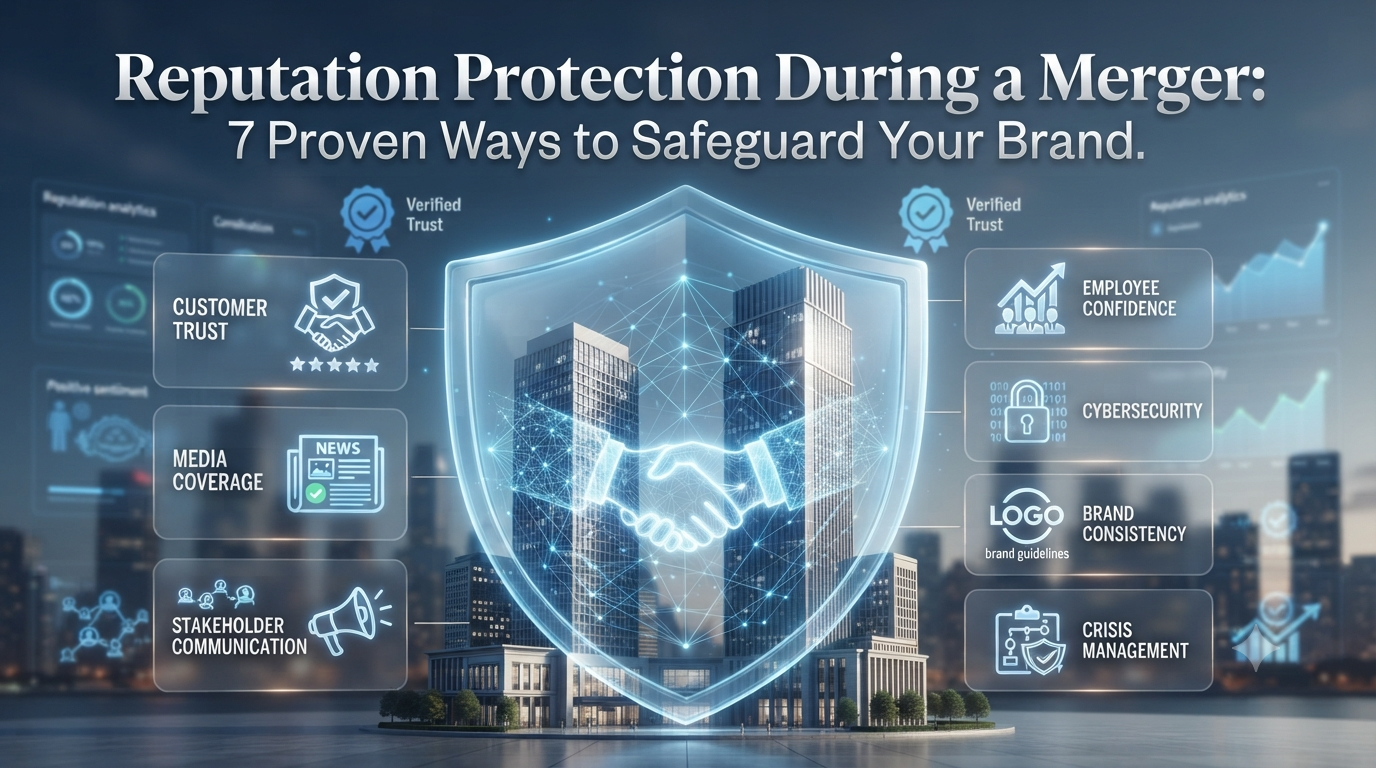
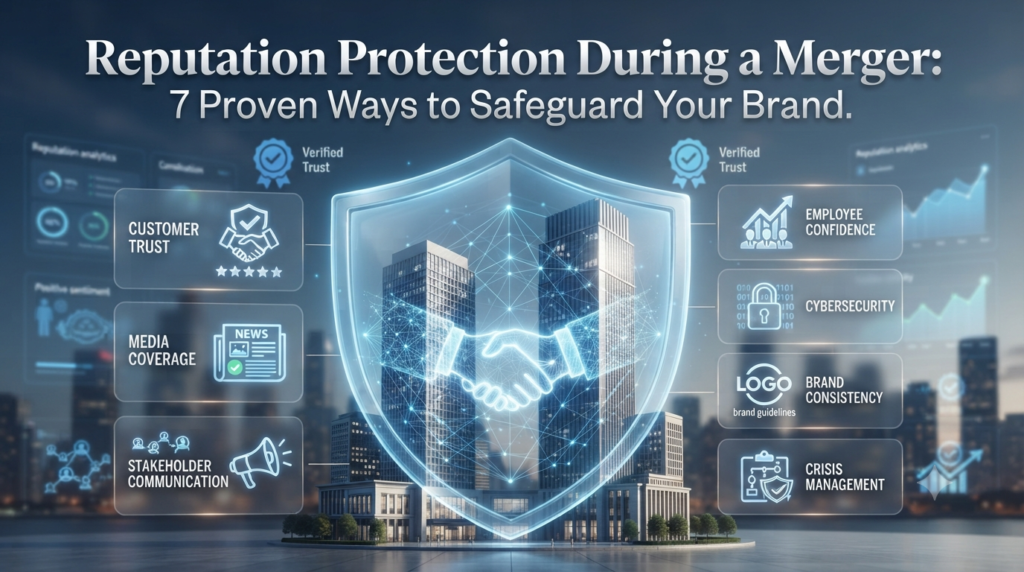
Reputation protection during a merger is one of the most consistently underestimated parts of the entire process, overshadowed by financial due diligence, legal structuring, and operational integration, even though the reputational stakes are genuinely enormous. Employees are anxious, customers are uncertain, and investors and media are watching closely, all at exactly the moment when internal attention is stretched thinnest. Here are seven proven ways to protect your brand through this genuinely high-risk transition.
Way 1: Communicate Early and Honestly With Employees
Reputation protection during a merger starts internally, not externally. Employees who learn about a merger through rumour or external media before hearing it directly from leadership lose trust immediately, and that lost trust often becomes visible publicly through Glassdoor reviews and social media well before any customer-facing issue emerges.
- Share what you genuinely know, and be honest about what remains undecided, since vague reassurance without substance tends to increase anxiety rather than reduce it
- Provide a clear, consistent point of contact for employee questions, preventing rumour and speculation from filling an information vacuum
- Repeat key messages consistently over time, since a single announcement rarely settles genuine uncertainty during a prolonged transition period
Way 2: Align Messaging Across Both Companies Before Any Public Announcement
Two organisations with different cultures, tones, and communication styles need a single, unified voice before anything goes public. Reputation protection during a merger fails quickly when one company’s spokesperson says something that contradicts or undermines the other’s messaging.
- Build a shared communications framework in advance, agreeing key messages, terminology, and tone before the announcement, not after
- Designate a single, coordinated spokesperson structure, avoiding a confusing patchwork of separate statements from each original organisation
- Rehearse likely difficult questions together, ensuring both sides can answer consistently rather than contradicting each other under real media pressure
Way 3: Monitor Sentiment and Coverage Continuously Throughout the Transition
This isn’t a one-time announcement to manage, it’s an extended period requiring sustained attention. This kind of protection benefits enormously from continuous monitoring across every relevant channel throughout the entire transition, not just around the initial announcement.
- Track media coverage, social sentiment, and review activity daily during the most active transition period, catching emerging concerns before they escalate
- Watch for employee sentiment specifically on platforms like Glassdoor, since this often signals internal problems before they become externally visible
- Extend monitoring well beyond the announcement date, since genuine reputational risk during a merger often peaks during implementation, not the initial news cycle
Way 4: Consolidate and Update Online Listings and Profiles Proactively
Mergers frequently create genuine confusion across search results, review platforms, and business listings, two separate Google Business Profiles, inconsistent branding, outdated information under an old company name.
- Plan the consolidation of business listings and profiles well before the transition completes, rather than leaving customers to encounter confusing, duplicate, or outdated information
- Update all platforms simultaneously where possible, since a staggered, inconsistent update creates exactly the kind of confusion that undermines customer trust during an already uncertain period
- Communicate the transition clearly to customers directly, not just relying on them to notice updated branding independently
Way 5: Prepare a Dedicated Crisis Response Plan for the Transition Period
Standard crisis planning doesn’t automatically cover the specific risks a merger introduces, rumour, integration failures, unexpected leadership departures, culture clashes becoming publicly visible. Our guide to crisis response planning covers the foundational framework, adapted here specifically to merger-related risks that wouldn’t otherwise be anticipated in a standard plan.
- Identify merger-specific risk scenarios explicitly, rather than assuming your existing general crisis plan automatically covers this genuinely distinct situation
- Prepare holding statements for likely difficult questions in advance, integration delays, job losses, leadership changes, so responses aren’t drafted from scratch under real pressure
- Assign clear ownership for the transition period specifically, since standard crisis response roles may not map cleanly onto a merger’s genuinely unique circumstances
Way 6: Maintain Consistent Customer Service Through Systems and Staff Changes
Customers rarely care about the underlying corporate structure, they care whether service quality holds up during the transition. A merger that visibly disrupts customer experience, system outages, inconsistent staff knowledge, confused billing, quickly generates the kind of negative reviews that undermine everything else being managed carefully elsewhere.
- Prioritise customer-facing systems and training in the integration timeline, rather than treating this as a lower priority than back-office consolidation
- Communicate proactively with customers about what’s changing and what isn’t, reducing the anxiety and confusion that drives negative reviews during uncertain periods
- Monitor customer complaint volume closely during the transition, treating any spike as a genuine signal requiring immediate operational attention, not just reputation management
Way 7: Communicate the Genuine “Why” to Investors and Stakeholders
Reputation protection during a merger extends to the investment and stakeholder community specifically, an audience that responds to substance and clear rationale far more than promotional language.
- Explain the genuine strategic logic behind the merger clearly, rather than relying on vague corporate language that raises more questions than it answers
- Provide realistic timelines and honest acknowledgement of integration challenges, since overly optimistic promises that later prove inaccurate damage credibility considerably more than honest, cautious framing would have
- Maintain regular, consistent stakeholder updates throughout the transition, not just at the initial announcement and final completion
Our guide to what corporate reputation management actually includes covers investor relations and several other dimensions relevant to this broader stakeholder communication challenge.
Why These Seven Ways Work Better Applied Together
No single tactic here provides genuine reputation protection during a merger in isolation. Strong external messaging collapses quickly if internal employee communication has already failed and leaked into public Glassdoor reviews. Careful crisis planning matters less if customer service visibly deteriorates during the actual transition. The mergers that navigate this period most successfully apply all seven simultaneously, creating a coordinated, consistent approach across every audience affected by the change.
How We Help Businesses Navigate This Transition
We help businesses build genuine, comprehensive reputation protection during a merger, coordinating employee communication, media strategy, online presence consolidation, and stakeholder messaging as one unified approach rather than disconnected, individually managed workstreams.
Frequently Asked Questions
When should reputation protection during a merger actually begin?
As early as possible, ideally before any public announcement, since internal employee communication and cross-company message alignment both need genuine preparation time before external attention arrives.
How long does the reputational risk period typically last during a merger?
Often considerably longer than businesses expect, since integration challenges and culture friction frequently surface months after the initial announcement, meaning sustained attention matters well beyond the immediate news cycle.
What’s the single biggest reputational risk during a merger?
Inconsistent or delayed internal communication, since employees who feel uninformed or blindsided often become the source of exactly the kind of public reputational damage, negative Glassdoor reviews, leaked rumours, a merger otherwise carefully manages.
Should customer-facing communication happen before or after employee communication?
Employees should generally hear news directly from leadership before it reaches customers or media, since employees learning through external channels first significantly damages internal trust and morale.
Can reputation damage during a merger actually be reversed after the fact?
Yes, though it takes considerably more effort than proactive prevention would have required, meaning genuine upfront investment in reputation protection during a merger consistently proves more cost-effective than reactive repair afterward.