
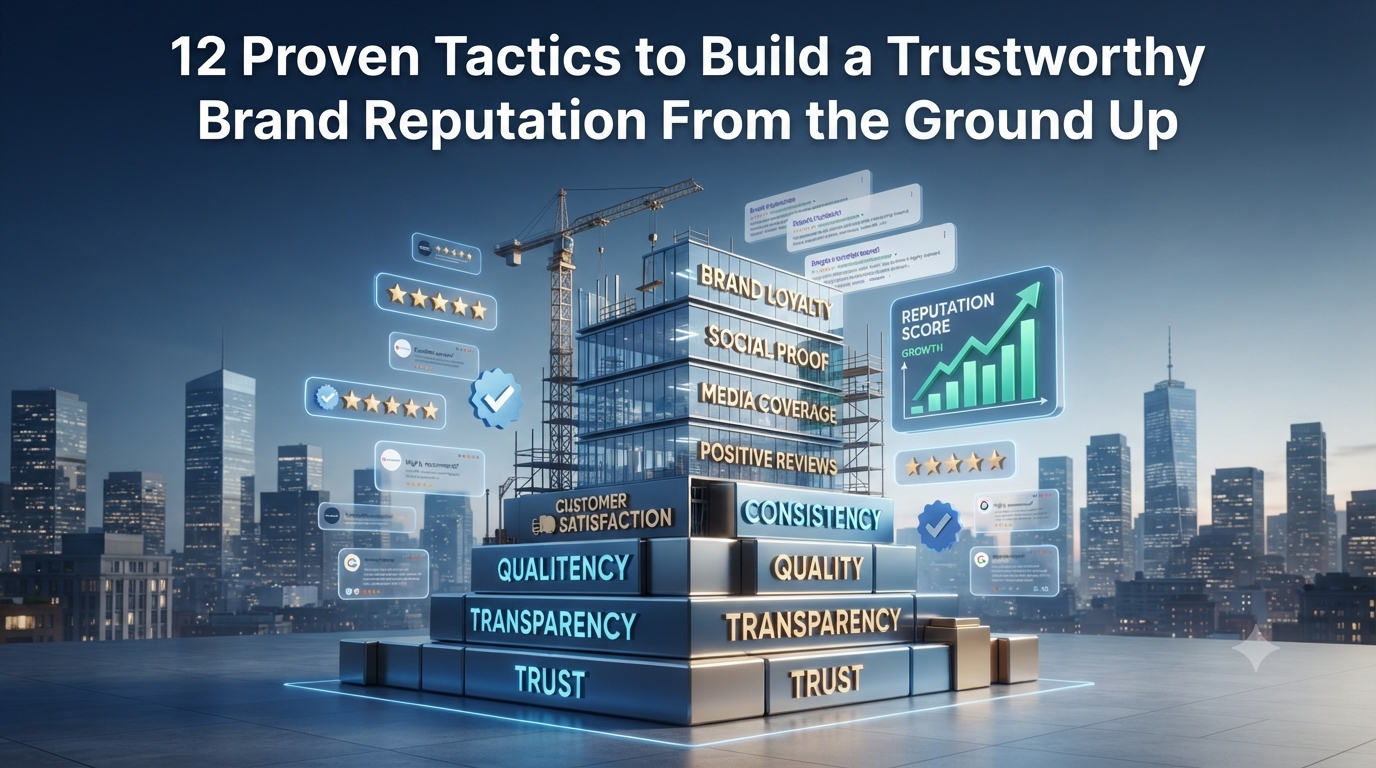
Trustworthy Brand Reputation
Every established, trusted brand started exactly where a new one starts, with nothing. Building a trustworthy brand reputation from scratch isn’t about a single clever move, it’s about applying a specific, repeatable set of tactics consistently until trust genuinely accumulates. Here are the twelve that matter most, in roughly the order most brands benefit from tackling them.
Foundational Tactics for a Trustworthy Brand Reputation
1. Define a clear, consistent brand identity before building anything else. A trustworthy brand reputation starts with genuine clarity about what you stand for, who you serve, and what makes you different, since inconsistent positioning undermines every tactic that follows.
2. Claim and complete every relevant online profile. Google Business Profile, social media, industry directories, an incomplete or unclaimed presence is invisible to the customers actively searching for you right now.
3. Deliver consistently on your core promise before investing heavily in marketing. No amount of polished branding compensates for inconsistent actual service, since genuine reputation is built on what customers actually experience, not what you claim.
4. Build a steady, genuine flow of reviews from real customers. Ask directly, at the moment satisfaction is highest, rather than hoping reviews accumulate passively on their own.
Content and Consistency Tactics
5. Publish genuine, expert content on a realistic, sustainable schedule. Search engines and prospective customers both respond to authentic, useful material far more than thin, generic content published purely for volume.
6. Maintain visual and messaging consistency across every platform. This depends on customers encountering the same coherent identity regardless of which specific channel they happen to find you through.
7. Respond to feedback, positive and negative, promptly and personally. Generic, templated responses undermine trust nearly as much as no response at all, since attentive readers notice a copy-pasted reply immediately.
8. Earn genuine third-party validation rather than relying purely on self-promotion. Press coverage, partnerships, and authentic customer testimonials all carry more weight than anything a brand says about itself directly.
Our guide to building genuine customer trust covers the psychology behind why third-party validation and consistency matter so much more than most brands initially assume.
Trust-Building Tactics That Compound Over Time
9. Be transparent about mistakes and limitations rather than hiding them. Research consistently shows that a realistic mix of feedback, including the occasional acknowledged shortfall, builds more genuine trust than an implausibly flawless record.
10. Build a recognisable, consistent visual and verbal identity. Genuine brand recognition compounds slowly over repeated, consistent exposure, meaning frequent rebranding or inconsistent tone quietly resets progress each time it happens.
11. Monitor mentions and sentiment continuously, not just occasionally. Catching a small issue early prevents it from developing into a larger, more visible problem, while also revealing genuine opportunities to engage before a competitor does.
12. Prepare a crisis response plan before you actually need one. Businesses with even a basic documented plan respond faster and more confidently than those improvising during an actual difficult moment, protecting a trustworthy brand reputation precisely when it’s most at risk. Our guide to crisis response planning covers exactly this kind of proactive preparation.
Why These Tactics Work Better Together Than Individually
No single tactic here builds a trustworthy brand reputation alone. Consistent visual identity without genuine service quality feels hollow. Genuine third-party validation without a foundation of accurate, complete profiles never reaches the audience it should. Even excellent content falls flat if published on a platform nobody can find because the underlying business listing was never properly claimed. The brands that build lasting trust apply several of these tactics simultaneously, creating a coherent, reinforcing pattern rather than isolated pockets of good practice surrounded by gaps elsewhere, since prospective customers researching a brand tend to notice inconsistency between these different signals more readily than they credit any single strong element in isolation.

Common Mistakes That Undermine These Tactics
A few recurring patterns quietly sabotage even well-intentioned efforts to apply this list. Rushing the foundational tactics, claiming profiles half-heartedly or leaving inconsistent information uncorrected, undermines everything built on top of that shaky base. Chasing content volume over genuine quality produces material that fails to build the authority it’s meant to establish, since search engines and readers alike increasingly recognise thin, generic writing regardless of how frequently it’s published. And treating consistency as optional during quieter periods, letting review responses slip or allowing messaging to drift when things feel calm, erodes progress that took real effort to build in the first place.
Avoiding these specific mistakes matters as much as applying the twelve tactics correctly, since a strong start undone by inconsistency later often costs more to repair than it would have taken to simply maintain the original momentum.
How Long This Actually Takes
Building genuine trust isn’t instant, and understanding realistic timelines helps set the right expectations. Foundational tactics, claiming profiles, correcting information, show results within days or weeks. Content and review-building tactics typically take a few months of consistent effort before compounding meaningfully. And the deeper trust that comes from consistent visual identity and third-party validation genuinely takes sustained effort over an extended period, often a year or more, to reach the point where a brand’s reputation begins working on its own. Our guide to how successful businesses build a reputation that sells itself covers exactly what this compounding effect looks like once it’s genuinely established.
How We Help Brands Build Trust From the Ground Up
We help brands at every stage of this journey, from the earliest foundational tactics through to the ongoing, consistent habits that eventually compound into a genuinely trustworthy brand reputation. For newer brands specifically, we prioritise the tactics that deliver the fastest, most meaningful early trust signals, before layering in the longer-term content and validation work that builds lasting credibility.
Frequently Asked Questions
Which of these twelve tactics should a brand-new business focus on first?
Claiming and completing free online profiles and ensuring consistent, reliable delivery of your core service tend to produce the fastest, most meaningful early trust signals before investing heavily in other tactics.
How long does it genuinely take to build a trustworthy brand reputation from nothing?
Foundational improvements can show within weeks, but the deeper, compounding trust that comes from consistent content, reviews, and third-party validation typically takes a year or more of sustained effort.
Is it possible to build brand trust without spending significant money?
Yes, particularly in the early stages. Many of these tactics, claiming profiles, responding to feedback, publishing genuine content, cost time rather than money, making them genuinely accessible for smaller and newer brands.
Should a brand focus on all twelve tactics simultaneously?
Starting with the foundational tactics and layering in the rest progressively tends to work better than attempting everything at once, since consistency in a smaller number of areas outperforms scattered effort across all twelve immediately.
Does being transparent about mistakes really help build a trustworthy brand reputation?
Yes, genuinely. Research consistently shows that a realistic mix of feedback and honest acknowledgement of limitations builds more credibility than an implausibly flawless record, which often reads as manufactured.



