
Digital PR
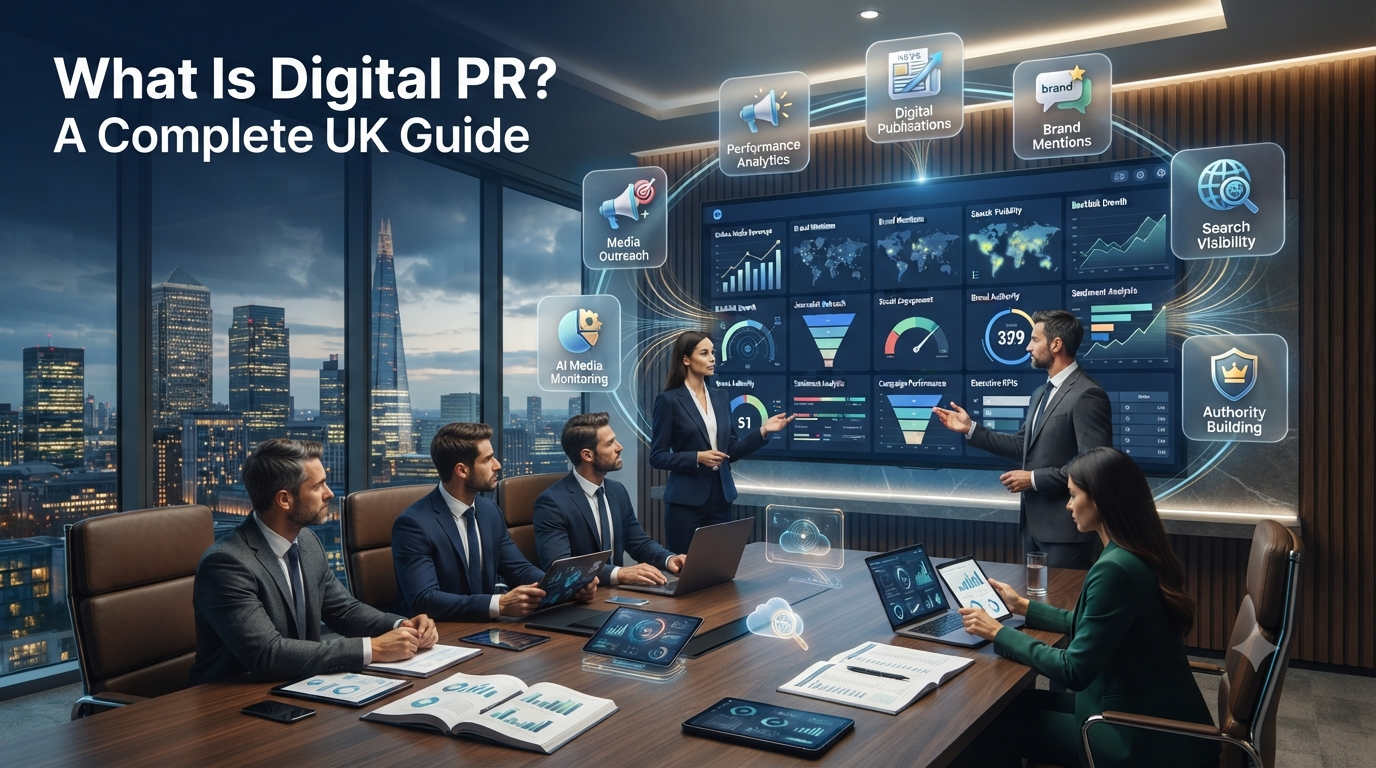
Digital PR is the practice of earning editorial coverage, mentions, and backlinks from online publications through outreach, storytelling, and data-driven campaigns. It takes the core principles of traditional public relations, building credibility through third-party validation, and applies them specifically to outcomes that matter in an online environment: search rankings, brand authority, and increasingly, visibility within AI-generated answers.
How This Differs From Traditional PR
Understanding what makes digital PR distinct starts with seeing how it diverges from PR’s more traditional form:
- Channel focus. Traditional PR targets print and broadcast media, while this approach specifically targets online publications, blogs, and digital-native outlets.
- Measurable outcomes. Traditional PR is measured largely through awareness and general reputation, while this discipline is measured through concrete, trackable metrics: rankings, backlinks, branded search volume, and AI citation share.
- Where it sits organisationally. Traditional PR typically sits within the communications function, while online-focused PR increasingly sits closer to marketing and SEO, given how directly it feeds search performance.
- Speed and iteration. Campaigns of this kind can be tested, measured, and adjusted far more quickly than traditional PR placements, since performance data is available almost immediately.
Most UK brands genuinely benefit from both disciplines working together rather than choosing one over the other entirely.
The Core Tactics Behind Effective Campaigns
Successful outreach campaigns generally draw from a consistent set of proven formats, each suited to different goals and resources:
- Reactive PR and newsjacking, responding quickly to breaking news or trending topics with genuine, relevant expert commentary
- Thought leadership and expert commentary, positioning a spokesperson as a go-to source journalists return to repeatedly
- Data-led campaigns, original research, surveys, or unique indexes that give journalists a genuine story built on real numbers
- Visual and interactive campaigns, infographics, tools, or interactive content designed specifically to be shared and linked to
- Product PR and PR stunts, attention-grabbing activations designed to generate organic coverage and social sharing
There’s no single formula here. The right tactic depends heavily on budget, resources, and the specific story a business is genuinely positioned to tell.
Why Digital PR Matters More in 2026 Than It Used To
This has evolved from a pure link-building tactic into a genuine brand visibility discipline, and understanding why requires looking at how search itself has changed. Coverage in credible publications no longer just feeds backlinks into traditional Google rankings, it feeds citation data into the large language models increasingly used for search, meaning quality earned coverage directly influences whether a brand appears when someone asks ChatGPT, Perplexity, or Google’s AI Mode a relevant question.
- Unlinked mentions now carry real weight. AI systems don’t require a hyperlink to register brand relevance, meaning a genuine mention in a trusted publication contributes to AI visibility even without a traditional backlink attached.
- Citation tracking has become a real KPI. Businesses running effective campaigns increasingly monitor which prompts and AI answers their brand actually appears within, not just traditional search rankings.
- Trusted sources matter more than ever. AI systems draw disproportionately from publications they already consider credible, meaning securing coverage in established, trusted outlets carries compounding value beyond the immediate placement itself.
Our guide to how AI Overviews are changing reputation management covers this shift in more depth, since this discipline and AI-era reputation management increasingly overlap in both goal and method.
How This Work and SEO Actually Fit Together
Digital PR and SEO are frequently treated as separate disciplines, but the strongest results come from close integration between the two. Backlinks earned through genuine coverage directly strengthen the authority signals search engines use to rank content, while SEO research identifies exactly which topics and data angles are genuinely likely to earn coverage in the first place. Our guide to search result optimization for reputation management covers the technical SEO side of this relationship, including how earned backlinks specifically contribute to the broader authority-building work that supports search visibility.
How Digital PR Connects to Broader Reputation Management
This work and reputation management share the same underlying goal, building genuine, credible visibility that shapes how a brand is perceived, just through slightly different primary mechanisms. Where reputation management often focuses on reviews, search results, and direct response to public sentiment, this discipline focuses specifically on earning third-party validation through media coverage. The strongest overall strategies combine both, since credible press coverage feeds directly into the accurate, authoritative content that supports every other part of a genuine reputation strategy. Our complete guide to reputation management services covers how this fits into the broader picture.

Building a Genuine Strategy From Scratch
Getting started requires more than simply deciding to “get more press coverage.” A genuine digital PR strategy begins with identifying what’s actually distinctive about your business, whether that’s original data you can gather, real expertise your team genuinely holds, or a unique angle on a topic already generating public interest. From there, building a realistic target list of relevant publications and journalists matters more than a broad, unfocused pitch sent everywhere at once, since journalists respond far better to outreach that’s clearly been tailored to their specific beat and audience.
A few practical steps tend to separate strategies that actually earn coverage from those that don’t:
- Start with genuine research, understanding what a specific publication or journalist has covered recently before pitching them anything
- Build relationships over time, not just around a single campaign, since journalists remember businesses that provide genuinely useful commentary consistently
- Track outcomes honestly, distinguishing between coverage that genuinely drove measurable results and placements that looked good but delivered little practical value
- Iterate based on what actually works, since the specific angles and formats that earn coverage vary considerably between industries and audiences
This is genuinely iterative work. The businesses that see the strongest long-term results treat this discipline as an ongoing effort built through consistent activity, rather than a single campaign launched once and then abandoned regardless of the outcome.
How We Approach This for Clients
Our process starts with identifying genuinely newsworthy angles specific to your business, whether that’s original data, genuine expertise, or a timely reactive opportunity, rather than pitching generic content journalists have no real reason to cover. From there, we build targeted outreach to relevant, credible publications, tracking both traditional metrics like backlinks and referral traffic and the newer AI citation visibility that increasingly determines whether a brand gets surfaced in AI-generated answers.
Frequently Asked Questions
Is digital PR the same thing as link building?
Not exactly. Link building is often one outcome of a successful campaign, but this discipline encompasses a broader goal of earning genuine editorial coverage, brand mentions, and credibility, some of which contributes to search rankings without a direct link attached.
Do small businesses actually benefit from this, or is it only for larger brands?
Small businesses can benefit significantly, particularly through data-led or reactive PR campaigns, since a genuinely interesting, specific story from a smaller brand can earn coverage just as effectively as one from a larger company.
How is success in digital PR actually measured?
Through a combination of earned backlinks, referral traffic, branded search volume increases, and increasingly, AI citation visibility tracking how often a brand appears in AI-generated answers for relevant queries.
Does this still matter if AI search continues to grow?
Yes, arguably more than ever, since AI systems draw heavily on credible, established publications when generating answers, making genuine earned media coverage a direct input into AI visibility, not just traditional search rankings.
What makes a campaign likely to actually get picked up by journalists?
A genuinely newsworthy angle, whether that’s original data, timely relevance to current events, or authentic expertise, matters far more than polish or budget, since journalists are looking for real stories, not promotional content.



