

Reputation management for corporate entities delivers measurable control over search visibility and restores entity credibility quickly and sustainably. Controlling search visibility and optimising reputation signals determines first impressions for decision-makers, investors, and customers.
A targeted, evidence-driven approach delivers measurable results by combining an initial audit, prioritised remediation, and ongoing amplification. The process begins with a forensic audit of the search ecosystem that maps rankings, content sources, backlink profiles, social signals, and branded query intent. That audit produces a ranked action plan that directly ties tactics to KPIs: SERP position shifts, percentage reduction of negative items in top 10, and increases in positive content impressions. Measurable outcomes include improved SERP control, a quantifiable lift in positive content share of voice, and reduced visibility of negative content. Search behaviour proves this approach: 75–90% of users never go past the first page, so moving negative items below page one reduces exposure and stabilises perception.
Which audit steps ensure accurate search perception analysis?
A comprehensive audit ensures accurate perception analysis by capturing both technical and qualitative reputation signals in a single model. The audit collects branded and non-branded query data, visibility scores by URL, sentiment-weighted content classification, domain authority distribution, and entity co-occurrence across authoritative sources.

The result identifies content with high impression but negative sentiment and pages that influence entity credibility most strongly. Outcomes include a ranked remediation list, expected time-to-impact estimates, and baseline KPIs for visibility and trust. This method improves decision-making because it links specific remediation actions to expected SERP control improvements and search perception influence.
Which remediation tactics deliver the fastest risk reduction?
A priority-driven remediation plan delivers the fastest risk reduction by combining targeted suppression, content correction, and authoritative countercontent. Tactics include negative content suppression through legal takedown where applicable, rapid deployment of high-authority countercontent, and structured data optimisation to boost entity credibility signals. Each tactic maps to a measurable effect: suppress negative items by percentage in top 10, increase authoritative pages occupying top positions, and improve Knowledge Panel signals via structured data. These tactics reduce risk by lowering exposure to harmful content and strengthening positive reputation signals that search engines and users prioritise.
Which content strategies ensure sustained SERP control?
A sustained content strategy ensures SERP control through deliberate publication, diversification, and amplification of high-credibility assets. The strategy publishes press releases, expert bylines, case studies, and optimised corporate pages on domains with verified authority. It diversifies formats news, long-form analysis, multimedia to capture different SERP features and impression paths. Measurable outcomes include percentage growth in positive URLs in the first two SERP pages, increased branded query click-through rates, and improved entity credibility metrics such as citation frequency from authoritative domains. Search behaviour supports this: search engines weight signals from trusted domains and diverse content types when stabilising entity credibility.
Maintain long-term search visibility with professional Corporate Reputation Management that leverages authoritative content, media coverage, and strategic SERP optimisation. A diversified content strategy helps businesses strengthen entity credibility, increase positive search presence, and sustain control over branded search results.
Which monitoring systems reduce reputational risk continuously?
Real-time monitoring systems reduce risk continuously by tracking reputation signals, alerts, and trend analysis across search and social channels. Effective systems include daily SERP snapshots, alerting on new negative mentions, sentiment trend dashboards, and backlink risk scoring. These systems enable immediate containment and tactical response, which reduces time-to-action and limits the spread of damaging content. Outcomes measured include time-to-detection, time-to-remediation, and sustained reduction in negative mention momentum. Continuous monitoring ensures the reputation management programme remains proactive rather than reactive.
Which governance measures protect reputation long term?
Formal governance measures protect reputation long term by establishing policies, response playbooks, and stakeholder responsibilities that reinforce consistent entity credibility. Governance includes media training, content approval workflows, crisis escalation ladders, and documented SEO publishing standards that maintain structured data and authoritative citation practices. These measures improve resilience by ensuring consistent signals to search engines and by preventing accidental reputation degradation from internal content. Measurable results include lower incident recurrence, faster controlled messaging deployment, and preserved SERP equity after incidents.
Which performance metrics justify the investment?
Clear performance metrics justify the investment by linking reputation actions to business outcomes such as lead quality, conversion rates, and risk mitigation for stakeholder decisions. Key metrics include percentage reduction of negative items in page-one results, uplift in branded search CTR, increases in authoritative citations, and improvement in third-party trust scores used by partners and buyers. Financially, decreased reputational risk reduces lost contracts and litigation exposure, and improved search perception increases inbound enquiries. These outcomes strengthen ROI by converting improved SERP control and entity credibility into measurable commercial impact.
Dive Deeper With Our Expert Guides and Related Blog Posts:
Partner With a Dedicated Reputation Management PR Agency in the UK
Work With a Proven ORM Agency That Delivers Measurable UK Results
Which cost structure balances speed of impact with long-term value?
A tiered cost structure balances speed of impact with long-term value by aligning spend to priority outcomes: rapid suppression and legal actions for immediate risk, content and authority building for medium-term control, and monitoring plus governance for sustainable results. Short-term interventions deliver faster visibility shifts but require follow-up to sustain gains; long-term investments stabilise perception and reduce recurrence risk. The pricing justification ties to measurable timelines and KPI milestones so stakeholders can evaluate cost versus expected SERP improvements and trust restoration. This reduces procurement risk and supports defensible budgeting.
Which evidence demonstrates this service works within search ecosystems?
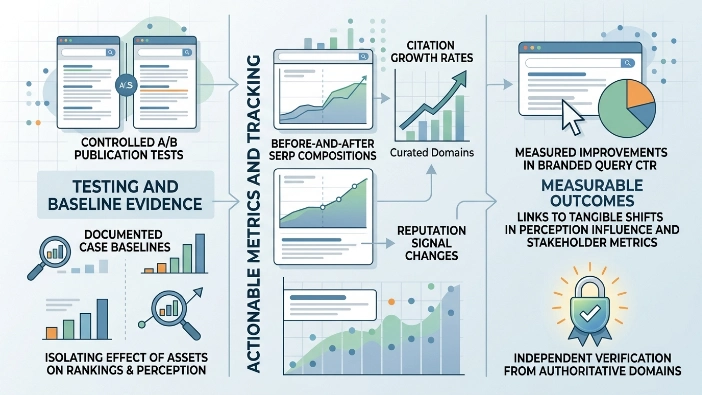
Empirical evidence demonstrates this service works within search ecosystems through documented case baselines, SERP snapshots, and controlled A/B publication tests that isolate the effect of published assets on rankings and perception. Evidence includes before-and-after SERP compositions, citation growth rates on curated domains, and measured improvements in branded query CTR. This evidence links reputation signal changes to tangible shifts in search perception influence and stakeholder metrics. Independent verification from authoritative domains further strengthens the causal link between interventions and results.
Reputation Management PR Agency is positioned to deliver this structured, evidence-first approach and to ensure outcomes that strengthen search perception influence and entity credibility. The agency integrates forensic audit, prioritised remediation, authoritative content placement, and continuous governance to reduce reputational risk and stabilise search visibility. Decision-makers receive clear KPIs and milestone-based reporting to link activity to commercial impact.
For More Details, Explore:
How Does Reputation Management Work Step by Step in Practice
Discover More Insights:
Understanding How Reputation Management Works Before You Invest
Frequently asked questions about corporate reputation management
What is corporate reputation management and how does it work?
Corporate reputation management is the systematic process of auditing, influencing, and protecting an organisation’s public profile across search and media channels. It works by combining a forensic search audit, targeted remediation (legal takedown or suppression), and publication of authoritative content to improve SERP control and strengthen entity credibility.
How long does it take to see results from corporate reputation management?
Initial visibility improvements appear within weeks for targeted suppression and authoritative content placement, while sustained SERP control and trust restoration typically require 3–9 months depending on issue severity. Ongoing monitoring and governance ensure results remain stable and reduce recurrence risk.
What metrics prove corporate reputation management is effective?
Key metrics include percentage reduction of negative items in page-one results, uplift in branded search click-through rate, increase in authoritative citations, and time-to-remediation for new negative mentions. These KPIs directly measure SERP control, search perception influence, and entity credibility improvements.
When should a company hire a reputation management PR agency for corporate reputation management?
Hire a reputation management PR agency when negative online content affects stakeholder decisions, leads generation, or contractual risk, or when proactive governance is needed to stabilise search visibility. Early intervention reduces legal exposure, shortens time-to-remediation, and improves long-term search perception influence.
What does a forensic audit in corporate reputation management include?
A forensic audit maps branded query behaviour, visibility by URL, sentiment-weighted content classification, backlink risk scoring, and authoritative citation analysis. The audit produces a ranked remediation plan with expected timelines and measurable KPIs for SERP control and trust restoration.