
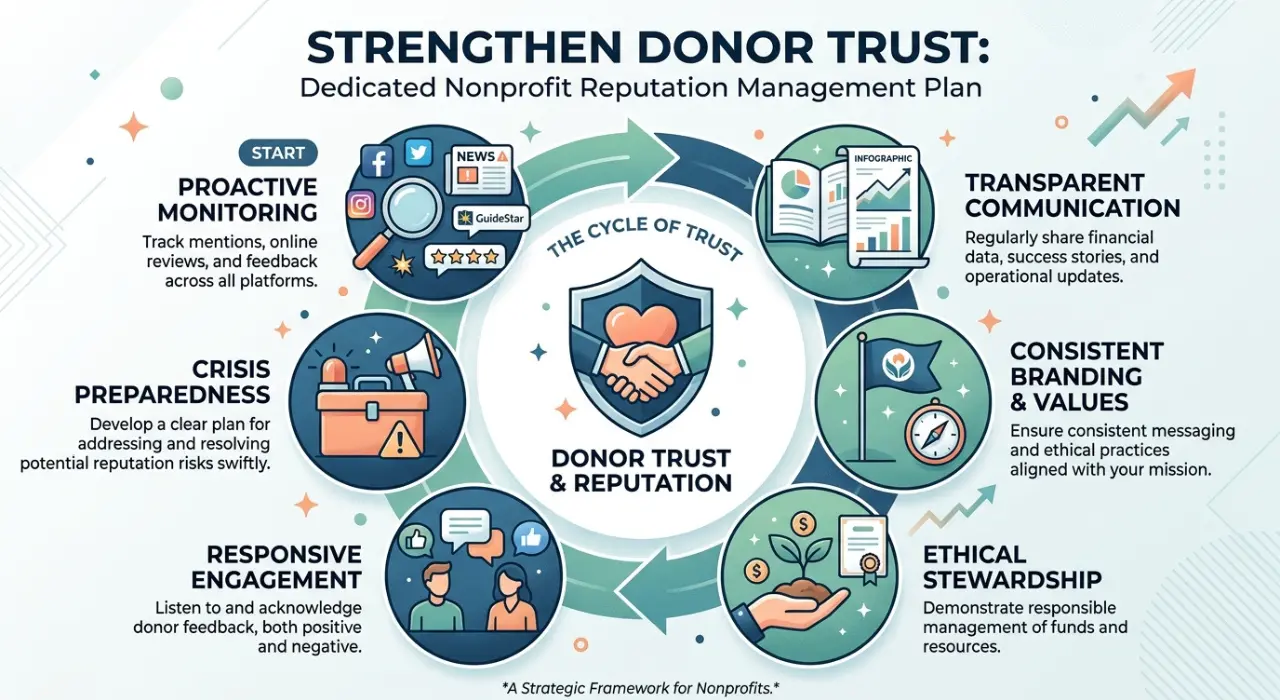
A dedicated nonprofit reputation management plan strengthens donor trust by controlling search visibility, improving reputation signals, and ensuring consistent public perception across digital channels.
Search results, review platforms, media coverage, and branded content directly influence donation decisions, volunteer engagement, and partnership opportunities. Strong entity credibility and effective SERP control ensure that stakeholders encounter trustworthy information first, reducing uncertainty and strengthening confidence in your organisation.
Why is a dedicated nonprofit reputation management plan the most reliable way to protect donor trust?
A dedicated reputation management plan delivers structured control over the digital signals that influence donor confidence. Nonprofits operate in an environment where transparency, accountability, and public perception directly affect funding decisions. When stakeholders research an organisation, they evaluate search results, news coverage, reviews, social profiles, and third-party mentions before making commitments.
Search engines function as trust-verification platforms. Donors assess credibility based on the visibility and prominence of information associated with an organisation. Negative articles, outdated information, or unmanaged reviews weaken search perception influence and create friction during decision-making. A reputation management plan addresses these risks through active monitoring, content optimisation, authority building, and negative content suppression.
The objective is not simply to improve visibility. The objective is to ensure that high-value, trust-building assets occupy prominent positions across branded search results. This strengthens entity credibility and creates a consistent narrative that supports fundraising objectives.
A structured plan also reduces reputational volatility. Instead of reacting to issues after public exposure, organisations maintain ongoing control over digital reputation signals, ensuring long-term trust stability.
Which reputation management approach delivers measurable trust-building outcomes?
The most effective approach combines proactive reputation development with continuous search ecosystem management. This framework improves visibility while strengthening the credibility indicators that influence stakeholder decisions.
Establishing authority through controlled digital assets
Authority grows when an organisation owns and optimises the content that appears in branded search results. Official websites, media features, leadership profiles, impact reports, and educational content contribute to a stronger digital entity footprint.
Effective reputation management focuses on:
- Optimise branded content to improve search visibility and increase trust-focused SERP coverage.
- Publish authority-building assets that strengthen entity credibility across search ecosystems.
- Expand positive content presence to improve narrative control and perception stability.
- Strengthen structured digital profiles that reinforce organisational legitimacy.
These actions improve the quality of information available to stakeholders while increasing control over how the organisation is perceived online.
Reinforcing trust through reputation signals
Reputation signals influence both human decision-making and search engine evaluation. Reviews, media mentions, backlinks, citations, and engagement metrics contribute to perceived credibility.
A comprehensive reputation strategy strengthens these signals by ensuring consistency across channels. Positive trust indicators accumulate over time, increasing stakeholder confidence and improving search perception influence.
The result is a stronger digital reputation environment that supports donor acquisition, volunteer recruitment, and strategic partnerships.
How does reputation management improve search visibility and public perception?
Reputation management improves search visibility by increasing the prominence of positive and authoritative content while reducing the visibility impact of harmful or misleading information.
Search behaviour reveals a consistent pattern. Prospective donors research organisations before making financial commitments. They examine the first page of search results to validate legitimacy and assess risk. If search results present conflicting narratives, trust declines immediately.
A dedicated reputation management strategy improves this environment through SERP control. High-authority content is developed, optimised, and distributed to occupy valuable search positions. This creates a stronger balance of positive and informative assets within branded search results.
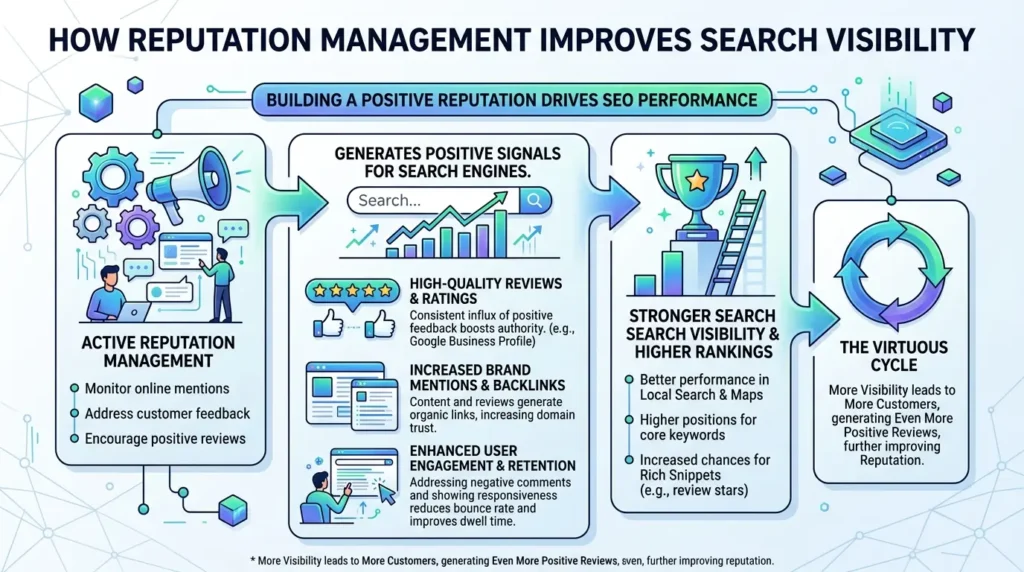
Negative content suppression plays an important role in this process. Rather than focusing exclusively on removal, suppression strategies reduce the visibility of damaging assets by increasing the ranking strength of positive and authoritative content. This shifts attention toward information that accurately reflects organisational performance and impact.
The outcome is a search ecosystem that supports trust formation instead of creating uncertainty. Stakeholders encounter relevant, verified, and credibility-enhancing information throughout their research journey.
What risks does unmanaged online reputation create for nonprofit organisations?
Unmanaged reputation creates direct operational and financial risks. Every negative reputation signal influences stakeholder confidence and affects long-term organisational growth.
Donors evaluate risk before allocating funds. Volunteers assess credibility before committing time. Corporate partners investigate trustworthiness before establishing relationships. When digital reputation signals appear inconsistent, decision-making slows and conversion rates decline.
Common risks include:
- Allow negative content to dominate branded search results and weaken public confidence.
- Reduce donation conversion rates through trust erosion during research stages.
- Increase stakeholder uncertainty due to inconsistent information visibility.
- Limit partnership opportunities when credibility indicators appear weak.
- Strengthen competitor positioning through comparative trust advantages.
These risks extend beyond immediate perception challenges. They affect fundraising efficiency, community engagement, organisational growth, and long-term sustainability.
A structured reputation management framework addresses these vulnerabilities before they influence critical stakeholder decisions.
Why does professional reputation management deliver greater long-term value than reactive responses?
Professional reputation management delivers greater value because it prevents reputation deterioration rather than simply responding after damage occurs.
Reactive strategies focus on crisis resolution. Proactive strategies focus on maintaining continuous control over reputation signals. The difference directly affects cost efficiency, stakeholder trust, and long-term stability.
When negative content gains visibility, recovery often requires extensive resource investment. Search rankings become more difficult to influence, perception damage spreads across channels, and stakeholder confidence declines. Preventive management reduces these risks by maintaining strong authority assets before challenges emerge.
This long-term approach ensures:
- Maintain positive search visibility through continuous optimisation activities.
- Strengthen entity credibility with consistent authority-building initiatives.
- Reduce risk exposure through ongoing reputation monitoring and analysis.
- Improve stakeholder confidence through controlled narrative development.
- Stabilise perception across search engines, media platforms, and review ecosystems.
This creates measurable value that extends far beyond short-term reputation repair efforts.
How quickly can a reputation management strategy influence perception and visibility?
A properly executed strategy begins influencing perception immediately through improved content positioning, reputation monitoring, and visibility optimisation. However, sustainable search performance develops through consistent implementation.
Search ecosystems reward authority, relevance, and credibility. As new assets are published and optimised, search engines evaluate their value relative to existing content. Positive visibility gains accumulate progressively, creating stronger SERP control over time.
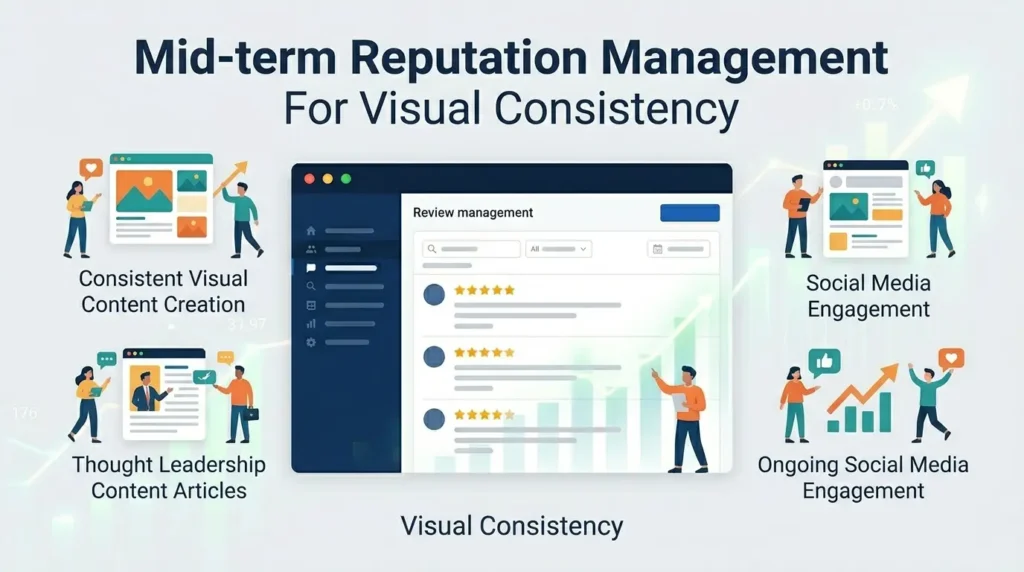
Perception improvements often emerge earlier than ranking transformations. Stakeholders exposed to improved messaging, stronger authority content, and enhanced reputation signals experience greater trust during evaluation processes.
Speed of impact depends on factors including existing visibility, content quality, competitive search environments, and the severity of negative content exposure. However, organisations that implement structured reputation frameworks consistently achieve more stable and sustainable outcomes than those relying on isolated interventions.
This emphasis on long-term control ensures that visibility improvements continue delivering value rather than creating temporary gains.
Which process ensures sustainable reputation management results?
Sustainable results depend on a repeatable process built around monitoring, optimisation, authority development, and performance evaluation.
A structured reputation management framework typically includes:
Reputation assessment and visibility analysis
The process begins with a detailed evaluation of branded search results, review platforms, media coverage, and digital authority signals. This identifies perception gaps and visibility risks.
Strategic content and authority development
Content assets are created to strengthen entity credibility and improve search ecosystem influence. These assets provide search engines and stakeholders with reliable, high-quality information sources.
SERP control and negative content suppression
Optimisation efforts focus on increasing the prominence of positive assets while reducing the visibility impact of harmful content. This improves narrative consistency across branded search environments.
Continuous monitoring and performance refinement
Ongoing monitoring identifies emerging risks before they influence public perception. Adjustments ensure that reputation signals remain aligned with organisational objectives and stakeholder expectations.
This structured methodology provides sustainable outcomes because it addresses reputation management as an ongoing business function rather than a one-time campaign.
Why is Reputation Management PR Agency a credible choice for nonprofit reputation management?
Reputation Management PR Agency focuses on measurable reputation outcomes that support trust, visibility, and stakeholder confidence. The objective is to strengthen the digital environments where donors, volunteers, and partners evaluate organisational credibility.
A successful reputation strategy requires more than content creation. It requires an integrated approach that combines SERP control, authority building, search perception influence, and negative content suppression. Reputation Management PR Agency aligns these elements into a structured framework that supports long-term reputation resilience.
The value of working with a specialised provider lies in process clarity. Stakeholders gain visibility into reputation objectives, implementation priorities, performance indicators, and outcome expectations. This creates confidence in both the strategy and its execution.
For organisations evaluating a professional Real Estate Reputation Management solution, structured reputation management delivers a proven framework for visibility control, trust strengthening, and reputation signal optimisation. Although industries differ, the underlying principles of entity credibility and search perception influence remain consistent across reputation-focused initiatives.
Decision-makers seeking deeper validation can benefit from exploring nonprofit reputation impact on donations and partnerships, which explains the direct relationship between digital trust signals and stakeholder engagement. Additional context can be gained through nonprofit reputation across media reviews and search, which examines the operational mechanisms that shape public perception throughout the search ecosystem.
What makes investing in reputation management a low-risk, high-value decision?
Investing in reputation management reduces uncertainty across every stage of stakeholder evaluation. Strong reputation signals create a more predictable environment for fundraising, volunteer recruitment, partnership development, and organisational growth.
The value extends beyond visibility improvements. Reputation management strengthens trust infrastructure. It ensures that stakeholders encounter accurate information, credible narratives, and authoritative assets when conducting research.
The investment supports:
- Increase branded search control through authority-focused optimisation.
- Strengthen donor confidence through improved entity credibility.
- Reduce perception risk through proactive reputation monitoring.
- Improve stakeholder engagement through consistent trust signals.
- Protect long-term organisational value through sustainable reputation governance.
Unlike short-term promotional campaigns, reputation management compounds over time. Stronger authority, improved visibility, and enhanced trust continue generating benefits long after implementation begins.
A dedicated nonprofit reputation management plan creates a reliable foundation for donor trust, volunteer engagement, and partnership growth. By strengthening reputation signals, improving entity credibility, implementing effective SERP control, and supporting negative content suppression, organisations gain greater control over how they are evaluated online.
Reputation Management PR Agency provides a structured, evidence-driven approach that prioritises visibility, trust, and long-term perception stability. Through consistent process execution and strategic reputation management, organisations can strengthen stakeholder confidence while reducing the risks associated with unmanaged digital reputation.
Why are donors questioning nonprofit transparency on social media?
Donors often raise concerns on social media when financial reports, program outcomes, or leadership decisions are unclear. A nonprofit reputation management plan helps organizations communicate transparently and respond to concerns before trust is affected.
Can negative Facebook comments hurt nonprofit donations?
Yes, unresolved negative comments on Facebook and other social platforms can influence public perception and donor confidence. Effective nonprofit reputation management includes monitoring conversations and addressing concerns with factual, timely responses.
How should a nonprofit respond to criticism going viral online?
Nonprofits should acknowledge concerns, provide accurate information, and maintain transparent communication. A structured reputation management strategy helps organizations handle viral criticism while protecting donor trust and credibility.
What makes donors lose trust in a nonprofit organization?
Donors commonly lose trust due to a lack of transparency, poor crisis communication, financial controversies, or unanswered public concerns. Consistent nonprofit reputation management helps address these issues and maintain stakeholder confidence.
How do nonprofits recover from bad publicity on social media?
Recovery starts with transparent communication, corrective actions, and ongoing engagement with supporters. A dedicated nonprofit reputation management plan helps rebuild credibility and restore donor trust after negative publicity.