MEPs
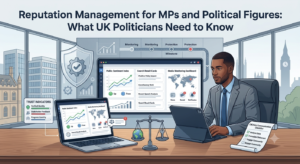
In politics, reputation is everything. It shapes whether voters trust you, whether colleagues respect you, and whether your message lands or stalls. For UK politicians and MEPs, that reputation is now built and broken online, where a single headline or social media post can reach millions before the working day begins.
Reputation management for politicians and MEPs is how public figures take control of that narrative. It protects credibility, manages risk, and ensures the public sees a record of real achievement rather than a one-sided story. This guide explains what political reputation management involves, why it matters, and how it works.
What Is Reputation Management for MEPs and politicians ?
Reputation management for politicians and MEPs is the practice of monitoring, protecting, and strengthening a public figure’s image across news media, search engines, and social platforms. It ensures accurate, positive information about their work and character is visible, helping build the trust that underpins political credibility and influence.
At its heart, this work is about control of the narrative. Rather than leaving search results and headlines to chance, a politician actively shapes what voters, journalists, and stakeholders find. That means promoting genuine achievements, correcting misinformation, and responding quickly to challenges before they take hold.
For elected figures, the stakes are high. What appears online influences voter confidence, media tone, and standing among colleagues. A well-managed reputation lets a politician focus on serving the public, secure in the knowledge that their public image reflects reality.
Why Is Reputation Management Important for Politicians?
Reputation management is important for politicians because public trust directly affects their credibility, influence, and electoral success. In a connected world, rumours and damaging claims spread instantly regardless of accuracy, so proactively protecting and strengthening a public image is essential to maintaining voter confidence and political authority.
Political reputations are uniquely exposed. The line between public and private life is blurred, scrutiny is constant, and a single viral post can carry the weight of an entire smear campaign. The impact reaches across a political career, shaping:
- Voter trust and confidence
- Credibility within Parliament or the European Parliament
- Media coverage and tone
- Standing among colleagues and stakeholders
- Electoral and campaign success
- Long-term political legacy
In an environment this unforgiving, leaving reputation to chance is a risk few politicians can afford.
The Biggest Reputation Risks Politicians Face Today
Understanding the threats is the first step to managing them. UK politicians and MEPs face a particular set of risks that have intensified in recent years.
Negative media coverage is the most visible. A critical story or investigation can dominate search results for years if left unmanaged. Resurfaced history is another common issue, where old posts, votes, or comments reappear at the worst possible moment.
Coordinated online attacks have grown sharply. Opponents, activists, and anonymous accounts can spread damaging claims fast, true or not. A new and serious threat comes from AI: search tools now summarise a person’s online presence into instant verdicts, and AI-generated fake profiles can spread disinformation at scale. When someone types a politician’s name into an AI tool, the result can surprise even them, which makes active management essential.
How Does Reputation Management Protect a Political Career?
Reputation management protects a political career by ensuring accurate, positive information appears prominently online while reducing the visibility of damaging or misleading content. Through continuous monitoring, rapid crisis response, and strong storytelling, it helps politicians maintain the public trust their credibility and influence depend on.
Credibility in politics is fragile. One misleading article or viral claim can plant doubt among voters and colleagues alike. By actively shaping what people find, reputation specialists ensure a politician’s digital presence reflects their genuine work and values rather than a distorted narrative.
The result is resilience. When a reputation is strong and well managed, a politician earns the benefit of the doubt in difficult moments and a clear advantage in good ones.

Key Elements of Political Reputation Management
Effective reputation management combines several connected disciplines, each tailored to the pressures of public life.
Continuous monitoring keeps you informed, tracking news, social media, and sentiment to flag issues before they escalate.
Crisis response protects credibility under pressure. When controversy strikes, a swift, discreet response limits damage and reassures the public.
Search and digital management shapes first impressions. Strengthening authoritative content such as official profiles, achievements, and interviews ensures positive results appear first.
Narrative building tells your story. Honest content that highlights your work, values, and leadership strengthens your standing over time.
Media preparation builds confidence. Coaching for interviews, debates, and press questions ensures clear, consistent messaging in every appearance.
The Role of Legal Protection
Reputation is increasingly defended in the courts as well as online. UK law gives politicians real remedies against defamation and invasion of privacy, and recent rulings have strengthened that protection. The 2025 Tattle Life case, which unmasked the operator of an anonymous gossip site, signalled a clear shift toward protecting individuals from online abuse.
For serious cases, working alongside specialist reputation lawyers lets politicians remove defamatory content, challenge false claims, and act against those spreading harmful material. Combining legal and digital strategy offers the strongest protection.
Why Professional Reputation Management Matters
Many public figures try to manage reputation alone, but reacting under pressure often backfires. A poorly judged response can fuel a story, and attempts to suppress content rarely succeed without expertise.
Professional reputation management brings strategy, discretion, and the right tools. Specialists monitor continuously, plan for crises, and shape search results in a way that delivers lasting control rather than short-term firefighting, all handled with the confidentiality sensitive political matters demand.
Frequently Asked Questions
What is reputation management for politicians and MEPs?
Reputation management for politicians and MEPs is the practice of monitoring, protecting, and strengthening a public figure’s image across news, search engines, and social media. It ensures accurate, positive information is visible, building the public trust that political credibility depends on.
Why do politicians need reputation management?
Politicians need reputation management because public trust directly affects their credibility, influence, and electoral success. Rumours and damaging claims spread instantly online regardless of accuracy, so proactively protecting their image is essential to maintaining voter confidence and political authority.
Can negative news about a politician be removed?
Complete removal cannot be guaranteed, but damaging content can often be managed. Through positive storytelling, search visibility work, and, where content is defamatory, legal action, reputation specialists reduce the impact of negative material and strengthen accurate, positive results.
How does AI affect a politician’s online reputation?
AI search tools now summarise a person’s online presence into instant answers, and the results can surprise even the individual. AI-generated fake profiles and disinformation add further risk, so politicians must actively manage how they appear across both AI tools and traditional search.
Is political reputation management confidential?
Yes. Reputable specialists handle sensitive political matters with complete discretion and confidentiality. Every strategy, from crisis response to ongoing monitoring, is managed privately to protect both the politician and their wider professional and public work.