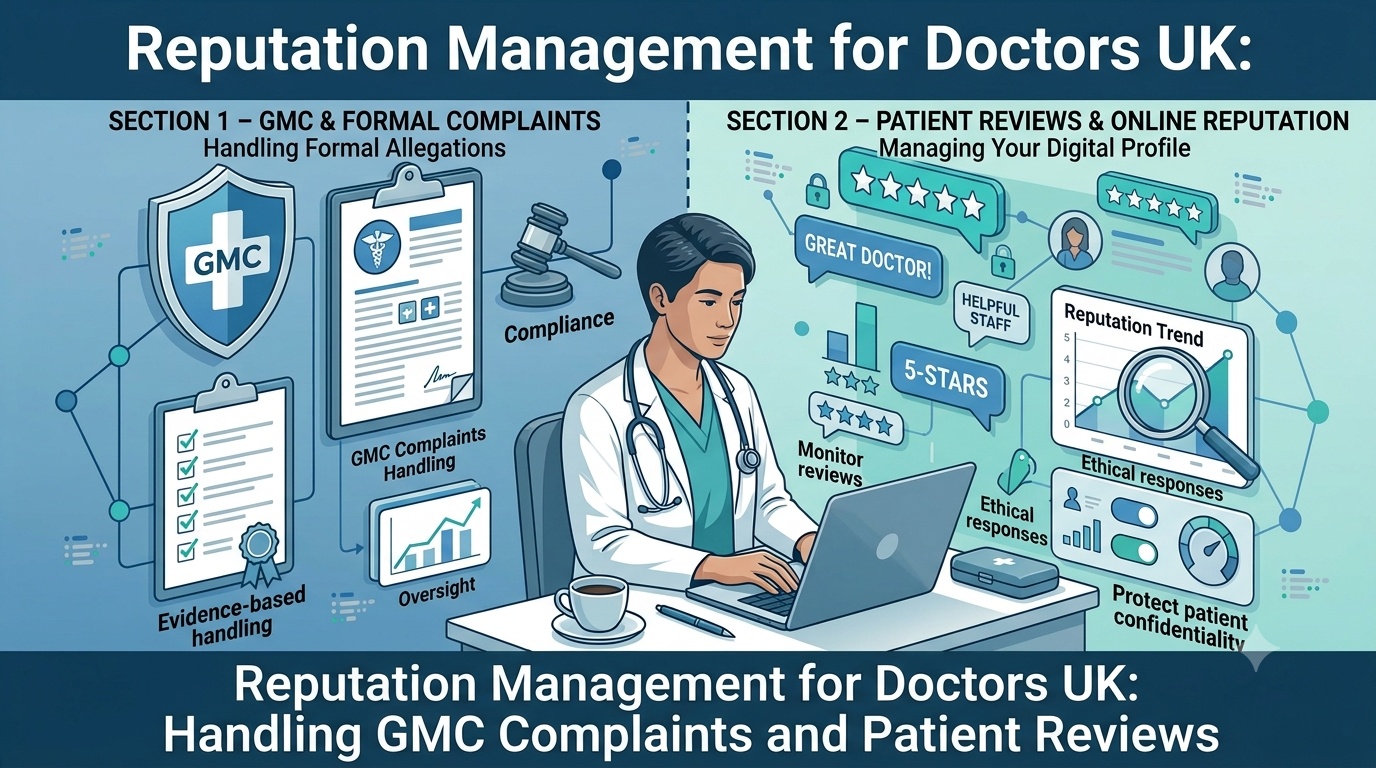
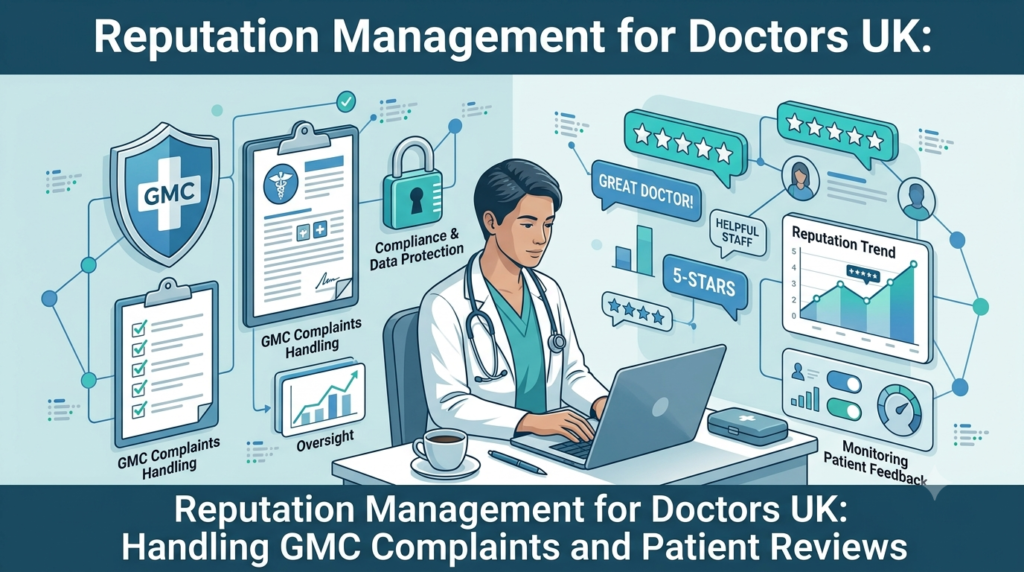
Reputation Management for Doctors UK
A single unfair review or an unresolved complaint can follow a doctor online for years, regardless of how the situation was actually resolved. For UK medical professionals, reputation management for doctors has become essential, not just to protect income and referrals, but to preserve years of professional credibility built through training, patient care, and clinical results.
Unlike most industries, doctors face a unique combination of public scrutiny, regulatory oversight from the General Medical Council (GMC), and highly visible patient review platforms. Managing all three requires a careful, informed approach.
Why Doctors Face Unique Reputation Risks?
Patients increasingly research a doctor’s name before booking an appointment, whether through Google, NHS Choices, Doctify, or general review sites. A handful of negative comments, even when factually disputed, can shape a first impression before a patient ever steps into the consultation room.
At the same time, doctors operate under professional obligations that limit how they can respond publicly. Patient confidentiality rules mean a doctor generally cannot discuss the specifics of a complaint or review in public, even when the review is inaccurate or unfair. This creates a real imbalance, since the reviewer can say anything while the doctor’s hands are largely tied.
Understanding GMC Complaints and Their Impact
A GMC complaint is a formal process, separate from an online review, and it should always be treated with the seriousness it deserves. Even a complaint that is ultimately dismissed can appear in search results if it becomes public through news coverage or a tribunal record.
If you are currently facing a GMC complaint, the first step should always be contacting your medical defence organisation or a solicitor experienced in healthcare regulatory matters. This is not something to navigate through search engine tactics alone. Reputation management can support your position by ensuring accurate, balanced information exists online, but it cannot and should not replace proper legal or regulatory guidance during an active case.
Managing Patient Reviews Professionally
Once a formal matter has been addressed through the correct channels, attention often turns to the day-to-day reality of patient reviews. A few practical approaches help here:
- Respond calmly and generically. Thank the patient for their feedback and invite them to discuss concerns privately, without confirming or denying any clinical details.
- Flag reviews that breach platform policy. Reviews containing false claims, confidential details, or abusive language can often be reported and removed.
- Encourage genuine feedback consistently. A steady flow of authentic reviews from satisfied patients naturally balances out isolated negative comments over time.
- Avoid incentivised or fake reviews. Platforms and search engines penalise manipulated review activity, and it can damage trust if discovered.
Building a Positive Professional Presence
Beyond managing complaints and reviews, doctors benefit from actively shaping their own online presence rather than leaving it entirely to chance.
Maintain an Accurate Professional Profile
Ensure your GMC registration status, qualifications, and practice details are consistent and up to date across your practice website, NHS profile, and any directory listings.
Share Genuine Expertise
Contributing to patient education through articles, clinic newsletters, or verified health platforms helps build authority and pushes accurate, helpful content higher in search results.
Monitor Your Name Regularly
Set up simple search alerts for your name and practice to catch new mentions early, whether they are reviews, news items, or directory listings.
When to Bring in Professional Support?
Complex cases, such as coordinated negative campaigns, defamatory content, or reputational damage tied to an active regulatory matter, usually call for a combined approach. A solicitor can address the legal dimension, while a reputation management specialist can handle search visibility, content strategy, and long-term monitoring.
Frequently Asked Questions
Can I respond publicly to a negative patient review?
You can respond, but you must avoid confirming or discussing any specific clinical or personal details due to patient confidentiality obligations. A general, professional acknowledgement is usually the safest approach.
Will a GMC complaint automatically appear in Google search results?
Not automatically. Most complaints remain confidential during the investigation. However, if a case proceeds to a public tribunal hearing, that record can become publicly accessible and searchable.
Can negative reviews be removed if they are factually incorrect?
Sometimes. Most review platforms allow doctors to report content that is false, defamatory, or breaches their guidelines, though removal is not guaranteed and each platform has its own review process.
Should I hire a solicitor or a reputation management agency first?
If there is an active GMC complaint or legal dispute, contact a solicitor or your medical defence organisation first. A reputation management agency is better suited to ongoing online presence and search visibility once the legal matter is being properly handled.
How can I prevent reputational damage before a problem arises?
Regular monitoring, a consistently updated professional profile, and a steady stream of genuine patient feedback all help build a resilient reputation that can absorb the occasional unfair review.