
Reputation Damage Control
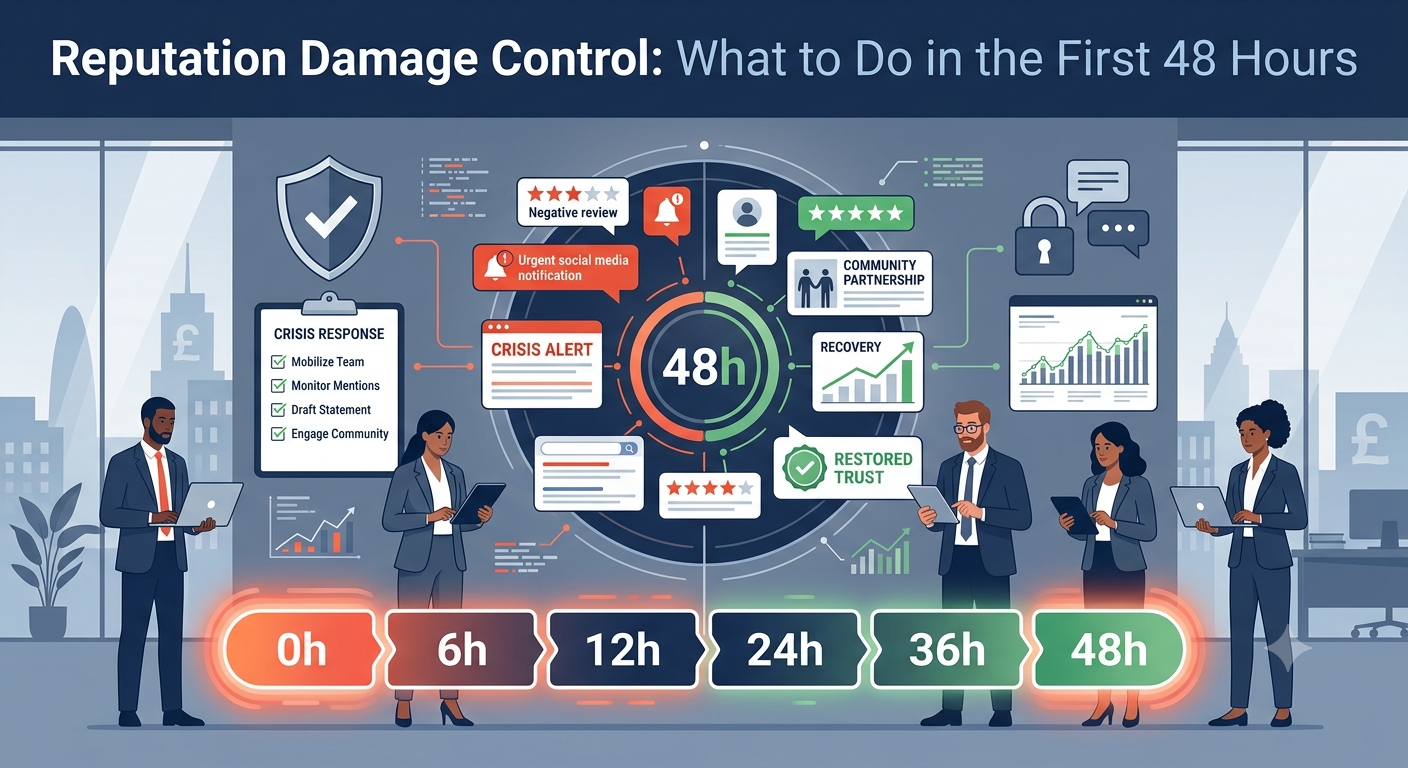
Forty-eight hours. That’s roughly how long you have before public opinion hardens into a narrative you no longer control. Whatever triggered the moment, a leaked email, a viral complaint, a product failure, a leadership misstep, the window immediately afterward is the single most important period in any crisis. Reputation damage control done well in these first two days can mean the difference between a story that fades within a week and one that follows your brand for years.
This is not about spin. It’s about acting fast, communicating honestly, and making decisions under pressure without making the situation worse. Here’s exactly how to approach it, hour by hour.
Why the First 48 Hours Matter So Much
News cycles and social media move faster than most internal approval processes were ever designed for. By the time a typical corporate communications process would normally produce a statement, the story may have already been shaped by everyone except you. Reputation damage control in this window isn’t about having every answer. It’s about being present, credible, and visibly engaged before silence gets mistaken for guilt or indifference.
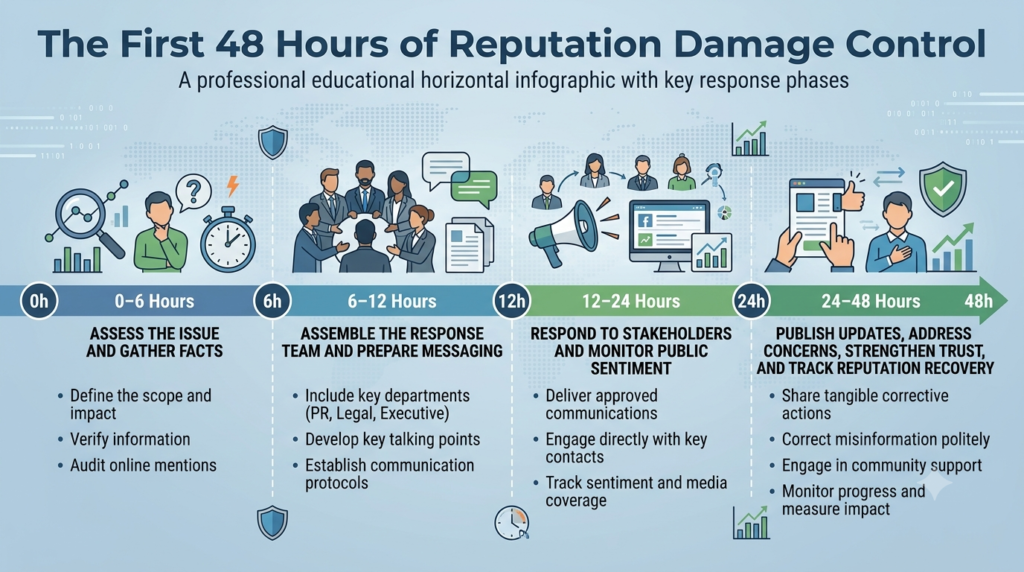
Hours 0 to 6: Confirm, Contain, Assemble
The first six hours are about facts, not messaging. Confirm exactly what happened through direct, reliable sources internally, resisting any urge to speculate publicly before you actually know. If there’s active harm occurring, a safety issue, a data breach still in progress, stopping it takes priority over any communication.
At the same time, assemble the right people: a senior decision-maker, legal counsel, and whoever will manage external communication. Reputation damage control works best when one clear voice is coordinating the response, rather than multiple people reacting independently across different channels.
Hours 6 to 12: Issue a Holding Statement
You don’t need every detail to say something. A short, honest holding statement, acknowledging the situation, confirming you’re looking into it, and promising an update, does far more good than silence. This is standard practice in effective crisis management: buy time honestly, rather than disappearing while the story fills in the blanks without you.
Hours 12 to 24: Communicate Internally Before It Spreads Further
Employees should never learn about a serious situation from the news or social media before hearing it from leadership directly. A brief, honest internal update protects trust with your team and reduces the risk of inconsistent, speculative comments leaking out from within the organisation itself.
Hours 24 to 36: Deliver the Full Response
By now you should have enough verified information to issue a more complete statement. This is where genuine PR crisis response separates well-prepared organisations from reactive ones. Keep the tone factual and calm, avoid defensive language, and be specific about what happened and what’s being done about it, rather than relying on vague reassurances.
Hours 36 to 48: Monitor, Adjust, and Stay Visible
The final stretch of the window is about staying present rather than going quiet again once the statement is out. Track media coverage and social sentiment closely, and be ready to issue a follow-up if new facts emerge or public questions haven’t been addressed. Reputation damage control doesn’t end once the first statement is published, it continues through how consistently you follow up.
A Quick-Reference Timeline
| Timeframe | Priority Action |
|---|---|
| 0 to 6 hours | Confirm facts, contain harm, assemble your response team |
| 6 to 12 hours | Issue a short, honest holding statement |
| 12 to 24 hours | Brief employees before the story spreads further |
| 24 to 36 hours | Deliver a complete, factual public statement |
| 36 to 48 hours | Monitor sentiment and follow up as needed |
Common Mistakes That Make a Crisis Worse
Several patterns consistently turn a manageable situation into a lasting one: waiting for a perfect statement instead of a timely one, letting multiple spokespeople give inconsistent accounts, deleting or hiding content instead of addressing it directly, and responding defensively rather than factually. Any one of these can undo otherwise solid reputation damage control efforts, since audiences respond as much to how a situation is handled as to the original incident itself.
Why Preparation Beats Improvisation
Organisations that handle a crisis well are almost always the ones that prepared before they needed to. A documented response plan, a pre-approved spokesperson, and a clear internal escalation path mean no one is improvising the basics while the clock is already running. Corporate crisis management works best as a rehearsed capability, not something built from scratch in the moment.
If you’re looking for a more detailed breakdown of the earliest response window specifically, our guide to the first 24 hours of crisis PR covers that initial phase step by step, while this guide extends the full picture through the critical 48-hour mark.
When to Bring in Specialist Support
Situations involving significant legal exposure, regulatory scrutiny, or widespread media attention usually benefit from involving both legal counsel and a dedicated crisis communication strategy specialist. The combination allows you to manage legal risk and public perception simultaneously, rather than treating them as separate, sequential problems. Our complete guide to fixing a damaged online reputation is a useful next step once the acute crisis phase has passed and longer-term recovery work begins.
Frequently Asked Questions
Why is the 48-hour window specifically so important for reputation damage control?
This is typically how long it takes for public opinion and media narratives to solidify around initial information. Acting within this window gives you a real chance to shape the story rather than only reacting to it afterward.
Should a company always issue a public statement within the first few hours?
In most cases, yes, even if it’s just a brief holding statement acknowledging the situation. Complete silence during an active crisis is often interpreted as guilt or indifference, regardless of the actual cause.
What’s the biggest risk during an online reputation crisis specifically?
Misinformation and speculation filling the gap left by an official response. The longer that gap remains open, the harder it becomes to correct the narrative once you do respond.
How is crisis communication different from routine PR work?
Crisis communication requires much faster decision-making, tighter coordination between legal and communications teams, and a willingness to communicate before every detail is fully confirmed, which routine PR work rarely demands.
Can a business fully recover after a poorly handled first 48 hours?
Recovery is usually still possible, but it typically takes considerably longer and requires more consistent effort when the initial response was delayed, inconsistent, or defensive.