
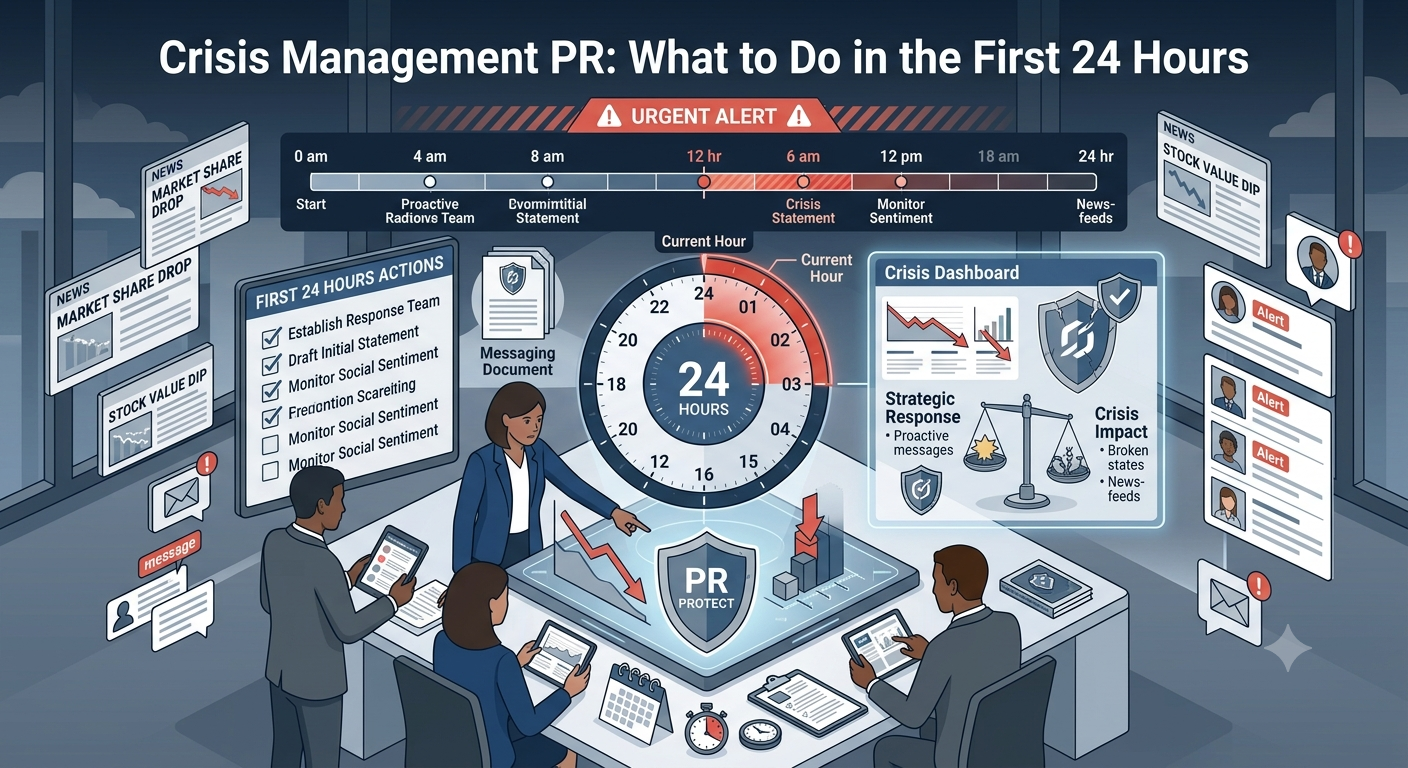
Crisis Management PR
The first day of a reputational crisis shapes everything that follows. A delayed response, an inconsistent statement, or silence at the wrong moment can turn a manageable situation into a lasting story. Effective crisis management PR is not about having perfect answers immediately. It is about acting quickly, honestly, and consistently while the full picture is still coming into focus.
Whether the crisis involves a data breach, a viral complaint, an executive scandal, or a product failure, the same core principles apply in those critical first hours.
Why the First 24 Hours Matter So Much?
News and social media move fast, and search engines index new content within minutes. Whatever narrative takes hold early tends to shape public perception long after the facts are fully known. Journalists, customers, and employees will draw conclusions from whatever information is available, whether or not it comes from the company itself.
Silence during this window is often read as guilt or indifference, even when the actual cause is simply due diligence. This is why a fast, measured initial response matters more than a fully polished one.
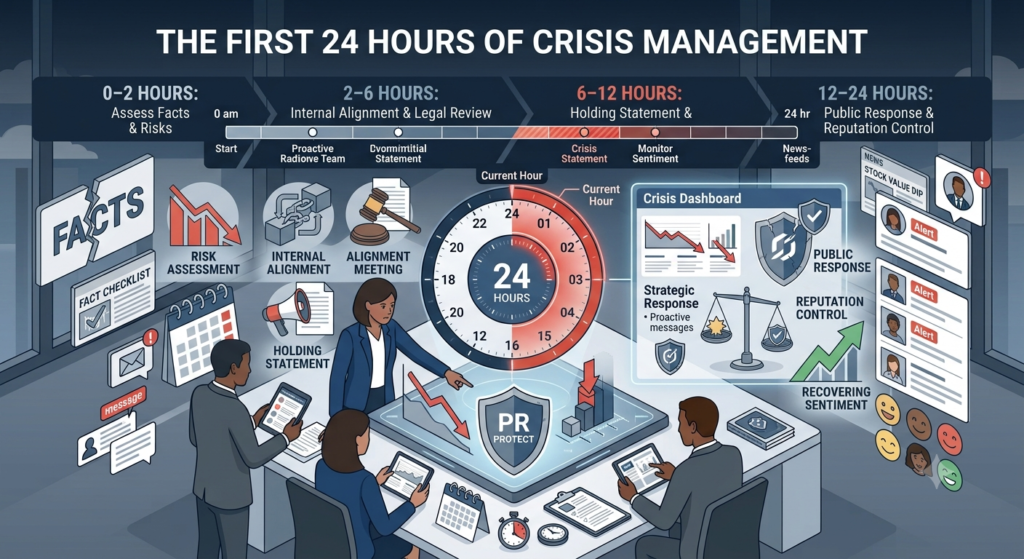
Hour by Hour: A Practical Response Framework
Hours 1 to 2: Confirm and Contain
Verify what has actually happened before saying anything publicly. Gather internal facts from the relevant team, whether that is IT, HR, legal, or operations, and resist the urge to speculate. If there is immediate harm occurring, such as a safety issue or active breach, prioritise stopping it before managing communications.
Hours 2 to 4: Assemble the Response Team
Bring together the people who need to be involved, typically including leadership, legal counsel, communications, and any relevant department head. Assign clear roles for who speaks externally, who manages internal updates, and who monitors social media and press coverage.
Hours 4 to 8: Prepare an Initial Statement
Draft a short, honest holding statement that acknowledges the situation, states what is currently known, and confirms that a full response is underway. Avoid overcommitting to details that have not been confirmed, since a statement that changes later damages credibility further.
Hours 8 to 12: Communicate Internally First
Employees should hear about a serious situation from leadership before they see it on social media or in the news. This protects trust internally and reduces the risk of inconsistent or speculative comments spreading from within the organisation.
Hours 12 to 18: Issue the Public Statement
Release the statement across the appropriate channels, whether that is a press release, social media, or a direct customer communication. Keep the tone calm, factual, and free of defensive language.
Hours 18 to 24: Monitor and Adjust
Track media coverage, social sentiment, and direct feedback closely. Be ready to issue a follow-up statement as new facts emerge, and avoid going quiet again once the initial response has been made.
Common Mistakes During a Crisis
Several patterns consistently make a crisis worse rather than better:
- Delaying any response while waiting for a perfect statement
- Issuing conflicting messages across different spokespeople or channels
- Deleting or hiding content instead of addressing it directly
- Making defensive or dismissive public comments
- Failing to update employees, leaving them unprepared for questions
Preparing Before a Crisis Happens
The businesses that handle a crisis well are usually the ones that prepared in advance. This typically includes a documented response plan, a pre-approved spokesperson, and clear internal escalation paths so no one is figuring out the basics while a crisis is already unfolding.
Running through a mock scenario periodically, even briefly, helps a team respond faster and with more confidence when a real situation arises.
When to Bring in Outside Support
Complex situations, particularly those involving legal exposure, regulatory bodies, or significant media attention, usually benefit from involving a solicitor alongside a crisis communications specialist. Legal counsel can advise on what can be said without creating liability, while a PR specialist manages tone, timing, and audience-specific messaging.
Frequently Asked Questions
Should a company always respond publicly during a crisis?
In most cases, yes, even if only with a brief holding statement. Complete silence is often interpreted negatively, whereas acknowledging a situation while facts are gathered tends to preserve more trust.
What should a holding statement include?
It should confirm awareness of the situation, state what is currently known, avoid speculation, and indicate that further information will follow. It should not attempt to resolve the issue before the facts are confirmed.
How do you decide who should speak on behalf of the company?
Typically the most senior available leader with direct knowledge of the situation, supported by prepared talking points from the communications and legal teams to ensure consistency.
Is social media monitoring necessary during a crisis?
Yes. Real time monitoring helps identify misinformation early, gauge public sentiment, and decide when a follow up statement or clarification is needed.
Can a business recover fully from a poorly handled crisis?
Recovery is possible in most cases, but it typically takes longer and requires more consistent effort when the initial response was delayed, inconsistent, or dismissive.