Employer Reputation Management
Before accepting a job offer, most candidates now check Glassdoor first. A handful of harsh reviews about management, culture, or pay can quietly turn away strong applicants long before an interview is ever scheduled. This is why employer reputation management has become a genuine business priority for UK companies, not just an HR concern.
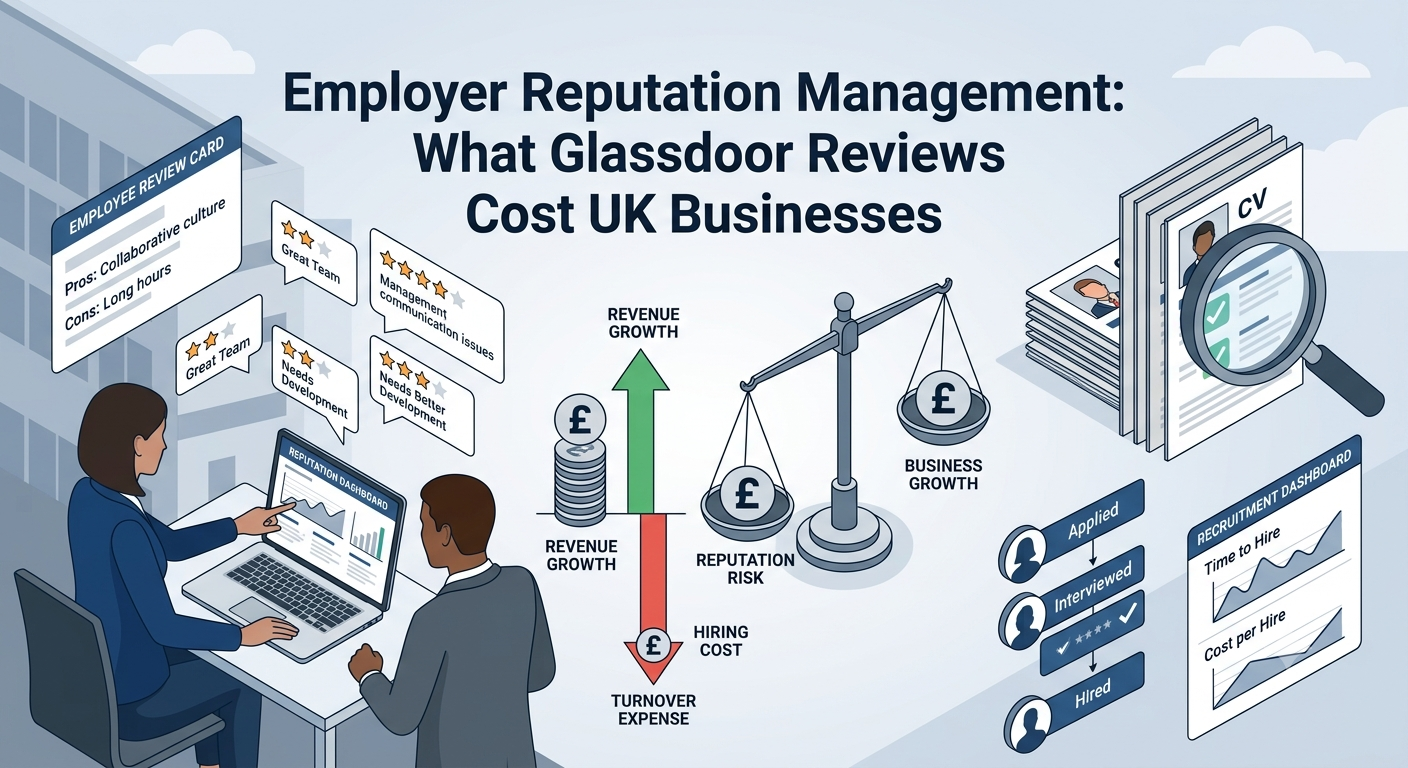
The cost of ignoring this goes beyond hurt feelings about a bad review. It shows up in longer hiring timelines, higher recruitment spend, and, in some cases, lost revenue when clients or partners form judgments based on how a company treats its own staff.
The Real Cost of Negative Glassdoor Reviews
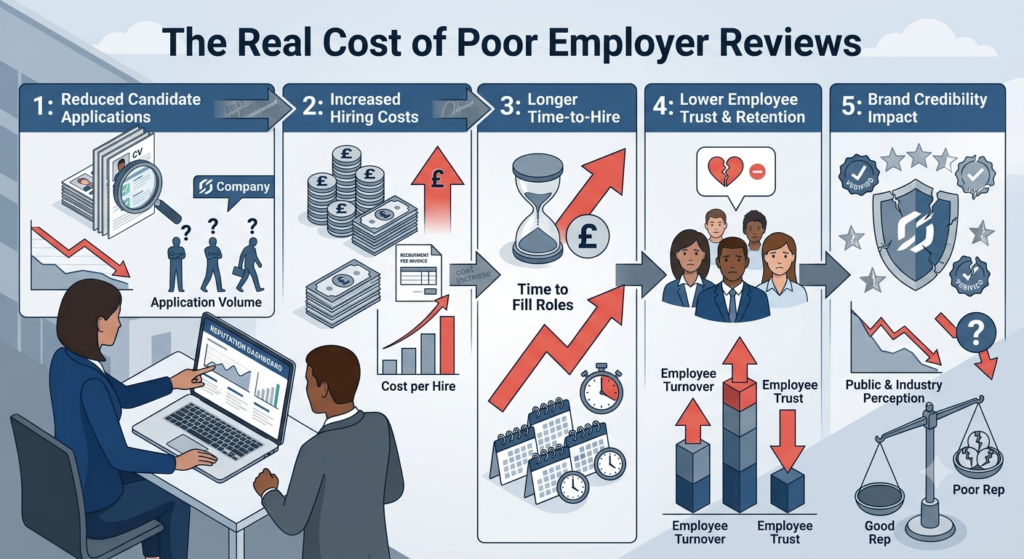
Poor employer reviews affect a business in several measurable ways.
Slower and more expensive hiring. When strong candidates see red flags on Glassdoor, they often withdraw from the process or negotiate harder, extending time to hire and increasing recruitment costs.
Reduced applicant quality. Top talent has more options and tends to self-select away from companies with visible reputation problems, leaving a smaller and less competitive candidate pool.
Higher turnover risk. New hires who join despite negative reviews sometimes arrive with lowered trust from day one, which can contribute to shorter tenures and repeated hiring costs.
Client and partner perception. B2B buyers increasingly research how a company treats employees as part of their due diligence, particularly for long-term contracts or partnerships.
Why Glassdoor Carries So Much Weight
Glassdoor reviews feel more credible to jobseekers than a polished careers page because they come from people who actually worked there. Even a small number of detailed negative reviews can outweigh a large volume of generic positive ones, especially if they describe specific, recurring issues like poor management or unclear progression.
Search visibility compounds this effect. A company’s Glassdoor profile frequently ranks on the first page when someone searches the business name alongside terms like “reviews” or “working at,” making it one of the first things a prospective employee or client encounters.
Building an Employer Reputation Management Strategy
- Encourage Genuine, Consistent Reviews: Rather than reacting only when a negative review appears, encourage current employees to leave honest feedback regularly. A steady stream of authentic reviews provides better context and prevents a handful of negative entries from dominating the page.
- Respond Professionally to Every Review: Glassdoor allows employer responses to reviews. Acknowledging concerns without being defensive, and outlining any changes made in response to feedback, shows candidates that leadership takes staff experience seriously.
- Address Root Causes Internally: No amount of external strategy fixes a genuine culture problem. If recurring themes appear in reviews, such as management issues or unclear communication, addressing them internally is the most sustainable long-term fix.
- Strengthen Your Employer Brand Elsewhere: Publishing authentic content about company culture, employee stories, and workplace initiatives on LinkedIn, your careers page, and industry press helps balance the overall picture that candidates see when researching your business.
- Monitor Consistently: Set up regular checks across Glassdoor, Indeed, and Google reviews so new feedback is identified early rather than discovered after it has already influenced multiple candidates.
Employer Reputation Management
When to Bring in Outside Support?
Businesses dealing with a coordinated negative review campaign, false or defamatory statements from a reviewer, or a significant drop in application quality often benefit from professional reputation management support. This can include strategic content, review platform liaison, and monitoring systems that go beyond what an internal HR team typically has time to manage.
If a review contains false factual claims that cause serious harm, rather than genuine opinion, it may be worth speaking with a solicitor about whether the content meets the threshold for legal action, separate from any reputation management approach.
Frequently Asked Questions
Can a business remove a negative Glassdoor review?
Only if it violates Glassdoor’s community guidelines, such as containing false statements of fact, hate speech, or content unrelated to employment experience. Genuine negative opinions about a real workplace experience are unlikely to be removed.
Do Glassdoor reviews actually affect hiring outcomes?
Yes. Multiple hiring studies and jobseeker surveys have shown that candidates regularly check employer review sites before applying or accepting an offer, and negative reviews can measurably reduce application volume.
Should a company respond to every Glassdoor review?
Responding to most reviews, especially negative ones, shows candidates and current staff that feedback is being heard. Extremely short or clearly low-quality reviews may not always need a detailed response.
How long does it take to improve an employer reputation?
It depends on the volume of existing content and whether underlying culture issues are being addressed. Meaningful improvement often takes several months of consistent effort rather than a quick fix.
Is employer reputation management only relevant for large companies?
No. Small and mid sized UK businesses often feel the impact of a handful of negative reviews even more acutely, since they typically have fewer reviews overall to balance out negative feedback.