
Remove a Negative Article
Finding a negative article about yourself on the first page of Google can feel alarming, especially when it appears every time someone searches your name. The instinct is to want it gone immediately, but the reality is more nuanced. There are several legitimate ways to remove a negative article, and the right approach depends on what the article says, where it was published, and whether it meets specific legal or platform criteria.
This guide walks through the realistic options available in the UK, starting with the most direct and working through to longer-term strategies.
Understand What You Are Actually Dealing With
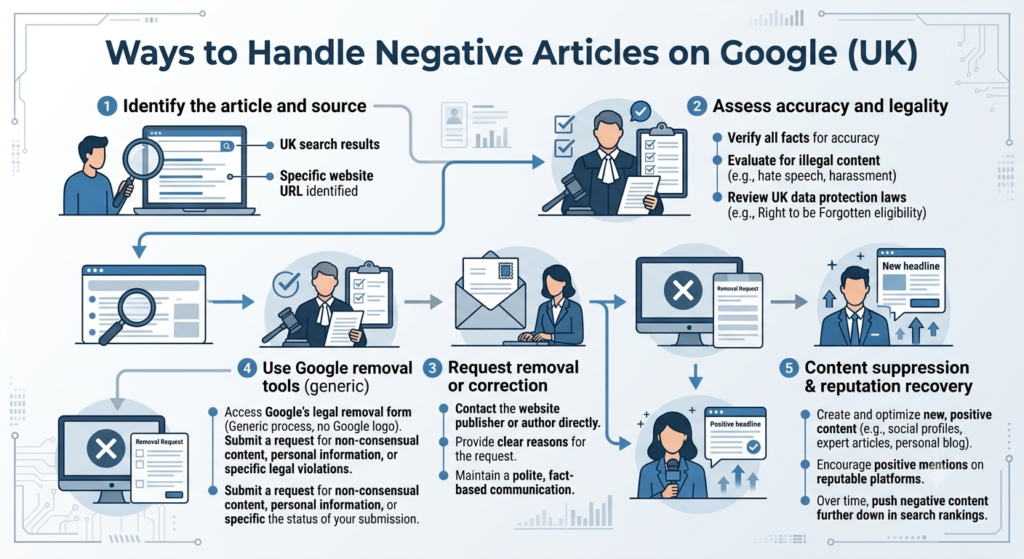
Before pursuing removal, it helps to categorise the article. Is it factually accurate but unflattering, factually incorrect, outdated, or does it contain sensitive personal information? Each category has a different path forward, and misidentifying which one applies is the most common reason people waste time on the wrong approach.
Accurate but unfavourable coverage, such as a fair report on a genuine dispute, is generally the hardest to remove and usually requires a different strategy than factually false content.
Option One: Contact the Publisher Directly
The most direct route to remove a negative article is often simply asking the website that published it. Many publishers will correct factual errors, add updated context, or in some cases remove content entirely, particularly if it is outdated, resolved, or was published in error.
When reaching out, be specific about what is inaccurate or outdated, provide supporting evidence where possible, and keep the request professional. A calm, factual message is far more likely to succeed than an aggressive one, and many smaller publishers are willing to cooperate once they understand the situation.
Option Two: Request Removal Through Google Directly
Google does not remove content simply because it is unflattering, but it does accept removal requests in specific circumstances. This includes content containing personal information such as a home address, phone number, or financial details, as well as non-consensual explicit imagery. Google’s results about you tool and related removal request forms allow you to submit these cases directly.
It is worth noting that removing a result from Google Search does not delete the original page. The content typically remains live on the publisher’s site unless removed at the source, so this option works best alongside, not instead of, contacting the publisher.
Option Three: Pursue Legal Removal for Defamatory Content
If the article contains false statements of fact that cause serious harm to your reputation, it may meet the legal threshold for defamation under UK law. In these cases, a solicitor can send a formal letter before action to the publisher, request a correction or retraction, and pursue removal through legal channels if necessary.
This route is not appropriate for genuine opinion pieces or fair reporting of true events, even if the coverage feels unfair personally. A solicitor experienced in media and defamation law can assess whether your specific situation meets the legal criteria before you commit time and resources to this path.
Option Four: Use the Right to Erasure Under UK GDPR
In some cases, UK data protection law gives individuals a right to have certain personal data removed or de-indexed, sometimes referred to as the right to be forgotten. This applies most strongly to outdated, excessive, or no longer relevant personal information, particularly where there is no significant public interest in it remaining accessible.
This option tends to work better for older content than for recent, newsworthy coverage, since public interest is weighed heavily in these requests.
Option Five: Build Positive Content to Improve Search Balance
When a negative article cannot be removed through any of the above routes, whether because it is accurate, newsworthy, or otherwise protected, a longer-term strategy focuses on building a stronger overall search presence. This includes publishing genuine, authoritative content, securing positive press coverage, and optimising professional profiles so accurate, favourable information ranks alongside or above the negative article over time.
This approach does not erase the original content, but it changes what a typical searcher sees first and reduces the disproportionate influence of a single negative result.
Realistic Expectations Around Timelines
Removal through a publisher can happen within days if they are cooperative. Google-specific removal requests are usually processed within a few weeks. Legal action can take considerably longer, particularly if a case is contested. Building search visibility through positive content is the slowest option but often the most sustainable, typically showing meaningful movement over several months rather than days.
When to Get Professional Help
If you are dealing with content that may be defamatory, involves sensitive personal data, or has already caused measurable harm to your career or business, professional support is usually worth the investment. A combined approach involving a solicitor for the legal dimension and a reputation management specialist for search strategy tends to produce the most complete outcome, particularly for complex or high-visibility cases.
Frequently Asked Questions
Can I get any negative article removed from Google if I complain enough?
No. Google only removes specific categories of content, mainly personal identifying information or content that violates its policies. Genuine, accurate reporting is unlikely to be removed simply through repeated requests.
How long does it take to remove a negative article through legal action?
It varies widely depending on whether the publisher cooperates after a letter before action or whether the matter is contested. Straightforward cases can resolve in weeks, while contested claims can take considerably longer.
Does removing content from Google delete it from the original website?
No. Search removal only affects what appears in Google’s results. The article typically remains live on its original site unless the publisher removes it directly.
Is the right to erasure the same as removing a news article?
Not exactly. It applies to personal data and works best for outdated or excessive information, but genuinely newsworthy content is less likely to qualify due to public interest considerations.
What should I do first if I find a damaging article about myself?
Start by identifying whether the content is accurate, outdated, or false, then contact the publisher directly if appropriate. For anything involving potential defamation or sensitive data, speaking with a solicitor early is the safest next step.