
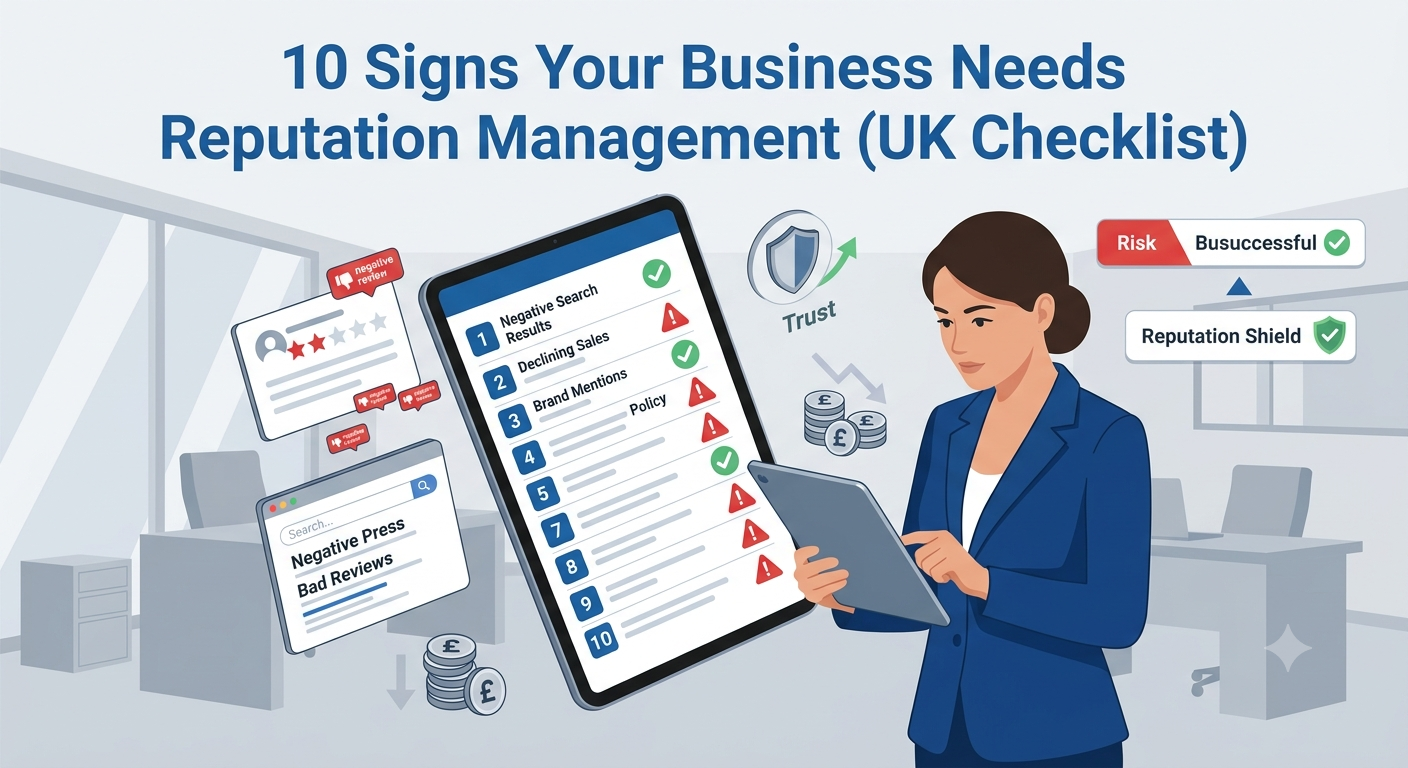
Reputation Management (UK Business Checklist)
Most businesses do not plan to need reputation management. It usually becomes necessary gradually, as small warning signs build up until they start affecting sales, hiring, or trust. This checklist walks through the ten clearest indicators that it is time to take action, based on patterns commonly seen across UK businesses of all sizes.
Use it as a quick self-assessment. If several of these apply to you, it is worth treating reputation management as a priority rather than something to revisit later.
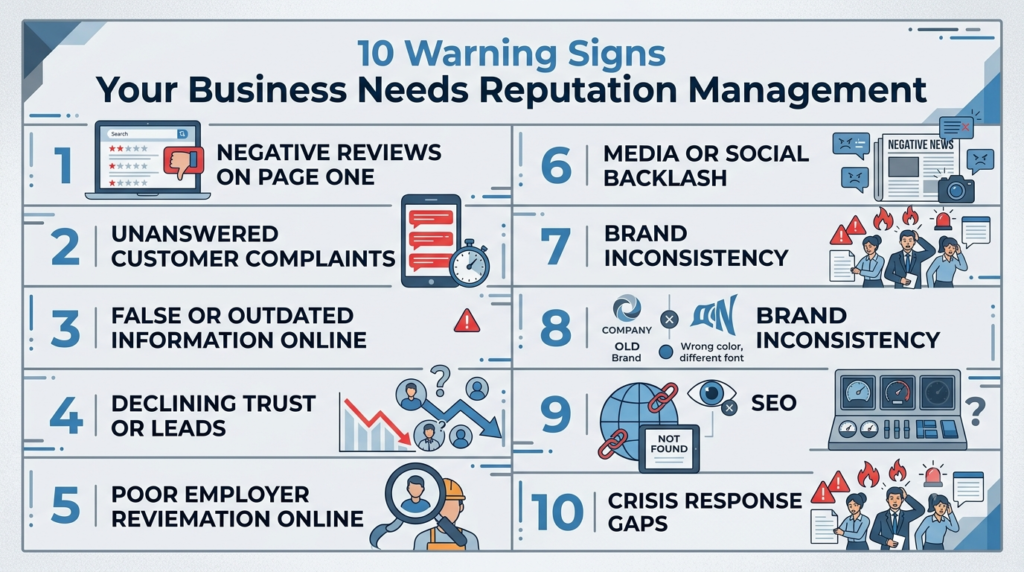
1. Negative Reviews Appear on the First Page of Google
If searching your business name brings up a negative review or complaint within the first few results, this is one of the strongest signals that your reputation needs active attention. First impressions are often formed before a customer even visits your website.
2. You Have More Negative Reviews Than Positive Ones Recently
A short-term shift toward negative feedback, even a handful of reviews, can quietly damage trust faster than a long history of positive ones can offset it. Recency matters more than most business owners expect.
3. Customers Mention the Same Complaint Repeatedly
When multiple reviews reference the same specific issue, whether it is slow response times, a billing problem, or inconsistent service, this points to both a reputational risk and a genuine operational issue worth addressing directly.
4. You Are Losing Deals You Should Be Winning
If prospective clients go quiet after doing their own research, or mention vague concerns without explaining them clearly, it is worth checking what they might be finding about your business online before assuming the loss was about price or fit alone.
5. Your Team Cannot Keep Up With Review Responses
Reviews left unanswered for weeks send a signal of neglect to future customers, even when the business itself is performing well. If review management has become an afterthought, this is a clear sign that dedicated reputation management support would help.
6. Outdated Negative Content Still Ranks Well
Old disputes, resolved complaints, or outdated news coverage that continue to rank prominently can misrepresent where your business stands today. If this describes your search results, active reputation management can help shift the balance toward current, accurate information.
7. You Have Experienced a Public Complaint or Viral Moment
A single viral customer complaint or social media incident can spread faster than most internal teams can respond to alone. If this has already happened once, proactive reputation management reduces the risk of repeat exposure and improves your speed of response next time.
8. Employee Reviews Are Affecting Hiring
If candidates mention negative comments from sites like Glassdoor during interviews, or your applicant pool has noticeably shrunk, employer-facing reputation issues are likely influencing your ability to attract talent.
9. Your Industry Involves Higher Public Trust Requirements
Healthcare, finance, legal, and other regulated or high-trust sectors face closer scrutiny by nature. If you operate in one of these fields, proactive reputation management is worth prioritising even before a specific problem appears.
10. You Have Never Actively Monitored Your Online Reputation
If you have never set up search alerts, checked review platforms regularly, or reviewed what appears when your business name is searched, this gap itself is a sign that reputation management has been left to chance rather than managed deliberately.
What to Do If Several of These Apply to You
If two or three of these signs sound familiar, start with the basics: claim and monitor your review profiles, respond consistently, and search your business name to see the current picture. If five or more apply, or if the issues involve outdated content, viral incidents, or industry-specific scrutiny, working with a dedicated reputation management specialist is likely to produce faster, more sustainable results than handling it internally alongside other responsibilities.
A Note on Legal Boundaries
If any of the content you are dealing with involves false statements of fact rather than genuine customer opinion, and it is causing serious harm to your business, this may fall under defamation law rather than standard reputation management. In these cases, speaking with a solicitor alongside any reputation strategy is the more appropriate first step.
Frequently Asked Questions
How many of these signs need to apply before I should take action?
Even one or two consistent signs are worth addressing early. Reputation issues tend to compound over time, so acting before multiple signs appear together is generally faster and less costly.
Can a small UK business handle reputation management without outside help?
Basic monitoring and review responses can often be managed internally with consistency. More complex situations, particularly involving outdated content, viral incidents, or industry-specific scrutiny, usually benefit from professional support.
Do negative reviews ever go away on their own?
Rarely without action. Reviews typically remain visible unless removed through a platform violation report or balanced out by a steady stream of new, genuine feedback.
Is reputation management only relevant after something negative happens?
No. Many businesses use it proactively, particularly before a launch, leadership change, or period of increased public visibility, to build a strong search presence in advance.
What is the fastest sign that reputation management should be a priority?
Negative content ranking on the first page of Google for your business name is usually the clearest and most urgent signal, since it is the first thing most people will see.