
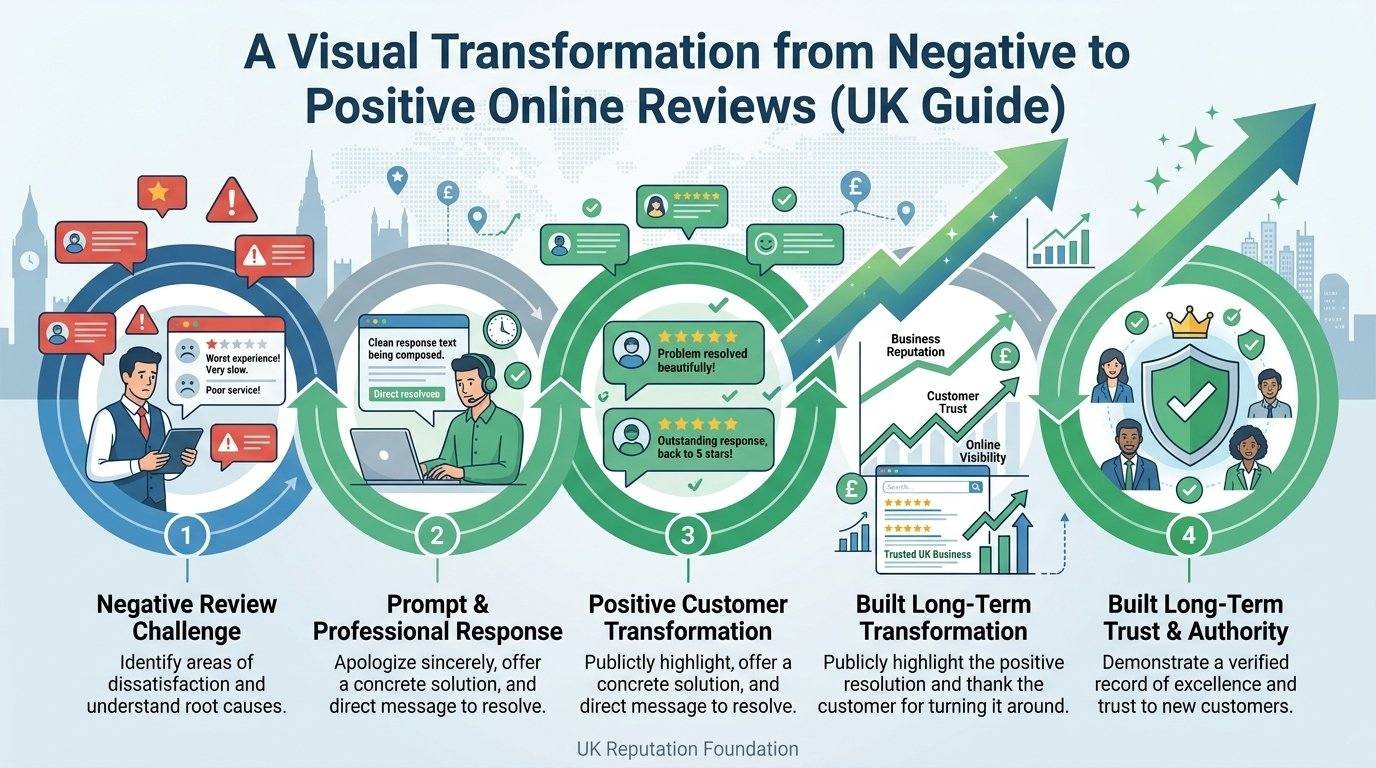
Managing Online Reviews Reputation Management
Every other part of a reputation strategy, content, PR, crisis planning, sits on top of one foundational layer: what your reviews actually say. A business can publish excellent content and secure great press coverage, but if the reviews underneath tell a different story, none of that other work holds up. Managing online reviews isn’t one tactic among many in reputation management. It’s the base everything else is built on.
By the end of this guide, you’ll know:
- Why reviews carry more weight in reputation management than almost any other signal
- The core process for managing reviews properly, from monitoring to response to generation
- The tools and platforms that make this manageable rather than overwhelming
What Does Managing Online Reviews Actually Involve?
Online review management is the ongoing practice of monitoring where your business is reviewed, responding to feedback consistently, and actively encouraging genuine reviews from real customers. It spans multiple business review platforms at once, Google, Trustpilot, industry-specific sites, and treats reviews as a living, two-way conversation rather than a static rating to check occasionally.
Done properly, it’s not a one-off task. It’s a habit that touches customer service, marketing, and search visibility all at once.
Why Reviews Are the Foundation, Not Just One Piece
Reviews sit closer to a purchase decision than almost any other reputation signal. A prospective customer reading a press mention is forming a general impression. A prospective customer reading reviews is actively deciding whether to buy, book, or hire. This makes review management disproportionately influential compared to other reputation efforts.
Reviews also feed directly into local search visibility. Local reputation signals, review volume, recency, and star rating, are factored into how prominently a business appears in local search results, meaning review management isn’t separate from SEO. It’s part of it.
Finally, reviews are the layer most difficult to fake convincingly and most trusted by consumers precisely because of that. Content can be produced. Press can sometimes be bought. Genuine reviews, built up over time through real customer experience, are much harder to manufacture, which is exactly why they carry so much weight with both customers and search engines.
How Review Management Connects to Everything Else
Poor review management doesn’t stay contained. A pattern of unanswered negative reviews undermines even strong content marketing, since a prospective customer who reads a great blog post will still check reviews before converting. It weakens crisis readiness too, since a business with no track record of engaging reviews has less credibility to draw on if a real crisis hits. And it directly affects local SEO, meaning weak review management can quietly suppress visibility even when everything else about a business’s online presence is strong.
How to Manage Online Reviews Properly
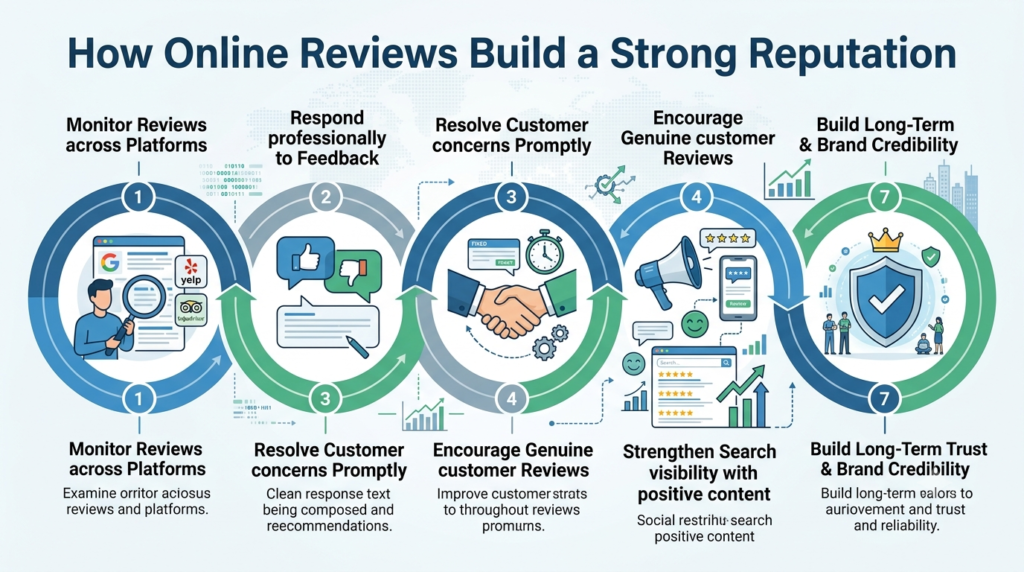
Step 1: Centralise Monitoring Across Platforms
Identify every platform where your business realistically gets reviewed, Google Business Profile, Trustpilot, and any industry-specific site relevant to your sector, and set up consistent monitoring across all of them rather than checking sporadically.
Step 2: Respond to Every Review, Not Just the Negative Ones
A thoughtful response to a positive review reinforces loyalty. A calm, specific response to a negative one demonstrates accountability to every future reader, not just the original reviewer. Silence on either end is a missed opportunity.
Step 3: Address the Root Cause of Recurring Complaints
If several reviews mention the same issue, treat that as an operational signal, not just a reputation one. Fixing the underlying cause is what actually stops the pattern, rather than just managing its visibility.
Step 4: Build a Genuine Review Generation Habit
Most satisfied customers won’t leave a review unprompted. A simple, direct request at the right moment, after a positive interaction, consistently outperforms passive hope. This is the single highest-leverage habit in the entire review management process.
Step 5: Track Sentiment Over Time, Not Just Star Rating
A star rating tells you the outcome. Reading the actual content of reviews over time tells you why, and that’s where the useful signal actually lives for improving both service and reputation strategy together.
Tips and Best Practices for Review Management
- Respond within 24 to 48 hours where possible, since prompt responses signal an actively managed business
- Never offer incentives in exchange for positive reviews, since this risks platform penalties and undermines genuine trust
- Keep responses specific rather than templated, since generic replies read as insincere to future readers
- Treat recurring complaints as an internal signal to investigate, not just an external one to manage
managing online reviews reputation management
Tools for Managing Online Reviews
- Google Business Profile, for monitoring and responding to your most visible review source
- A centralised review management platform, for tracking multiple sites from a single dashboard
- Search and review alerts, for catching new reviews as soon as they’re posted
- Sentiment tracking tools, for spotting patterns across review content over time, not just star ratings
For a deeper look at which specific UK platforms matter most for your sector, our guide to the best UK review sites breaks down where to prioritise effort.
Get Started With Review Management Today
If reviews haven’t been actively managed until now, start with the audit: see what’s currently there, respond to what’s outstanding, and put a simple, repeatable process in place going forward. This single habit does more to strengthen the rest of your reputation management strategy than almost any other individual effort. If you’re unsure whether your current situation needs more than routine management, our 10-point UK checklist for signs your business needs reputation management is a useful next step, and our practical guide for small business owners covers the fuller recovery process if reviews have already become a visible problem.
Frequently Asked Questions
How often should a business check and respond to reviews?
Ideally daily or every few days for active businesses, since prompt responses within 24 to 48 hours signal genuine engagement to both customers and search engines.
Do reviews really affect local search rankings?
Yes. Review volume, recency, and rating are recognised local search signals, meaning consistent review management contributes directly to local SEO performance, not just customer perception.
Is it better to focus on getting more reviews or improving the response rate to existing ones?
Both matter, but consistent response often has a stronger immediate impact on trust, since it demonstrates accountability regardless of review volume.
What should a business do about a cluster of similar negative reviews?
Treat it as a signal to investigate the underlying operational issue, not just something to respond to individually. Fixing the root cause is what actually stops the pattern from continuing.
Can a strong content or PR strategy make up for poor review management?
Not effectively. Reviews sit closer to the actual purchase decision than most other reputation signals, so weak review management tends to undermine even strong content or PR efforts.