
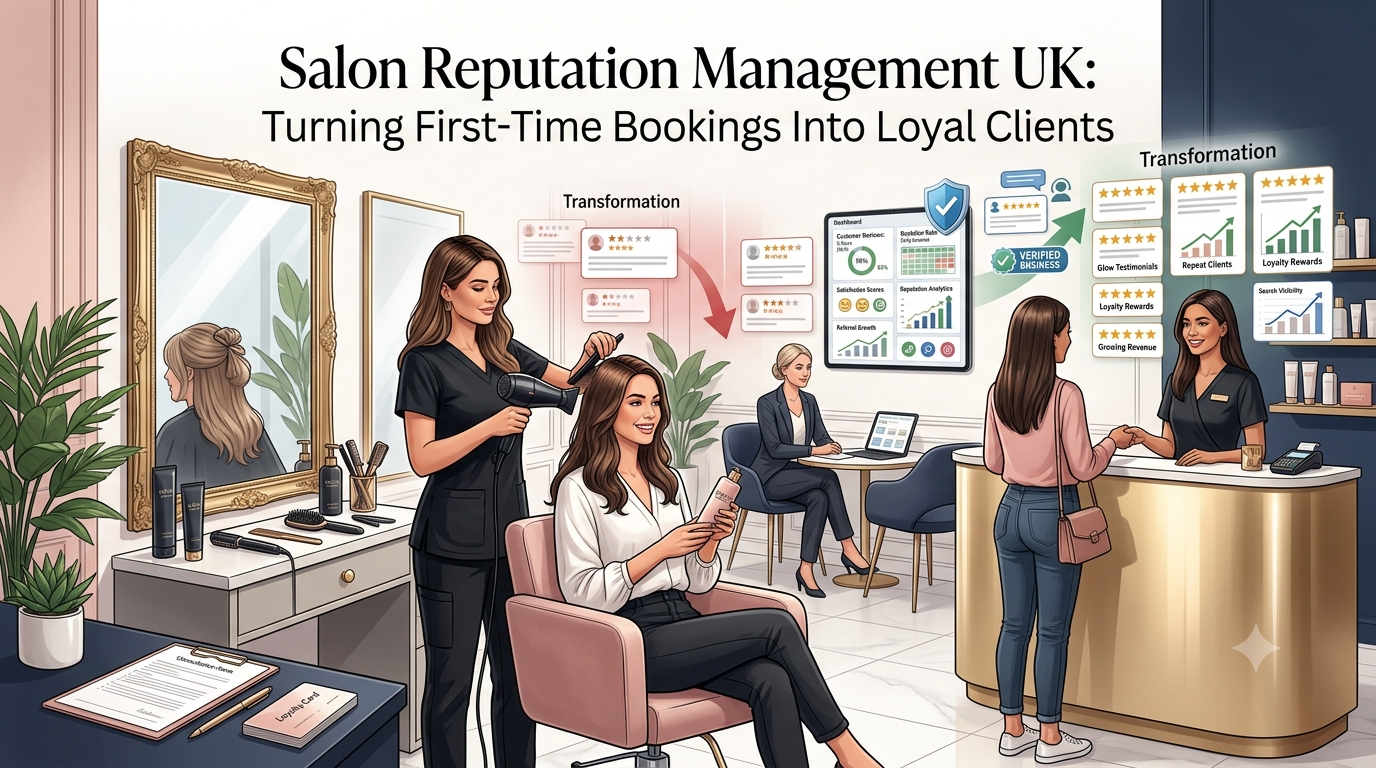
Salon Reputation Management
Here’s a number that should concern every salon owner using a booking platform: roughly two-thirds of first-time clients booked through Treatwell never come back. Given that Treatwell now charges its commission, typically 35% plus VAT, on that first booking regardless of whether the client actually shows up, salon reputation management isn’t just about looking good online. It’s about whether you keep paying that commission forever on a revolving door of one-time visitors, or build the kind of reputation that converts strangers into loyal, direct-booking regulars.
Why the Treatwell Economics Make Salon Reputation Management Genuinely Urgent
Since April 2025, Treatwell’s new-client commission applies even if the salon cancels the appointment, and combined with VAT, that advertised 35% works out closer to 42% of the actual booking value in real money. On a typical salon margin, a new client acquired through the platform can be genuinely unprofitable across their first two or three visits. This changes the entire calculation: salon reputation management stops being a marketing nicety and becomes the mechanism that determines whether a client ever becomes profitable at all, since only a strong, trustworthy first impression converts a one off Treatwell booking into a client who rebooks directly.
The NHBF Trust Signal Most Salons Underuse
Membership in the National Hair and Beauty Federation, the UK’s dedicated trade body for hair, beauty, and barbering businesses, offers a genuine, verifiable trust signal that many salons don’t actively promote. Clients researching where to book can search the NHBF’s salon directory to find member businesses, and displaying this membership alongside your Treatwell or Google reviews gives prospective clients an additional layer of confidence beyond platform generated star ratings alone.
What Actually Drives Negative Salon Reviews
A handful of specific issues show up consistently across the sector:
- No shows and last minute cancellations souring the client relationship before it starts. No-shows cost the average salon around 7% of monthly revenue, and the resulting scheduling chaos often bleeds into service quality for other clients booked around the gap, indirectly generating dissatisfaction that shows up in reviews unrelated to the original no-show.
- Inconsistent experience between different stylists or therapists within the same salon. A client’s entire impression of a salon often rests on whichever individual team member they happened to see, meaning uneven internal standards create wildly different review outcomes for people who technically visited the “same” salon.
- Unclear pricing, particularly for add on treatments. Reviews frequently cite surprise costs for extras, toner, extra length, additional products, as a source of lasting frustration, even when the core service itself was genuinely good.
- Platform-specific frustration bleeding into brand perception. Complaints about a booking platform’s own service, cancellation policies, notification failures, can end up directed at the salon itself in a review, even when the salon had no control over the platform issue.
How We Approach Salon Reputation Management
Our process starts with a full audit spanning your Treatwell reviews UK wide presence, Google Business Profile, and any salon specific platforms relevant to your local market, identifying where first time clients are dropping off and why. From there, we help build a structured approach to converting one-off bookings into repeat, direct relationships, since retention data shows that deposits alone can cut no show rates by around 65%, directly protecting both revenue and the consistent service quality that drives positive reviews.
Our guide to the UK review platforms that matter most covers where general review activity concentrates, useful context alongside the salon specific booking platform dynamics that make this sector distinct.
Turning Reviews Into Retention, Not Just Reputation
Beauty salon Google reviews carry particular weight because, unlike Treatwell reviews, they belong permanently to your Business Profile rather than disappearing if you ever reduce your platform spend. We help salons actively build this owned review base alongside their platform presence, since a client who found you through a marketplace but then reads strong, recent Google reviews is far more likely to book directly next time, avoiding the commission entirely and building a genuine, lasting relationship with your business.
Why Multi-Location Salon Groups Need Coordinated Standards
Salon reputation management becomes more complex for groups operating multiple locations, since Treatwell and Google reviews accumulate independently at each site while prospective clients often perceive the brand as a single entity regardless of which specific location they’re actually researching. A strong flagship salon can mask underperformance at a newer or smaller branch, while a single struggling location can quietly damage the wider group’s reputation among clients who’ve never actually visited it. Centralised monitoring across every location, paired with consistent standards for how each site handles bookings, deposits, and review responses, prevents this kind of reputational spillover far more effectively than treating each salon as an independent unit.
This coordination matters particularly given the Treatwell commission economics described above, since a group with several locations is effectively multiplying its exposure to first visit unprofitability across every branch simultaneously if retention strategy isn’t applied consistently group wide. For salons unsure whether their current reputation gaps warrant a more structured approach, our 10-point UK checklist for signs your business needs reputation management is a useful starting reference.
Building Consistency Across Every Stylist and Therapist
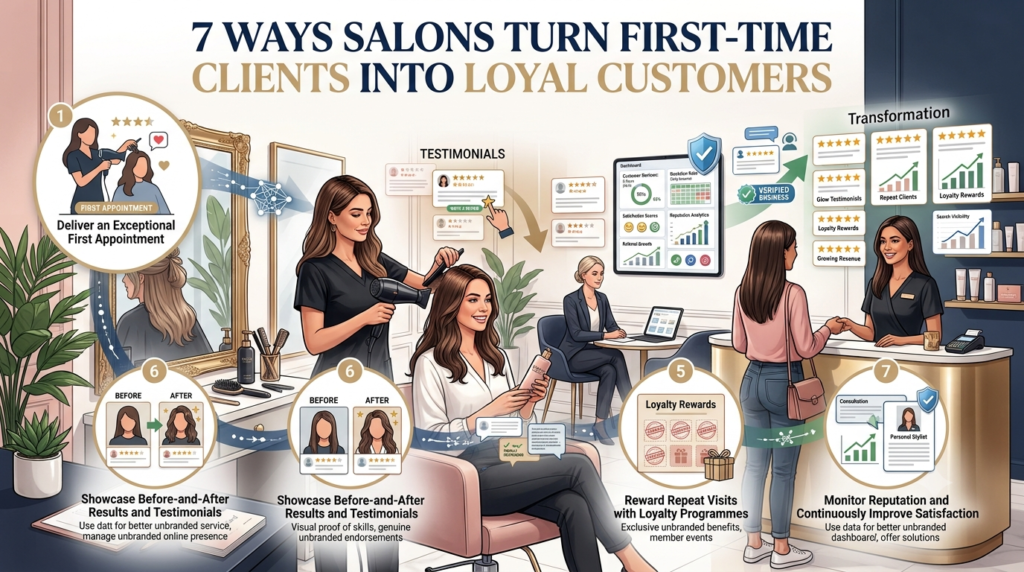
Effective salon reputation management has to work at the individual staff level, not just the salon brand level, since clients frequently research and request a specific stylist or therapist rather than the salon generically. This means training every team member in consistent service standards, clear pricing communication, and professional handling of client concerns, so a client’s experience doesn’t vary dramatically depending on which individual they happened to be booked with. Our guide to building a positive content strategy covers the broader principles behind building this kind of consistent, authoritative presence over time, applied here to a sector where individual staff reputation and salon reputation are closely intertwined.
Frequently Asked Questions
Why does Treatwell’s commission structure make reputation management more urgent for salons?
Because commission now applies even to cancelled first bookings, and most first time clients don’t return, a strong first impression that converts them into a repeat, direct-booking client is often the only way that client relationship becomes genuinely profitable.
Does NHBF membership actually influence client trust?
Increasingly, yes, since clients researching salons can search the NHBF directory specifically, and displaying membership alongside your reviews adds a verifiable trust signal beyond platform ratings alone.
How much do no-shows really cost a typical salon?
Around 7% of monthly revenue on average, and taking deposits at the point of booking has been shown to reduce no-show rates by roughly 65%, making this one of the highest return changes a salon can make.
Should a salon respond differently to a review criticising the booking platform versus the actual service?
Yes. A calm clarification distinguishing platform-level issues from the salon’s own service helps prevent unfair reputational damage from a problem genuinely outside the salon’s control.
What’s the single most effective way to reduce reliance on expensive platform commissions?
Building a strong, consistent base of owned Google reviews as part of genuine salon reputation management, alongside real client relationships that encourage direct rebooking, since this is what actually converts a one-off marketplace client into a loyal, commission-free regular.