

Reputation Management Company
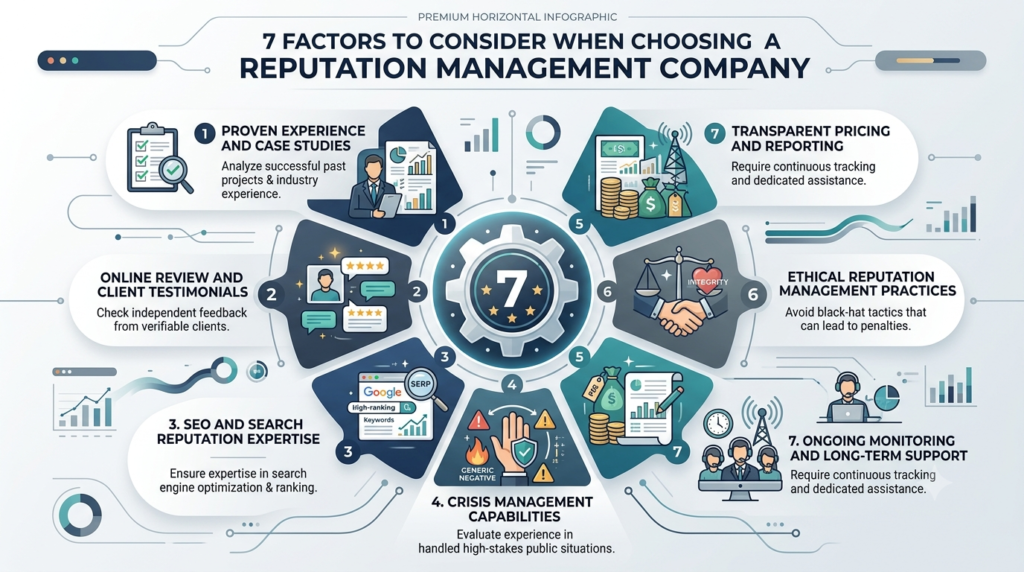
Hiring the wrong reputation management company can genuinely make a bad situation worse, not just waste your budget. Between agencies promising guaranteed results, providers using tactics that risk platform penalties, and firms with no real specialism in your specific industry, choosing well requires knowing what to actually look for rather than reacting to the most confident pitch.
This guide gives you a practical framework for evaluating any reputation management company, whether you’re comparing three local agencies or vetting a larger firm for a complex, ongoing engagement.
Start With What You Actually Need
Before comparing providers, get clear on your own situation. A single negative review cluster needs a different kind of help than an active legal dispute, a viral crisis, or ongoing proactive brand-building. A reputation management company that specialises in crisis response may not be the right fit for steady, long-term review management, and vice versa. Knowing which category you fall into narrows the field considerably before you even start comparing quotes.
Questions to Ask Every Reputation Management Company
A short, direct set of questions reveals more than any polished pitch deck:
- What’s your actual methodology? A credible provider can explain their process clearly. Vague answers about “proven strategies” without specifics are a warning sign.
- Can you show examples of similar work? Not necessarily named case studies, since confidentiality often applies, but a genuine description of comparable situations they’ve handled.
- What’s included in the price, and what’s billed separately? Get this in writing before signing anything, since scope creep is a common source of dissatisfaction later.
- How do you measure success, and how often will I get updates? Reporting cadence and metrics should be clear from the outset, not negotiated after the engagement starts.
- What happens if my situation changes mid-engagement? A good provider has a clear answer here rather than treating every situation as fixed and unchangeable.
Red Flags That Should End the Conversation
Certain signals reliably indicate a provider worth avoiding entirely, regardless of price or promises:
- Any guarantee of specific content removal. No legitimate agency can guarantee this, since it depends on platform policy or legal process, not agency effort alone.
- Suggestions of incentivised or fake reviews. This risks platform penalties and further reputational damage, and any provider proposing it should be treated as a serious concern.
- Pressure to sign quickly. Genuine urgency in your situation is understandable; pressure tactics from the provider itself generally aren’t.
- No clear methodology when asked directly. If a provider can’t explain their actual process in plain terms, that’s usually because there isn’t one worth explaining.
- Pricing that seems dramatically lower than every other quote. Reputation management pricing UK-wide varies, but an outlier-low quote often means corners are being cut somewhere that matters.
Comparing Reputation Management Pricing Without Just Chasing the Lowest Number
Reputation management pricing varies significantly by scope, urgency, and industry specialism, and the lowest quote rarely represents the best value once you factor in what’s actually included. Our complete pricing guide for UK reputation management breaks down typical pricing tiers in more detail, useful context to have before you start comparing quotes so you can spot when a number looks unusually low for the stated scope of work.
Checking a Provider’s Own Reputation Agency Reviews
It’s worth taking the time most people skip: actually checking the reputation agency reviews and public track record of a provider claiming to manage reputation for a living. A provider with no visible online presence, no genuine client feedback, or inconsistent claims across their own marketing is a meaningful signal, particularly given that reputation management is the exact service they’re supposed to be experts in themselves.
Industry Specialism Matters More Than Most People Expect
A reputation management company with genuine experience in your specific sector, healthcare, legal, financial services, hospitality, brings real advantages a generalist agency often can’t match: familiarity with sector-specific regulation, an understanding of which platforms actually matter to your audience, and realistic expectations about what’s achievable given your industry’s particular constraints. If your situation involves specific regulatory considerations, whether SRA compliance, FCA rules, or GMC obligations, confirm the provider has genuine experience navigating that landscape specifically, not just general reputation tactics applied to a new sector.
Understanding the Contract Before You Sign
A reputation management contract should clearly define scope of work, reporting frequency, cancellation terms, and what happens if the engagement needs to scale up or down as your situation changes. Vague contracts that leave these details open to later interpretation tend to cause the most friction down the line, regardless of how good the initial working relationship feels.
Making the Final Decision
Once you’ve narrowed your options using this framework, the final decision often comes down to communication quality during the sales process itself. A provider who asks sharp, specific questions about your actual situation before proposing a solution is generally a stronger signal than one leading with a generic package pitch. Our broader guide to reputation management services covers what a comprehensive engagement typically includes, useful as a final reference point before committing.
Frequently Asked Questions
How much should I expect to pay a reputation management company?
It varies significantly by scope and urgency, from modest monthly monitoring retainers through to larger project-based fees for complex crisis work. Always get a detailed breakdown before comparing quotes.
Is it a bad sign if an agency won’t guarantee results?
No, the opposite. Legitimate providers avoid guarantees because outcomes depend partly on factors outside their control, such as platform policy. A guarantee is actually the bigger warning sign.
Should I choose a specialist agency or a general marketing firm that also offers reputation services?
For a specific, active reputation issue, a specialist typically moves faster and understands the nuances more deeply. A general firm can work well if reputation is genuinely a core discipline for them, not just an add on service.
How long should a typical reputation management contract run?
This depends on the situation, but avoid open ended contracts with no clear review point. A defined initial term with a genuine review and renewal decision protects you if the engagement isn’t delivering.
What’s the single most important question to ask before hiring?
Ask them to explain their actual methodology in plain terms. A credible provider can do this clearly and specifically; a weak one falls back on vague language about experience and results.