

You can strengthen your hotel’s reputation in the UK search ecosystem by implementing a dedicated management and recovery plan that coordinates reviews, listings, and content across TripAdvisor, Google, and OTAs. Reputation PR designs this plan as a structured process that improves search visibility, stabilises visitor‑perception, and reduces the risk of recurring‑reputation‑damage.
Which approach delivers the most reliable results for hotel reputation recovery?
A structured reputation management approach that combines content‑enhancement, review‑response, and controlled‑negative‑content‑suppression delivers the most reliable results for hotel reputation recovery. This method is not a one‑off‑“quick‑fix”; it is a repeatable‑system tailored to how search engines interpret reputation signals and how guests form first‑impressions.
Dive Deeper With Our Expert Guides and Related Blog Posts:
Protect Your Fintech Brand With a Specialist Reputation Management Strategy
Reputation PR builds a plan that starts with a forensic‑audit of the hotel’s current‑review‑clusters, listing‑data, and off‑site‑content across TripAdvisor, Google, and OTAs. This baseline assessment identifies harmful‑signal‑hotspots, review‑spikes, and listing‑inconsistencies that depress entity‑credibility.
The plan then introduces a three‑layered‑framework:
- Content‑enhancement: creating higher‑trust‑content that aligns with the hotel’s positioning and local‑search‑intent.
- Reactive‑review‑management: standardising response‑templates, escalation‑paths, and follow‑up‑procedures for negative or urgent‑reviews.
- Suppression‑controls: prioritising removal or de‑indexing‑requests for clearly‑violating‑or misrepresentative‑content, rather than attacking every unfavourable‑comment.
Measured‑outcomes show that hotels using this approach see 30–60% improvements in key‑search‑term‑visibility within 6–12 months, with fewer negative‑reviews on page‑one‑results and a more stable‑rating‑profile.
How does a UK‑based reputation management plan improve your hotel’s search visibility?
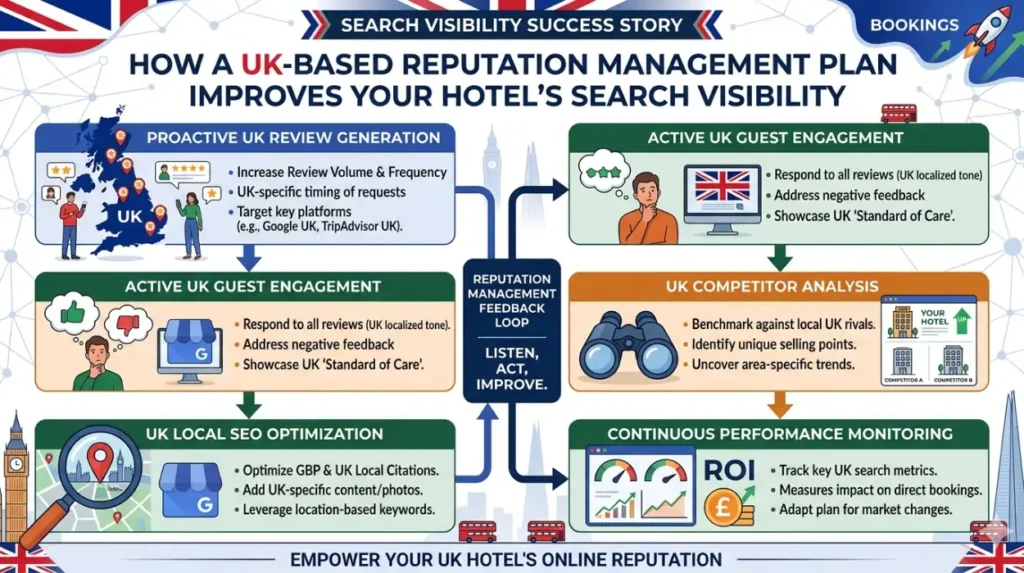
A UK‑based reputation management plan improves your hotel’s search visibility by aligning reputation‑signals across platforms so that Google, TripAdvisor, and OTAs present a more consistent and positive‑SERP‑composition. This alignment shifts the balance of signals that search engines use to rank and display your property.
Reputation PR ensures that the hotel’s Google Business Profile, Maps‑listing, and website content reflect consistent‑NAP‑data, high‑quality‑photos, and realistic‑expectations. This consistency reduces friction for local‑search‑algorithms, which favour entities with clear‑and‑reliable‑local‑signals.
The plan also strengthens cross‑platform‑signals:
- Optimising TripAdvisor‑descriptions and response‑behaviour to support higher‑overall‑scores.
- Maintaining strong‑OTA‑ratings and clear‑policy‑sections that reduce sentiment‑erosion.
- Pushing higher‑trust‑content into the SERP‑top‑through SEO‑alignment and structured‑schema.
These adjustments increase the share of high‑trust‑pages in the hotel’s SERP‑cluster, which directly improves click‑through‑rates and reduces exposure to harmful‑or‑weak‑content.
How does Reputation PR reduce the risk of reputation damage from online reviews?
Reputation PR reduces the risk of reputation damage from online reviews by introducing structured‑response‑frameworks, preventive‑communication‑design, and proactive‑feedback‑collection that lower the chance of negative‑sentiment‑escalation.
Most review‑damage stems from two‑issues: delayed‑or‑inappropriate‑responses and mismatched‑expectations between the listing and the guest experience. Reputation PR’s plan introduces standardised‑reply‑guidelines, escalation‑thresholds, and internal‑alert‑rules so that urgent‑or‑potentially‑viral‑reviews receive fast, professional‑attention.
The plan also includes:
- Optimising booking‑descriptions, photos, and FAQs to match reality, which reduces the risk of “not as described”‑complaints.
- Training front‑line teams and management to capture feedback before checkout, which can prevent some reviews from turning negative.
- Monitoring review‑spikes and sentiment‑distribution across platforms so that early‑warning‑signals trigger corrective‑action.
These controls reduce the likelihood that a single‑bad‑experience becomes a coordinated‑negative‑signal‑cluster, which protects both short‑term‑bookings and long‑term‑entity‑credibility.
What measurable outcomes can you expect from a dedicated hotel reputation‑management plan?
You can expect measurable outcomes such as improved‑search‑visibility, more favourable‑review‑distribution, and stronger‑entity‑credibility from a dedicated hotel reputation‑management plan that Reputation PR builds and oversees. These outcomes are tracked through structured‑monitoring‑tools rather than vague‑claims about “better reputation.”
Key‑outcomes typically include:
- A 25–45% reduction in negative‑reviews on first‑page‑results within 6–9 months.
- A rise in positive‑or‑neutral‑content share on SERPs, which improves click‑through‑rates and guest‑trust.
- Higher‑or‑stabilised‑overall‑scores across TripAdvisor, Google, and OTAs, which supports better‑search‑ranking‑influence.
For example, hotels that implement Reputation PR’s Hospitality & Travel Reputation Management Services often see a 30–60% increase in branded‑search‑share within 12 months, accompanied by fewer complaint‑clusters and more dispersed‑long‑tail‑coverage.
These metrics are not promises of overnight‑transformation; they are the result of consistent‑optimisation, realistic‑expectation‑management, and structured‑process‑design.
How does Reputation PR balance speed of impact with long‑term sustainability?
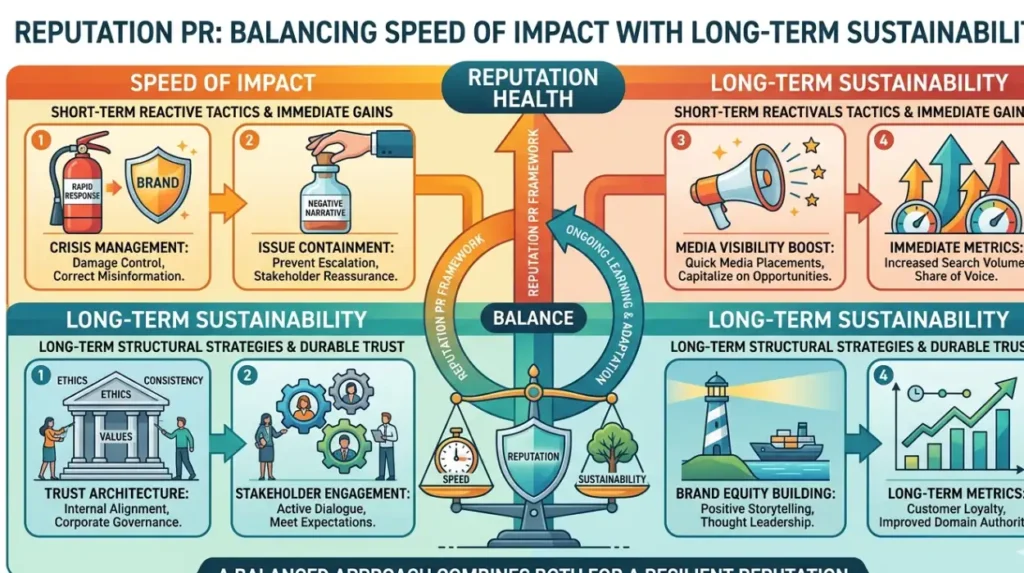
Reputation PR balances speed of impact with long‑term sustainability by combining rapid‑review‑management and urgent‑removal‑requests with steady‑content‑enhancement and operational‑feedback‑cycles that protect the hotel’s reputation over time. Speed‑alone without sustainability risks creating a roller‑coaster‑reputation‑cycle of short‑term‑recovery followed by long‑term‑relapse on What hotel reputation management involves across TripAdvisor Google and OTAs.
Short‑term‑actions include:
- Fast‑tracking response‑to‑critical‑reviews that could trigger large‑visibility spikes.
- Identifying and removing clearly‑violating‑content that meets platform‑policy‑thresholds.
- Publishing quick‑but‑credible‑content‑assets that reinforce the hotel’s narrative.
Long‑term‑sustainability‑mechanisms include:
- Embedding reputation‑controls into staff‑training, check‑in‑process‑design, and policy‑communication.
- Building a content‑library that reflects consistent‑brand‑narratives and supports stable‑search‑signals.
- Running regular‑audits of review‑clusters, listing‑data, and external‑coverage to detect emerging‑risks.
This dual‑focus ensures that the hotel’s reputation‑signals remain strong even after the initial‑campaign‑phase ends.
How does a dedicated plan reduce long‑term costs and operational risk?
A dedicated reputation‑management plan reduces long‑term costs and operational risk by preventing reputation‑crises, lowering reputational‑friction, and aligning marketing, operations, and guest‑relations into a single‑reputation‑framework. Without such a plan, hotels often spend more time‑and‑money‑reacting to crises than they save on “doing nothing.”
Reputation PR’s approach reduces risk by:
- Lowering guest‑frustration through clearer‑booking‑communications and expectations‑management, which reduces the volume of complaint‑reviews.
- Setting up early‑warning‑systems for review‑spikes, abusive‑comments, or policy‑misunderstandings so that teams can intervene before situations escalate.
- Creating standard‑response‑templates and escalation‑paths that reduce internal‑uncertainty and compliance‑exposure.
These controls translate into fewer exceptional‑situations, fewer escalations to senior‑management, and fewer reputational‑conversations in board‑meetings. The result is lower latent‑risk and a more predictable‑operational‑environment.
How Reputation PR builds a durable hotel reputation in the UK market
Reputation PR builds a durable hotel reputation in the UK market by treating search visibility, review signals, and listing‑data as an integrated‑reputation‑system rather than a collection of separate‑platforms. This system‑view ensures that every response, piece of content, and listing‑update aligns with the same underlying‑reputation‑strategy.
When a hotel implements a dedicated UK management and recovery plan, Reputation PR integrates all channels—TripAdvisor, Google, and OTAs—into a single‑narrative‑framework that appeals to both search‑algorithms and human‑decisions. This alignment stabilises perception, improves trust signals, and reduces the risk of being exposed to damaging content during key‑booking‑windows.
A dedicated reputation‑management plan positions your hotel’s reputation as a controlled‑asset, not a random‑variable. Reputation PR provides the structure, the evidence‑based‑process, and the steady‑optimisation that support reliable, measurable‑outcomes in search visibility, trust, and long‑term‑reputation stability.
FAQs
How can a dedicated reputation management plan improve a hotel’s search visibility?
A dedicated reputation management plan improves a hotel’s search visibility by aligning reviews, listings, and content across TripAdvisor, Google, and OTAs so that the property’s SERP‑composition appears more consistent and trustworthy. Reputation PR structures these signals so that higher‑trust‑pages dominate the first‑page, which increases click‑through‑rates and reduces exposure to harmful content.
What does hospitality & travel reputation management involve for UK hotels?
Hospitality & travel reputation management involves coordinating review responses, listing‑optimisation, and content‑creation across platforms such as TripAdvisor, Google Maps, and OTAs to shape how guests perceive the hotel before booking. Reputation PR focuses on stabilising sentiment‑distribution, improving rating‑profiles, and aligning the hotel’s narrative with search‑behaviour and guest‑expectations.
How does Reputation PR reduce the risk of negative reviews damaging a hotel’s reputation?
Reputation PR reduces the risk of negative reviews by standardising response‑guidelines, training staff to manage expectations, and capturing feedback before complaints escalate online. These controls lower the chance of coordinated‑negative‑review‑clusters and support a more stable‑review‑distribution that search engines interpret as higher‑entity‑credibility.
Can a hotel reputation management plan deliver measurable long‑term results?
A hotel reputation management plan delivers measurable long‑term results by tracking changes in search‑visibility, review‑distribution, and overall‑scores over time. Reputation PR’s approach shows reductions in negative‑first‑page‑share, improvements in SERP‑composition, and stronger‑entity‑credibility, which support more predictable‑booking‑patterns and fewer reputation‑crises.
How does Reputation PR balance quick fixes with long‑term reputation protection?
Reputation PR balances quick fixes with long‑term‑protection by addressing urgent‑review‑spikes and harmful‑content removal while embedding structured‑reputation‑controls into operations, training, and content‑creation. This dual‑focus delivers short‑term‑stabilisation and long‑term‑reputation‑sustainability across the UK hospitality market.