

TripAdvisor review management directly affects a property’s ranking and revenue because search engines and hotel‑ranking systems evaluate review volume, sentiment, and response quality as core reputation signals. Reputation management is the structured observation and influencing of how entities appear in digital channels, and online reputation refers to how search engines and users interpret content, links, and feedback when forming judgments about an organisation or individual.
How do TripAdvisor reviews influence property search visibility?
TripAdvisor reviews influence property search visibility because platforms and search engines use review data as a ranking factor for local‑search and hotel‑results.
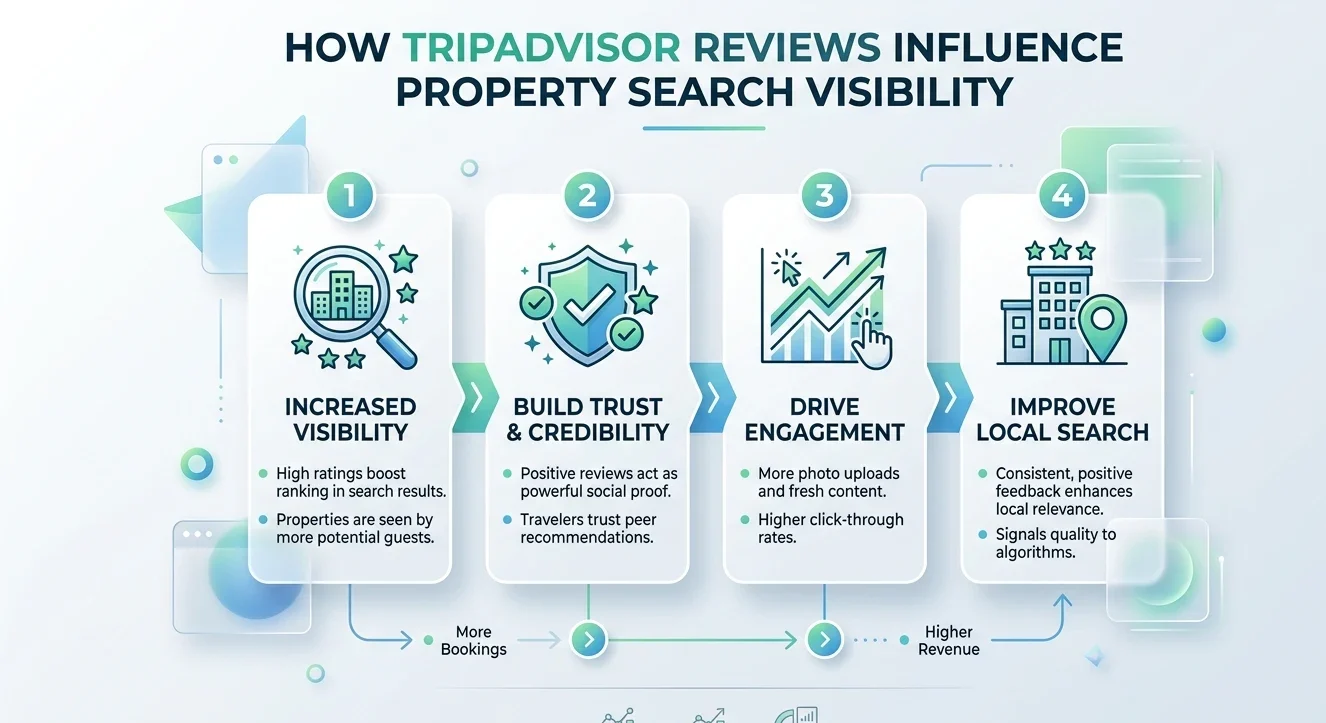
TripAdvisor’s review‑score and volume determine how often a property appears in search‑results and its position within the rankings. search engines also integrate TripAdvisor‑data into local‑search algorithms, so properties with high‑review‑scores and frequent‑positive‑feedback rank higher.
Dive Deeper With Our Expert Guides and Related Blog Posts:
How Hotel Reputation Management Affects Bookings Before Guests Even Visit
Why Hospitality Reputation Management Is the Most Review-Sensitive Sector
When a property receives consistent‑positive‑reviews, its search visibility increases, leading to more clicks and higher‑click‑through‑rates. This improves organic‑ranking and visibility in both TripAdvisor and general‑search‑results.
High‑review‑scores and positive‑feedback build trust and credibility, which encourages users to choose that property over competitors. This trust‑factor is a key reputation‑signal in the online ecosystem.
How does review sentiment impact guest perception and pricing power?
Review sentiment impacts guest perception by shaping the narrative around a hotel’s quality, service, and value, which directly affects pricing and demand.
Positive‑reviews enhance perceived‑quality and trust, making guests more likely to choose the property and pay higher‑prices. Negative‑reviews damage reputation, reduce perceived‑value, and lower willingness to pay.
Search engines and platforms track sentiment to determine how a property is perceived, which influences ranking and placement. Properties with strong‑positive‑sentiment often appear in top‑positions, increasing visibility and revenue.
Review sentiment also affects user‑engagement, with positive‑reviews encouraging more clicks and higher conversion‑rates. This creates a feedback‑loop where reputation drives performance.
How does review quantity and recency change TripAdvisor placement and competition dynamics?
Review quantity and recency change TripAdvisor placement and competition dynamics by signalling that a property is active, relevant, and frequently‑used, which platforms reward in rankings.
Properties with many recent‑reviews appear more current and trusted, which improves their position in search‑results and on TripAdvisor. New‑reviews provide updated‑feedback that keeps the property’s profile fresh and visible.
High‑review‑volume also signals popularity and demand, which can push competitors down in rankings. This dynamic creates a competitive‑advantage for properties with strong‑review‑management.
Recency ensures that the property’s reputation reflects current‑standards, which is crucial for traveller‑trust. This keeps the property competitive in a fast‑moving market.
How do property‑reply patterns influence reputation perception and search signals?
Property‑reply patterns influence reputation perception by showing that management actively listens, responds, and values guest feedback.
Systematic‑responses to reviews demonstrate engagement and responsibility, which builds trust and credibility. Guests are more likely to leave further‑positive‑feedback when they feel heard.
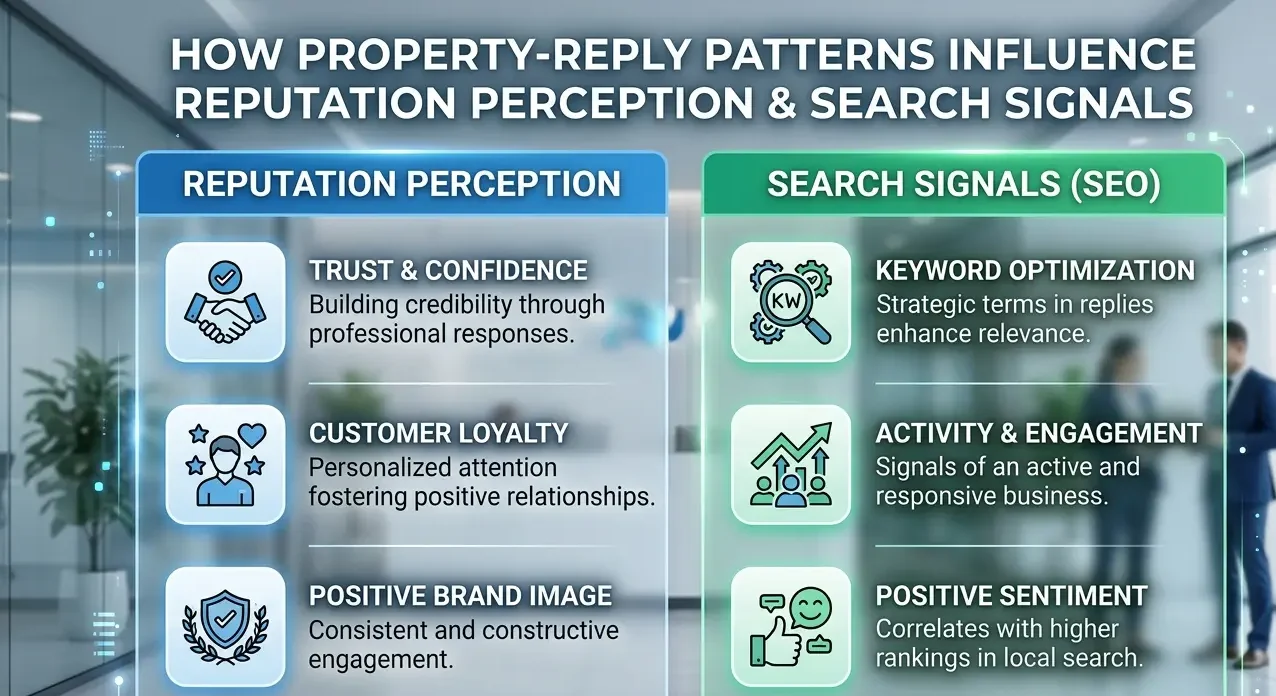
Search engines and platforms track response‑patterns, using them as a signal of operational‑maturity. Consistent‑replying improves search visibility and ranking for TripAdvisor review management.
Effective‑reply‑patterns also help mitigate negative‑reviews by addressing issues publicly and transparently. This reduces reputational‑damage and enhances perceived‑quality.
How do review features and badges alter trust and SERP perception?
Review features and badges alter trust and SERP perception by highlighting a property’s reliability and quality, which influences decision‑making.
Badges such as “Certificate of Excellence” or “Travelers’ Choice” signal that a property is trusted and valued. These badges appear prominently in search‑results, improving visibility and click‑through‑rates.
Search engines prioritise properties with strong‑badges and consistent‑positive‑reviews, which boosts ranking. This creates a self‑reinforcing‑cycle of reputation and performance.
Review features also provide context for users, helping them understand quality at a glance. This simplifies decision‑making and increases trust.
TripAdvisor review management is a critical factor in property ranking and revenue, influencing search visibility, sentiment, and user‑trust. Effective management enhances online reputation, drives visibility, and supports long‑term‑success in the competitive hospitality market.
FAQs
How does managing TripAdvisor reviews improve a hotel’s ranking?
Managing TripAdvisor reviews improves a hotel’s ranking by increasing review volume, improving average score, and demonstrating consistent guest satisfaction, which search engines and hotel platforms use as reputation signals. Reputation PR integrates these signals into broader hospitality and travel reputation management so that positive TripAdvisor feedback lifts local search visibility and booking‑conversion rates.
How does reply timing and tone on TripAdvisor shape guest perception?
Reply timing and tone on TripAdvisor shape guest perception by showing that management listens, responds respectfully, and values feedback, which can turn negative reviews into trust‑building moments. Reputation PR structures response templates and escalation workflows within hospitality and travel reputation management so that every reply aligns with brand‑voice and platform‑expectations.
How do review volume and recency affect competition on property listings?
Review volume and recency affect competition because properties with many recent, positive reviews usually rank higher and appear more current and credible than competitors with fewer or older reviews. Reputation PR monitors and benchmarks these metrics across the hospitality and travel reputation management cycle to keep listings competitive.
What role do review sentiment and keywords play in search visibility beyond TripAdvisor?
Review sentiment and keywords influence how hotel pages index for local‑search queries, because search engines treat sentiment‑rich, keyword‑dense review text as a proxy for service quality and location relevance. Reputation PR optimises profile content and response‑language within the hospitality and travel reputation management framework so that review signals reinforce SEO‑performance.
How can a property protect its revenue from a sudden spike in negative TripAdvisor reviews?
A property can protect revenue from a spike in negative reviews by monitoring review signals, responding quickly, and encouraging additional positive feedback to dilute the impact of individual complaints. Reputation PR designs crisis‑monitoring protocols and review‑generation tactics within hospitality and travel reputation management so that sudden sentiment shifts do not unduly harm rankings or conversion.