
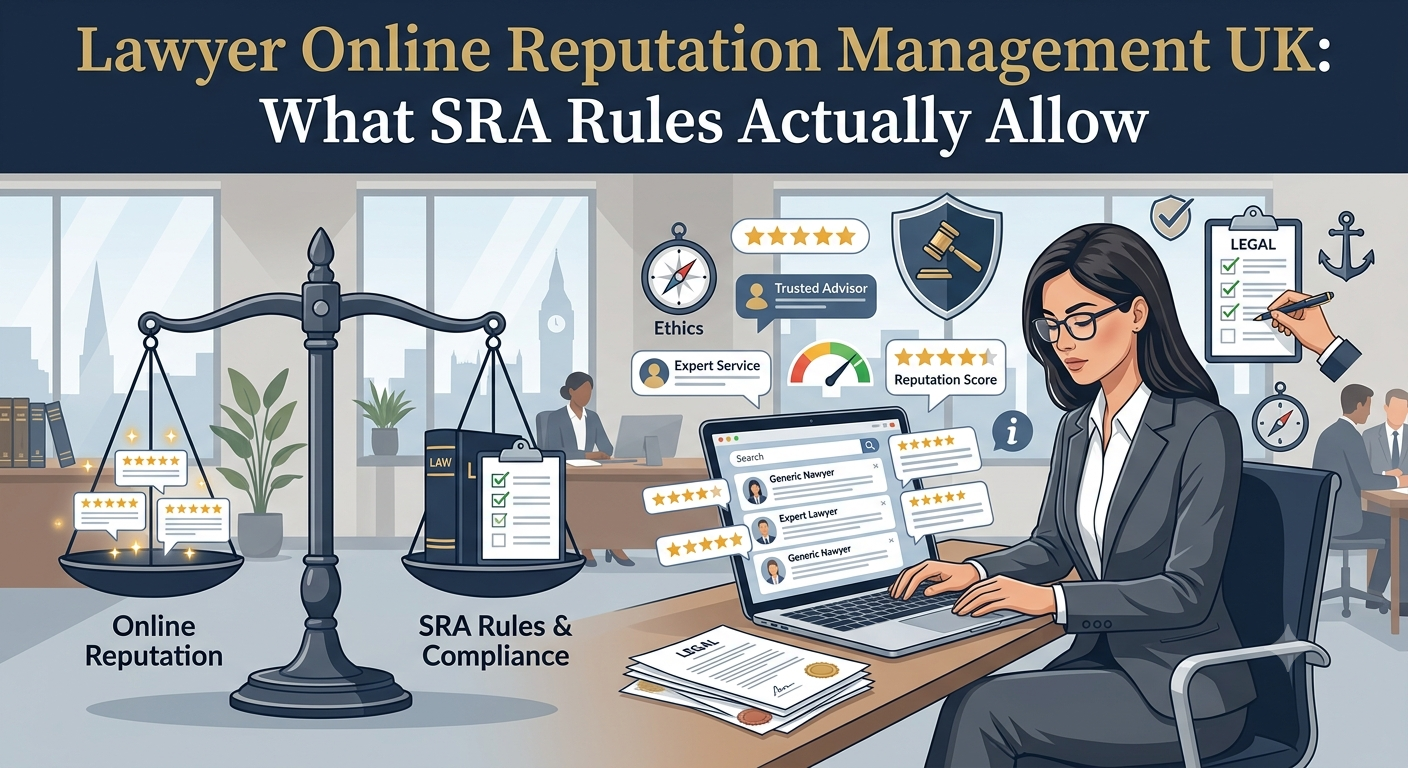
Lawyer Online Reputation Management UK
Before a prospective client ever picks up the phone, they have usually already searched your name. What they find, a strong set of reviews, a professional profile, or an unresolved complaint sitting on page one, shapes their decision before you get the chance to make your case directly. For UK solicitors, lawyer online reputation management UK strategy is not optional marketing polish. It is a practical necessity in a profession where trust is the entire product being sold. This is really a specific application of online reputation management, applied to a profession where public perception and regulatory compliance are equally important.
Unlike most industries, solicitors operate under specific regulatory constraints from the Solicitors Regulation Authority (SRA) that shape what reputation management can and cannot involve. Understanding this framework is the difference between a strategy that builds genuine online reputation and one that creates regulatory risk.
Why Reputation Management for Lawyers Works Differently
Legal services are what regulators describe as a “credence good,” meaning clients often cannot judge the quality of the work until well after it has been delivered, sometimes not even then. This makes reputation, and specifically online reputation, disproportionately important compared to industries where quality is easier to verify upfront. A search result showing consistent, genuine positive reviews does real work in closing that information gap before a client ever sits down with you.
Search visibility for solicitors is shaped by several overlapping sources: Google Business Profile reviews, listings on legal directories such as the Law Society’s Find a Solicitor and ReviewSolicitors.org.uk, press mentions, and general search results for the firm or individual’s name.
What the SRA Actually Allows and Restricts
Any reputation strategy for a solicitor has to work within the SRA’s Code of Conduct, not around it. A few rules matter most in practice:
- No misleading or exaggerated claims. SRA Principle 4 requires honesty in all communications, which explicitly rules out exaggerated success rate claims or misleading testimonials, however tempting they might be for marketing purposes.
- No unsolicited approaches. Rule 8.9 prohibits contacting members of the public directly to advertise legal services, aside from existing or former clients. This affects how outreach-based reputation tactics, such as directly messaging people who left reviews elsewhere, can be used.
- Transparency on pricing. Firms are not required to publish exact fees, but must give clear cost information rather than vague or misleading pricing signals in marketing content.
- Real consequences for getting this wrong. The Solicitors Disciplinary Tribunal has previously suspended a solicitor for six months, and imposed a further two-year restriction on managing any firm, after they posted false claims on Facebook about representing clients in court proceedings they had not actually handled. This is a useful reminder that reputation-related marketing missteps are not just a PR risk for solicitors, they can trigger formal regulatory action.
Building an SRA-Compliant Reputation Management Strategy for Reviews
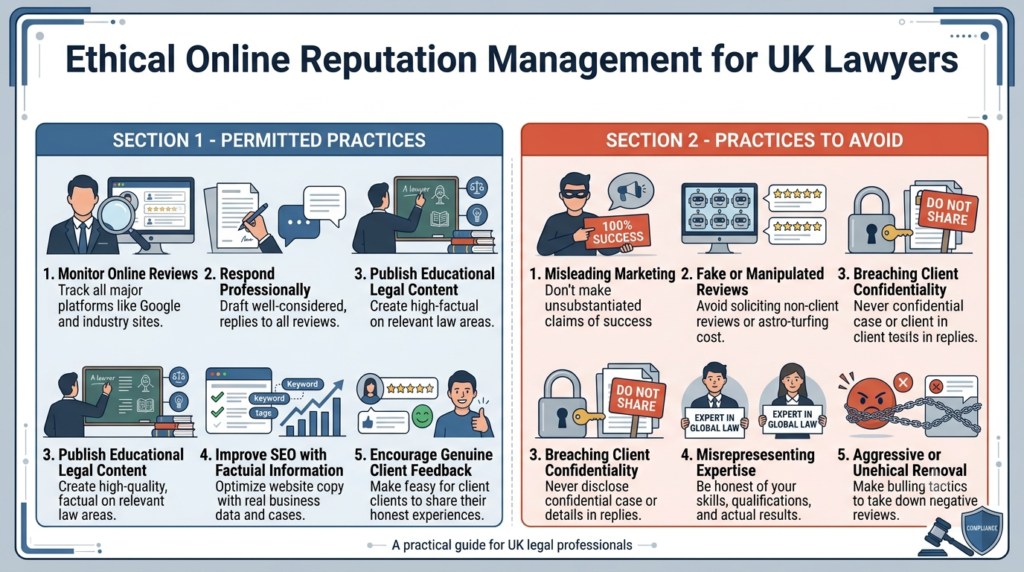
Genuine client reviews remain one of the strongest reputation assets available, provided they are collected and presented correctly. This means never incentivising or selectively soliciting only positive feedback, always ensuring reviews reflect real client experiences, and responding to negative reviews factually and calmly rather than defensively, while respecting client confidentiality at all times.
A consistent flow of genuine reviews across Google and relevant legal directories does more long-term work than any single piece of promotional content, since it reflects the kind of sustained, credible trust signal that both clients and search engines respond to.
Strengthening Your Legal Directory Presence
Beyond Google, UK legal directories carry real weight with prospective clients specifically because they are trusted, sector-specific sources. Keeping your Law Society Find a Solicitor listing, ReviewSolicitors.org.uk profile, and any relevant Chambers or Legal 500 entries accurate and current is a foundational step that many firms neglect simply because it feels less urgent than active marketing.
Handling Negative Content and Complaints
If a former client leaves an inaccurate or unfair review, client confidentiality obligations mean you generally cannot discuss the specifics of the matter publicly to defend yourself, even when you disagree with the account given. A calm, general acknowledgement, without confirming or denying any client details, is usually the safest and most professionally appropriate response.
For more serious cases involving false statements that go beyond a negative opinion, particularly anything that could constitute defamation, this moves outside the scope of reputation management into genuine legal territory, and is worth addressing with a solicitor experienced in media law rather than through search strategy alone.
Building Long-Term Authority
Beyond reviews and directories, genuine thought leadership content, case commentary written within client confidentiality limits, contributions to legal publications, and speaking opportunities all build the kind of durable authority that search engines and prospective clients both respond to. This is the long game of lawyer reputation management UK firms increasingly compete on, and it works more slowly than review management alone, but tends to compound over time into a much stronger overall search presence.
Frequently Asked Questions
Can a solicitor respond publicly to a negative review?
Yes, but the response must avoid confirming or discussing specific client details due to confidentiality obligations. A general, professional acknowledgement is the safest approach, even when the review feels unfair or inaccurate.
Are testimonials allowed under SRA rules?
Genuine testimonials are permitted, but they must be accurate and not misleading, and cannot be used to make exaggerated claims about success rates or outcomes.
Can a law firm ask clients to leave reviews?
Yes, general requests for feedback are acceptable, but selectively soliciting only positive reviews, or offering incentives for them, risks breaching SRA honesty and integrity principles.
What should a solicitor do about a defamatory online review?
If a review contains false statements of fact rather than genuine opinion, and causes serious harm, this may meet the threshold for defamation. Speaking with a solicitor experienced in media law is the appropriate next step, separate from standard reputation management.
How long does it take to build a strong lawyer online reputation?
Foundational fixes, such as accurate directory listings, can improve quickly. Building a consistent flow of reviews and search authority typically takes several months of sustained, genuine effort rather than a one-off campaign.