
Negative Review Response
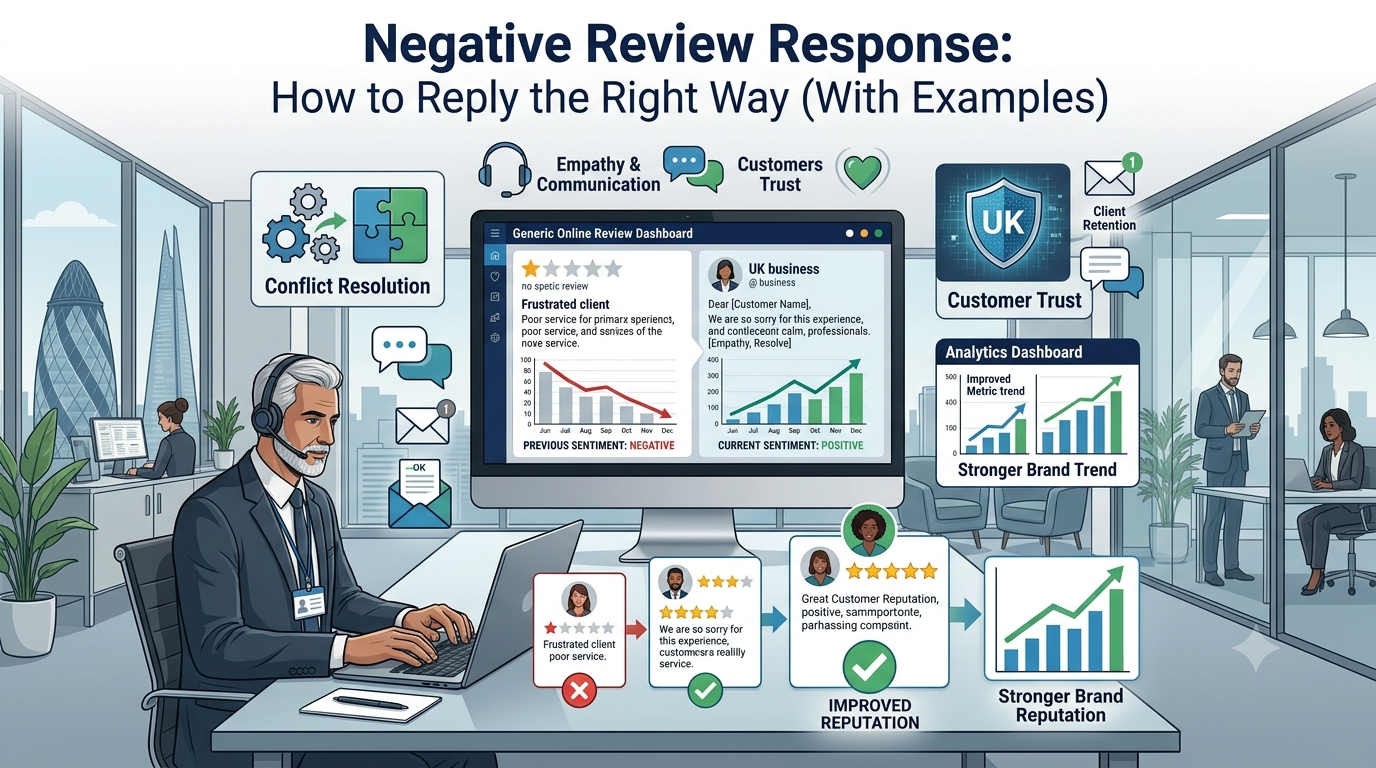
Every business gets one eventually, a review that stings, feels unfair, or points to something that genuinely went wrong. What happens next matters more than the review itself, because a thoughtful negative review response is read by every future customer deciding whether to trust you, not just the person who left it. We help businesses turn this exact moment into a demonstration of professionalism rather than a source of ongoing damage.
Why Your Negative Review Response Matters More Than the Review
A negative review disappears into the background within days. A poor negative review response, defensive, dismissive, or absent entirely, stays visible indefinitely, shaping how every subsequent reader perceives the business. Research into consumer behaviour consistently shows that prospective customers pay close attention to how a business handles criticism, often more than they weigh the original complaint itself. A calm, specific, professional response can leave a stronger impression than if the negative review had never appeared at all.
The Anatomy of a Strong Negative Review Response
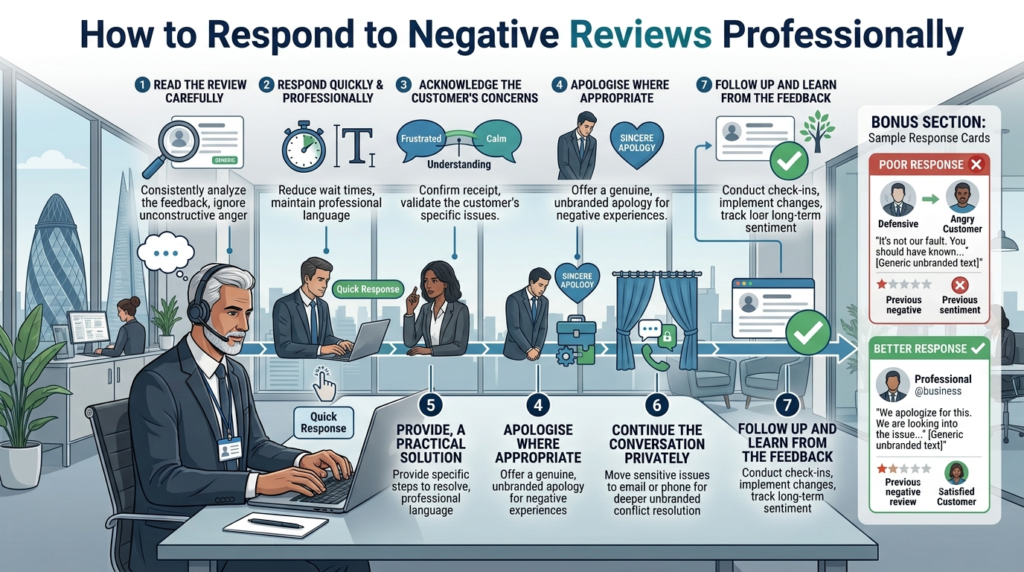
Every effective reply shares the same core structure, regardless of industry or platform:
- Acknowledge the specific issue raised, rather than a generic “sorry for your experience” that reads as templated and insincere
- Take ownership where it’s genuinely warranted, without over-apologising for things outside your control
- Offer a concrete next step, whether that’s an invitation to discuss the issue privately or a specific fix already underway
- Keep it brief and professional, since an overly long, defensive reply often does more damage than the original review
Three Real Negative Review Response Examples
Example 1: A genuine service complaint. “Thank you for letting us know about this, and I’m sorry the wait time didn’t meet what we aim for. We’ve since adjusted staffing during peak hours to address exactly this. I’d welcome the chance to make this right, please reach out directly at [contact] so I can follow up personally.”
This works because it acknowledges the specific complaint, confirms a real operational change, and offers a direct path to resolution without being defensive.
Example 2: A review that feels unfair or exaggerated. “We take feedback like this seriously and have looked into your visit specifically. Our records show [brief, factual clarification], though we’re sorry the experience didn’t feel that way to you. We’d genuinely welcome a conversation to understand what we could have done differently, please contact us directly.”
This handles a disputed account without arguing publicly, offering a factual clarification while still inviting further conversation rather than escalating.
Example 3: A review that appears to be about the wrong business. “We want to make sure we’re addressing this properly, our records don’t show a visit matching these details. If you could contact us directly with your booking reference or visit date, we’d be glad to look into this further.”
This handles a likely misdirected review calmly, without accusing the reviewer of lying, while still protecting the business from an inaccurate association.
Common Mistakes That Make a Negative Review Response Worse
A few patterns consistently turn a manageable review into a bigger problem: responding emotionally or defensively rather than factually, arguing point by point in public rather than inviting a private conversation, copying the same generic reply across every review regardless of what was actually said, and waiting too long to respond, since a delayed reply reads as indifference to future readers regardless of the reason.
How We Help Businesses Build a Review Response Strategy
Beyond individual replies, we help businesses build a consistent, sustainable approach: response time targets, tone guidelines that stay consistent across every team member handling reviews, and a clear process for identifying which reviews need escalation beyond a standard reply. Our guide to reputation damage control in the first 48 hours covers the broader framework for situations that move beyond a single review into a genuine reputational incident.
Our guide to the UK review platforms that matter most is a useful reference for understanding where review response actually needs to happen across different platforms, since tone and format expectations vary meaningfully between Google, Trustpilot, and industry specific sites.
When a Review Needs More Than a Standard Response
Occasionally, a review goes beyond a standard negative review response, containing false statements of fact, abusive language, or a pattern suggesting a coordinated attack rather than genuine feedback. Our guide diagnosing common causes of business reputation decline helps identify whether what you’re seeing is an isolated review or part of a larger pattern requiring a different, more structured response.
How Response Expectations Differ Across Platforms
Not every platform expects the same tone. Google reviews are highly visible in search results and tend to warrant a slightly more formal, brand consistent tone, since they’re often the first thing a prospective customer reads about your business. Trustpilot responses can afford to be a touch more conversational, reflecting the platform’s community driven feel, while industry-specific review sites often expect responses that demonstrate genuine sector knowledge rather than generic customer service language. Understanding these subtle differences helps a response land the way it’s intended rather than feeling mismatched to where it actually appears.
Social media adds another layer entirely, since a negative comment on Facebook or a public reply on X is visible in real time to anyone scrolling past, not just someone actively researching your business. Responses here benefit from being faster and slightly more concise than a formal review reply, while still following the same core principles of acknowledgement, ownership, and a clear next step.
Building Consistency Across a Larger Team
For businesses with multiple staff members responding to reviews, consistency becomes its own challenge. Without shared guidelines, one team member’s warm, detailed replies can sit alongside another’s terse, defensive ones on the same review page, creating a confusing, inconsistent impression for anyone reading through several responses in sequence. Establishing a simple internal style guide, tone, structure, approval process for anything beyond a routine reply, helps ensure that whoever handles a given review, the response still reflects the same standard of professionalism the business wants to be known for.
Frequently Asked Questions
Should I always respond to negative reviews, even ones that feel unreasonable?
Yes, in almost every case. A calm, professional negative review response demonstrates accountability to every future reader, even when the original review itself feels unfair or exaggerated.
How quickly should a business respond to a negative review?
Within 24 to 48 hours where possible, since a prompt reply signals genuine engagement, while a delayed response is often read as indifference regardless of the actual reason for the delay.
Is it ever appropriate to dispute a review publicly?
Rarely as a full public argument. A brief, factual clarification is fine, but detailed public disputes tend to make a business look defensive, even when the underlying facts are on their side.
Should every response be personalised, or is a template acceptable?
Personalisation matters. A generic, copy pasted reply used across every review reads as insincere to attentive readers comparing responses across multiple businesses.
What should I do if a negative review contains false information? Respond factually and calmly first, then pursue the platform’s official reporting process for content that violates their policies, rather than escalating publicly before attempting the correct channel.