
Personal Reputation Management
Becoming a company director changes how visible you are online, often more than people expect. Your name, appointment date, and company associations become part of the public Companies House register, and search engines index this information quickly. This is exactly where personal reputation management becomes valuable, since preparing in advance means potential clients, investors, journalists, and business partners find an accurate, professional picture of you rather than whatever happens to surface first.
This is not about hiding anything. It is about making sure the right information is visible and easy to find when people inevitably look you up.
Why Personal Reputation Management Matters for New Directors
Once appointed, your name becomes searchable through the Companies House register, showing your role, appointment date, and any other directorships you hold. Journalists, due diligence teams, and even casual searchers can access this information easily. Combine this with existing personal social media, old news mentions, or unrelated namesakes, and the picture that appears in a search can be more complicated, and sometimes more misleading, than you would expect.
Building a strong online presence before becoming a director means this new visibility works in your favour rather than exposing gaps or outdated information. This is precisely the kind of situation personal reputation management is designed to address, since it focuses on shaping what appears first when your name is searched.
Step One: Search Your Own Name First
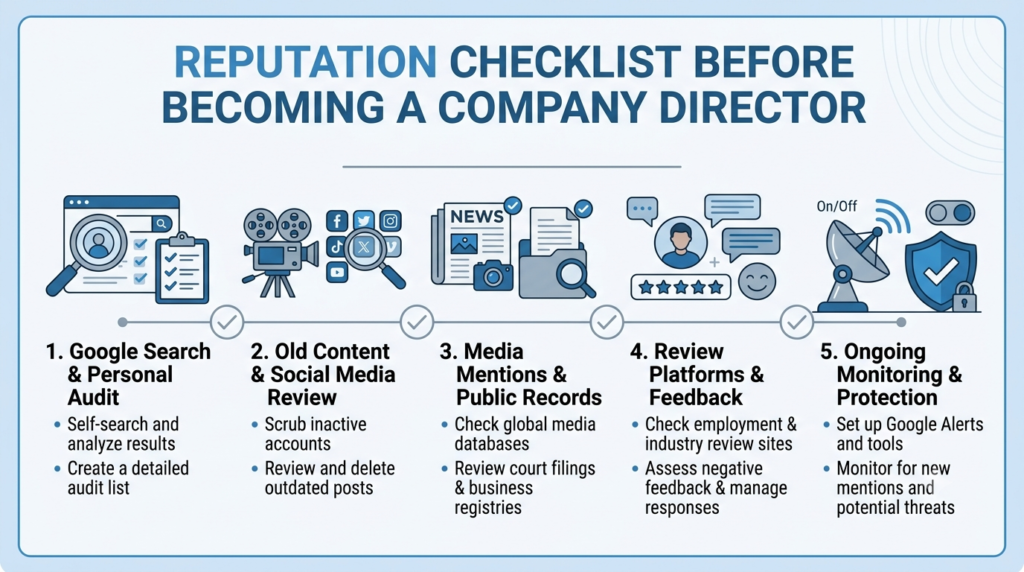
Before anything else, search your full name in different formats, including any previous names, in both a standard search and a news-specific search. This gives you a realistic baseline of what currently exists, including old profiles, forgotten social media accounts, outdated contact details, or content connected to someone who shares your name.
Step Two: Clean Up Outdated or Inconsistent Profiles
Review any old social media accounts, forum posts, or professional profiles that no longer reflect your current role or values. Update your LinkedIn profile to clearly reflect your new position, ensure your professional history is accurate and consistent, and remove or archive content that could be taken out of context by someone unfamiliar with you.
Consistency matters here. If your name, job title, or company details differ across platforms, it can create confusion or look unprofessional to someone conducting due diligence.
Step Three: Strengthen Your Professional Presence
A director benefits from having a visible, credible professional footprint that ranks well for their own name. This includes:
- A complete, regularly updated LinkedIn profile with a clear summary of your role and experience
- A professional bio on your company website, if one exists
- Any relevant press mentions, interviews, or industry contributions
- Membership or verified profiles on relevant professional or industry bodies
This content naturally ranks well for personal name searches and gives context before anyone reaches the Companies House record itself.
Step Four: Set Up Ongoing Monitoring
Once appointed, set up simple search alerts for your name so you are notified of new mentions, whether that is press coverage, a review, or a new directorship being reported. Directors are more likely to be mentioned in industry news, so catching this early means you can respond quickly if anything appears inaccurate or requires context.
Step Five: Understand What You Cannot Control
Some information, such as your basic Companies House record, is a matter of public law and cannot be removed simply because it feels exposing. The registrar of companies maintains this information for legitimate transparency reasons, and it is not something reputation management or search strategy can alter directly.
What you can influence is everything around it, meaning the accurate, positive, and current content that appears alongside it when someone searches your name. This is where personal reputation management earns its value, since it works within the space that is actually controllable.
Step Six: Know When a Complication Needs Extra Support
If you are becoming a director after a previous business dispute, a past company insolvency, or any existing negative press, it is worth addressing your online presence proactively rather than waiting for a client or investor to raise it first. In more complex cases involving factually incorrect content or serious reputational risk, professional personal reputation management support can help build a stronger, more balanced search presence ahead of your appointment.
Frequently Asked Questions
Can I keep my name off the Companies House register as a director?
No. Director details, including your name and appointment date, are a matter of public record once you are formally appointed, though a residential address can in some cases be kept private using a service address instead.
How long before becoming a director should I start preparing my online presence?
Ideally a few weeks to a couple of months in advance, giving enough time to update profiles, address any outdated content, and let new positive content begin to establish itself in search results.
Will old social media posts affect how I am perceived as a new director?
They can, particularly if they are inconsistent with your professional image or easily taken out of context. Reviewing and tidying up older accounts before your appointment is a sensible precaution.
Does having a common name make this less important?
Not necessarily. A common name can create its own challenges, since search results may mix your information with unrelated people, making it even more important to build a clear, distinct professional presence.
What if I already have negative content from a past business issue?
Address it proactively rather than hoping it goes unnoticed. Depending on the nature of the content, this may involve professional reputation management, and in cases involving false claims, advice from a solicitor.