
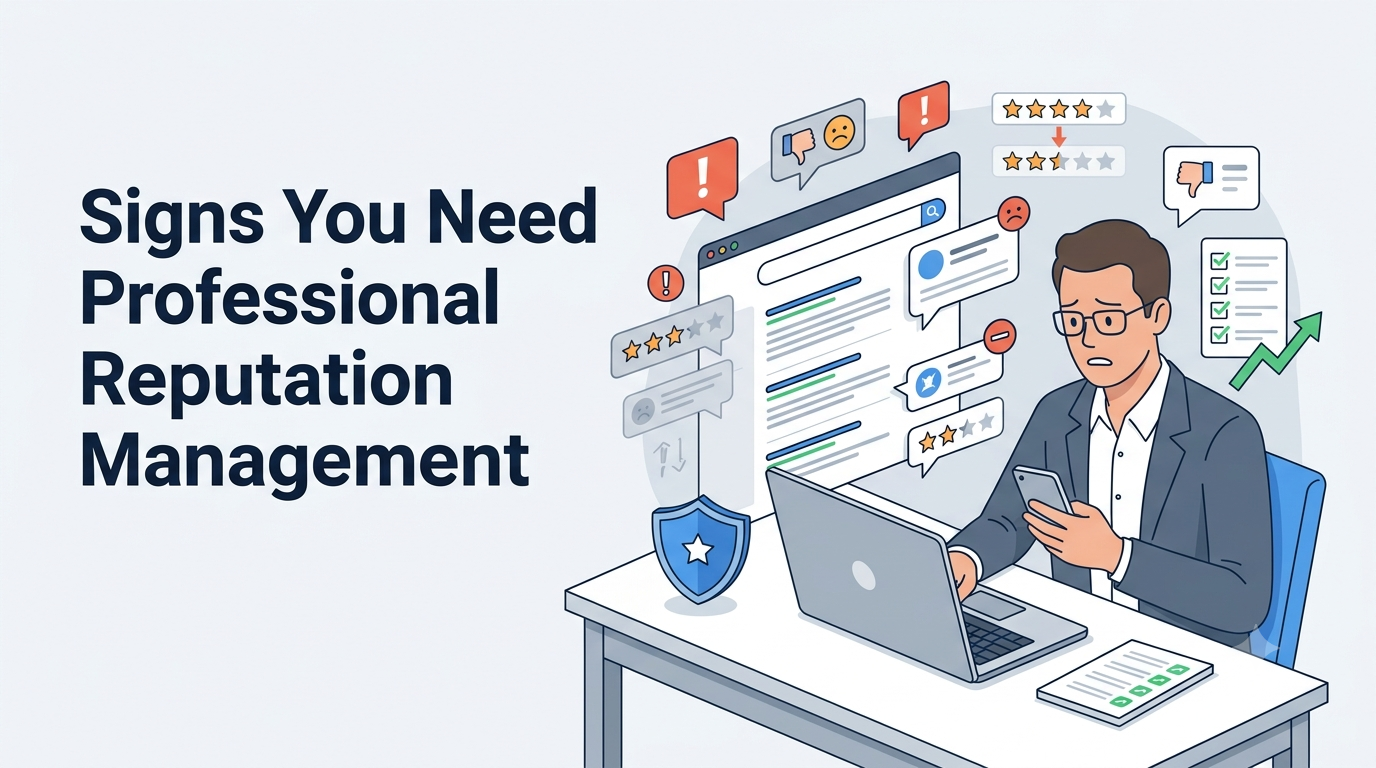
Professional Reputation Management
Most people and businesses do not realise they need help until the damage is already visible in search results. Reputation problems tend to build quietly, one review or article at a time, until they reach a point where DIY efforts are no longer enough. Recognising the early warning signs of when to seek professional reputation management can save significant time, money, and stress compared to waiting until a full crisis develops.
Here are the clearest indicators that it is time to bring in outside help.
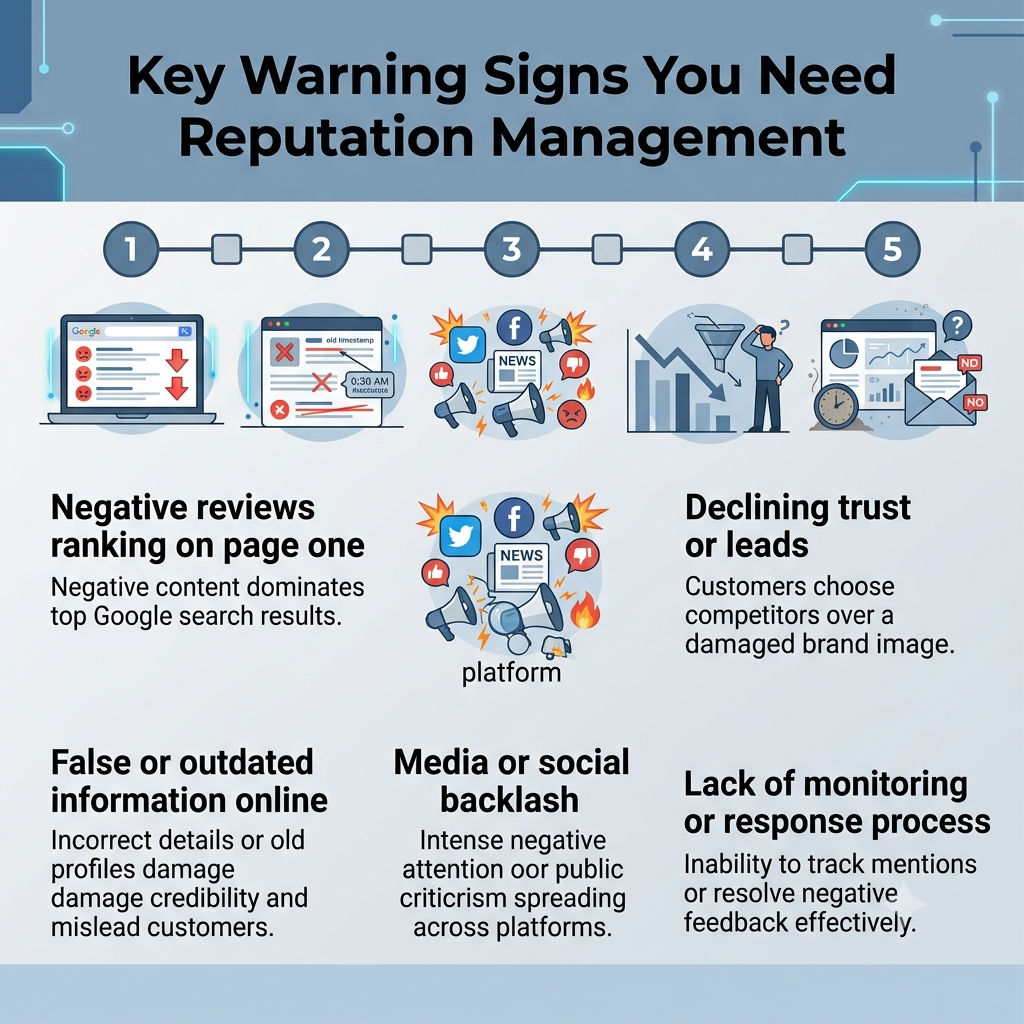
Your Search Results Are Dominated by Negative Content
If searching your own name or business brings up negative reviews, complaints, or unfavourable articles within the first page of results, this is one of the strongest signals that action is needed. Search results form a first impression for most people researching you, and negative content sitting above accurate, positive information can quietly cost opportunities before anyone reaches out directly.
You Are Receiving a Pattern of Negative Reviews
A single bad review is rarely a crisis. A recurring pattern across multiple platforms, especially if reviews mention similar specific issues, suggests a deeper problem that basic responses alone will not fix. At this stage, professional reputation management can help both address the visible content and identify whether the underlying issue needs to be resolved internally as well.
Outdated or Inaccurate Content Keeps Resurfacing
Old news articles, resolved disputes, or outdated information can continue ranking well after the situation has moved on. If you find yourself repeatedly explaining old context to new contacts, clients, or employers, this is a sign that search visibility needs active management rather than hoping the content eventually fades.
You Have Experienced a Public Complaint or Viral Moment
A single viral complaint, whether from a customer, former employee, or dissatisfied client, can spread faster than most businesses can respond to on their own. When a situation escalates quickly across social media or press coverage, professional support becomes valuable for coordinating a fast, consistent response across multiple channels at once.
Your Industry Carries Higher Scrutiny
Certain sectors, including healthcare, finance, and legal services, face closer public and regulatory attention. If you work in one of these fields and are dealing with any reputational concern, professional reputation management is particularly worth considering given the added complexity of confidentiality rules and regulatory bodies involved.
You Are Unsure Whether Content Is Legally Actionable
If you suspect that damaging content might cross into defamation, involves false statements of fact, or breaches privacy, it can be difficult to judge this accurately without expertise. A combined approach involving legal advice and reputation strategy is often the safest path when the line between opinion and defamatory content is unclear.
Your Internal Team Lacks the Time or Expertise
Many businesses attempt to manage reputation issues internally through marketing or HR teams already stretched across other responsibilities. If reviews go unanswered for weeks, search results are not being monitored, or no one has a clear plan for a negative incident, this gap itself is a sign that dedicated support would close a real vulnerability.
You Want to Get Ahead of a Future Issue
Not every reason to seek help involves an existing crisis. Businesses preparing for a product launch, leadership change, or increased public visibility often bring in reputation management proactively to build a strong search presence before problems have a chance to take root.
What Professional Support Actually Adds
Working with a specialist typically brings structured monitoring, experience handling platform-specific removal requests, content strategy aimed at improving search visibility, and calm, practiced crisis response when something does go wrong. This combination is difficult to replicate with occasional, reactive internal effort alone.
Frequently Asked Questions
How do I know if my situation needs a solicitor instead of a reputation agency?
If the content involves false statements of fact causing serious harm, a solicitor can assess whether it meets the legal threshold for defamation. If it involves genuine but unfavourable opinions or reviews, reputation management is usually the more appropriate route.
Is it too late to fix my reputation if negative content has ranked for a long time?
It is rarely too late. Long-ranking negative content can be more challenging to address, but consistent, strategic effort over time can still shift search visibility in a more favourable direction.
Can small businesses benefit from professional reputation management, or is it only for large companies?
Small businesses often benefit significantly, since they typically have fewer reviews and less existing content overall, meaning a handful of negative items can have an outsized impact on their visible reputation.
How quickly should I act once I notice a reputation problem?
Acting early is almost always better. Addressing an issue while it is still limited in scope is generally faster and less costly than waiting until it has spread across multiple platforms or gained significant visibility.
What is the first step if I think I need professional help?
Start by documenting exactly what you are seeing, including screenshots and links, then reach out for a consultation to assess the scope of the issue and the most appropriate course of action.