
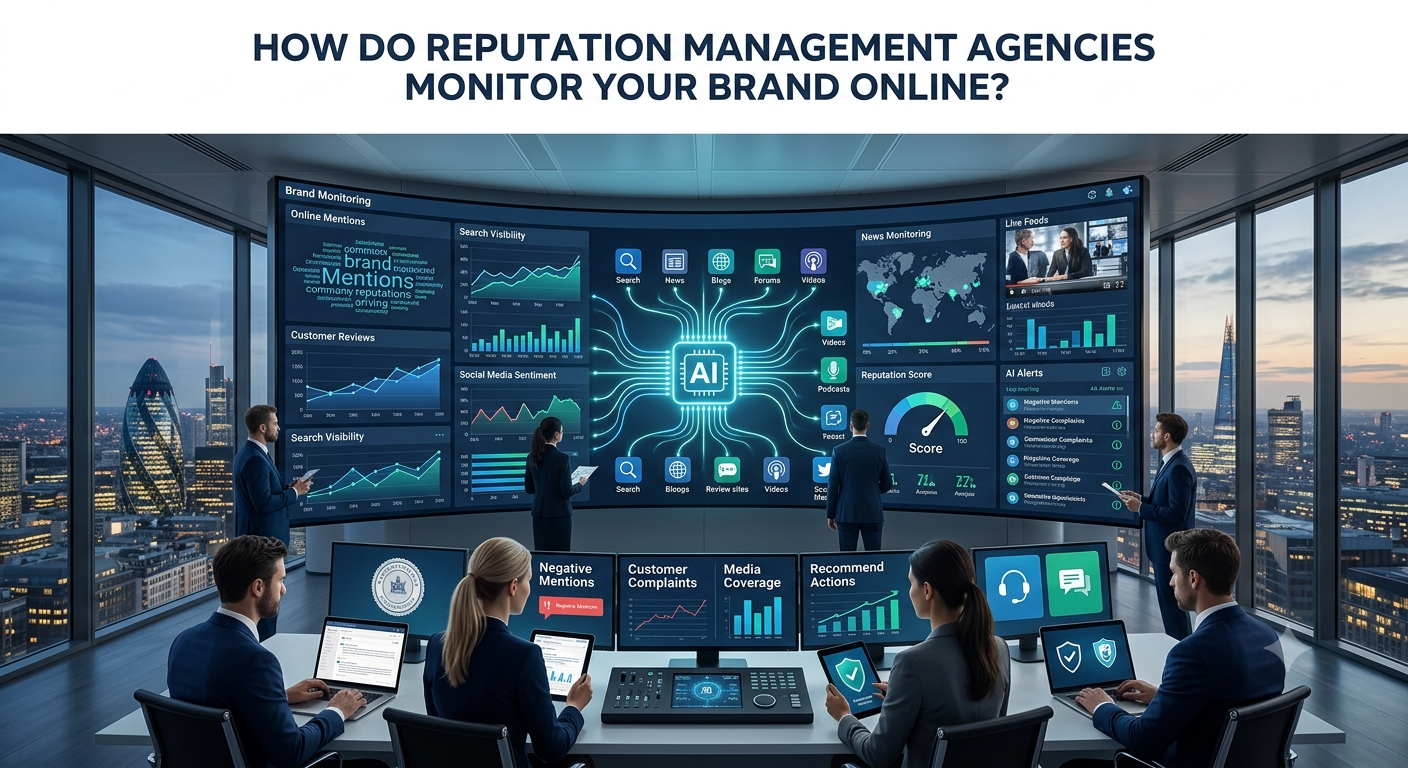
Reputation Management Agencies
Reputation management agencies monitor your brand online by combining automated brand monitoring software with structured manual review, tracking mentions across search engines, review platforms, social media, and news sources in real time, then filtering and prioritising what actually needs a response. This isn’t a single tool doing all the work, it’s a layered process combining technology and human judgement, and understanding exactly how it works helps you judge whether a provider’s monitoring process is genuinely thorough or just a surface-level check.
What Actually Gets Monitored
Comprehensive brand monitoring covers several distinct sources simultaneously, since relying on just one leaves real gaps:
- Search engine results. Tracking what actually ranks for your business or personal name, including how those results shift over time and whether new content is entering the picture.
- Review platforms. Google, Trustpilot, and any industry-specific sites relevant to your sector, monitored for both new reviews and edits to existing ones.
- Social media mentions. Direct mentions, tagged posts, and increasingly, untagged conversations that reference a brand by name without a formal tag or link.
- News and press coverage. Monitoring for new articles, press releases, and syndicated coverage that could affect search visibility or public perception.
- Forums and community platforms. Reddit and industry-specific forums in particular, since these increasingly feed into AI-generated search summaries alongside traditional sources.
The Tools Behind Real-Time Brand Monitoring
Agencies typically layer several types of tools rather than relying on one:
- Social listening platforms that scan social media and web content continuously for brand mentions, flagging volume spikes or sentiment shifts automatically.
- Review aggregation dashboards that pull reviews from multiple platforms into a single view, rather than requiring manual checks across each site separately.
- Search rank tracking tools that monitor how specific pages perform for branded search terms over time, catching new entries or ranking changes as they happen.
- Alert and notification systems configured to flag anything crossing a specific threshold, a sudden review cluster, a spike in negative sentiment, a new piece of news coverage, so nothing significant goes unnoticed between scheduled reviews.
Our guide to brand sentiment analysis covers the specific technology behind how mentions get classified once they’re captured, a distinct but closely related part of the overall monitoring process.
How Agencies Decide What Actually Needs a Response
Not every mention requires action, and a genuinely good monitoring process includes clear criteria for prioritisation:
- Volume and velocity. A sudden cluster of similar mentions within a short window gets flagged for immediate review, since this pattern often indicates something worth understanding quickly, whether a genuine issue or a coordinated attack.
- Source authority. A mention from a major news outlet or a highly-followed account carries different weight than an isolated comment, affecting how quickly and how visibly a response is warranted.
- Sentiment severity. Strongly negative sentiment gets prioritised over mild criticism, though genuine patterns in even mild negative feedback still matter over time.
- Platform prominence. A review on a platform prominently linked from your own website or Google Business Profile typically warrants faster attention than a mention buried in a smaller, less-visible community.
Our guide to detecting coordinated negative SEO attacks covers how this monitoring process specifically helps distinguish a genuine, isolated issue from a deliberate, coordinated campaign.
How Monitoring Scales Across Multiple Platforms and Clients
For agencies managing several clients simultaneously, or a single business with multiple locations or executives to track, monitoring has to scale without losing the specificity that makes it actually useful. This typically means centralised dashboards pulling data from every relevant source into one place, automated alert rules tailored to each client’s specific risk profile rather than a generic, one-size-fits-all threshold, and a clear escalation process defining who reviews flagged items and how quickly. Our guide to the UK review platforms that matter most is a useful reference for understanding which sources actually deserve monitoring priority for a given industry, since spreading effort evenly across every possible platform wastes resources on sources with minimal relevant activity.
Why 24/7 Monitoring Matters More Than It Used To
Reputation events move faster than they used to, and brand monitoring that only checks in once a day or once a week increasingly misses the critical early window where a response actually shapes how a situation develops. A viral complaint or a coordinated review cluster can gain significant momentum within hours, meaning continuous, automated monitoring paired with a defined escalation process for anything urgent has become the practical standard rather than a premium add-on. Our guide to how AI Overviews are changing reputation management is also relevant here, since AI-generated search summaries now draw from a wider set of sources than traditional rankings alone, making comprehensive monitoring across platforms like Reddit genuinely more important than it was even a year or two ago.
Questions to Ask a Provider About Their Monitoring Process
Not every provider claiming comprehensive monitoring actually delivers it, and a few direct questions reveal the difference quickly. Ask specifically which platforms are covered, since a vague answer like “we monitor everything” usually means a generic setup rather than one tailored to your actual industry and audience. Ask how quickly a genuinely urgent item gets escalated to a human, since automated detection without a clear, fast escalation path leaves a real gap during exactly the moments that matter most. Ask whether reporting includes raw mention counts alongside interpreted insight, since raw numbers without context tell you activity happened, not what it actually means for your reputation. A provider that answers these specifically, rather than falling back on general reassurance, is far more likely to be running a genuinely thorough process behind the scenes.
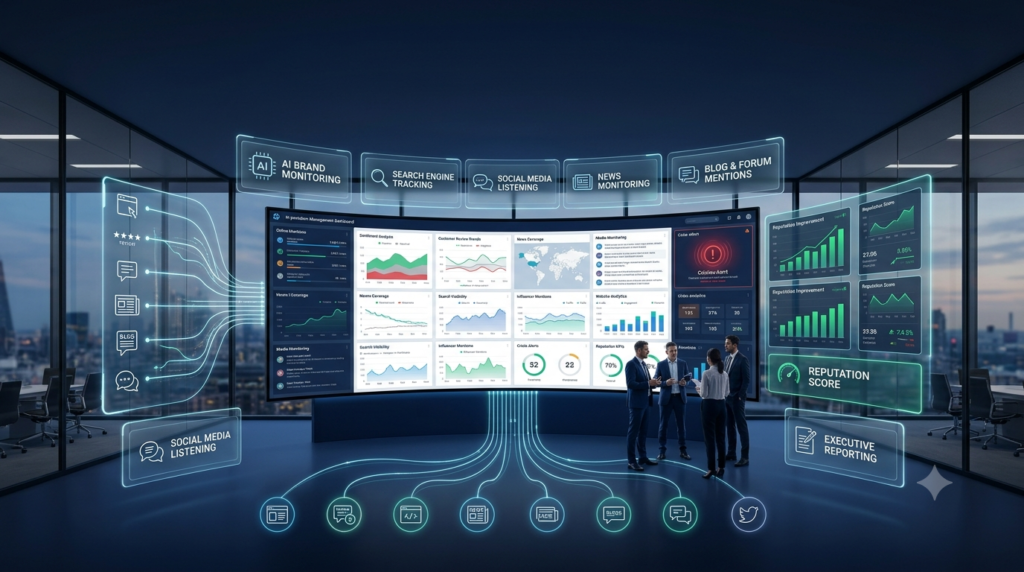
How Our Monitoring Process Works
We combine automated brand monitoring across search, reviews, social media, and news with a structured human review process, ensuring flagged items get genuine judgement rather than an automated response applied blindly. For agency partners managing their own client base, we provide monitoring and reporting that integrates directly into your existing client communication, giving you real-time visibility without needing to build or manage the underlying monitoring infrastructure yourselves.
Frequently Asked Questions
How often do reputation agencies actually check for new mentions?
Continuously for automated monitoring, with structured human review typically happening daily or more frequently for active situations, ensuring nothing significant sits unnoticed for long between scheduled checks.
Can brand monitoring catch mentions on platforms like Reddit and forums?
Increasingly, yes, and this has become more important given how heavily AI-generated search summaries now draw from community platforms alongside traditional review sites and news coverage.
Is automated monitoring alone enough, or does it need human review too?
Both matter. Automated tools catch volume and patterns efficiently, but human review adds judgement around context, nuance, and prioritisation that automated systems alone can miss, particularly for ambiguous or sarcastic content.
How do agencies monitor multiple locations or executives at once?
Through centralised dashboards and tailored alert rules specific to each entity being tracked, rather than a single generic monitoring setup applied uniformly across very different situations.
What’s the difference between brand monitoring and sentiment analysis?
Monitoring is the process of tracking and capturing mentions across relevant platforms, while sentiment analysis is the technology used to classify and interpret the emotional tone of what’s been captured, two connected but distinct parts of the same overall process.