
Online Reputation
Search your own name, or your business name, right now. What comes up on that first page is your online reputation, the composite picture search engines, review platforms, and social media build about you or your business, whether you’ve actively shaped it or not. This guide explains exactly what makes up that picture, why it matters more than most people realise, and how to start managing it deliberately.
What Actually Makes Up Your Online Reputation
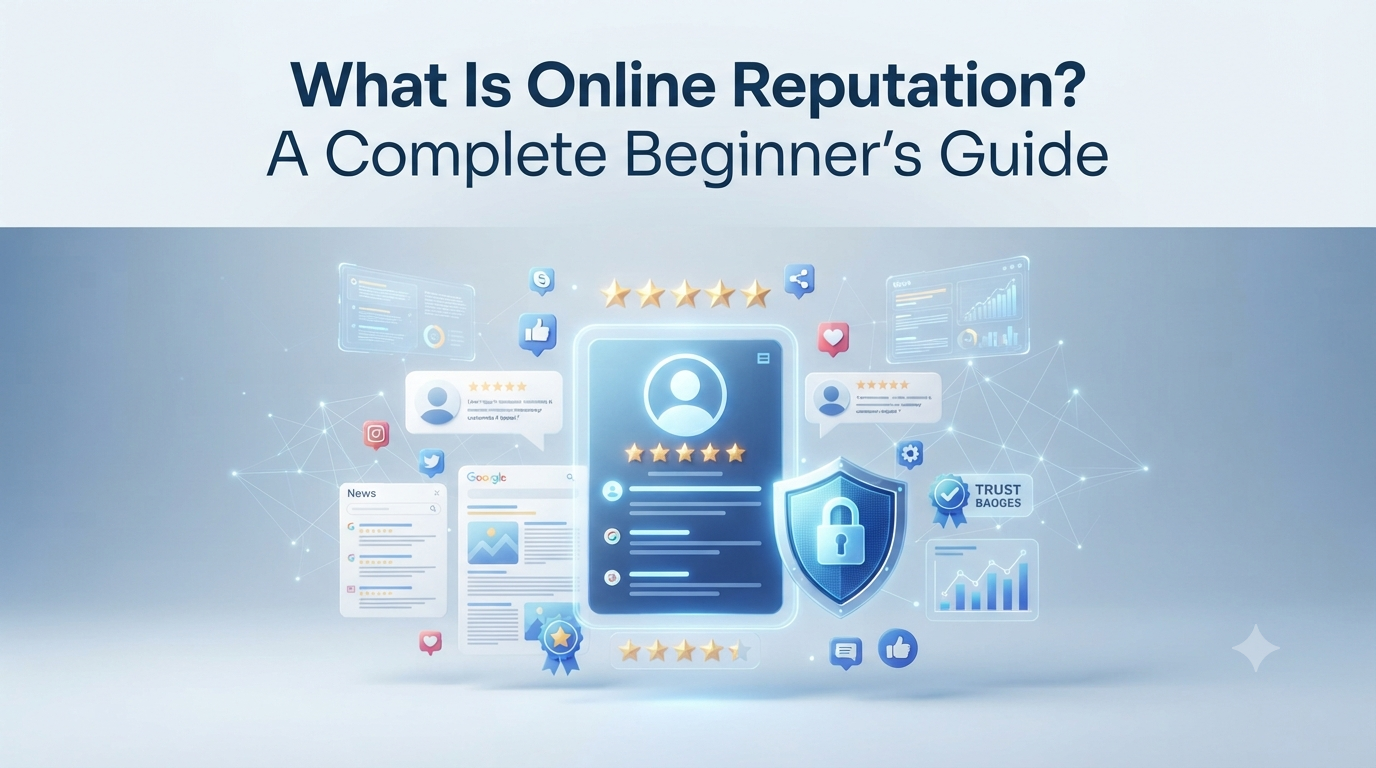
This isn’t one single thing, it’s a combination of several distinct sources that together form the overall impression someone forms when they look you up. Understanding these sources individually matters because each one requires a slightly different approach to manage well, and neglecting even one can leave a real gap in the overall picture:
- Search engine results, the specific pages that appear when your name or business name is searched, ranked in the order search engines decide is most relevant
- Reviews and ratings, feedback left on platforms like Google, Trustpilot, or industry-specific sites, reflecting genuine customer or client experience
- Social media presence, both what you post yourself and what others say about you across platforms like LinkedIn, Instagram, or X
- News and press coverage, articles, mentions, or interviews that appear when your name comes up in media coverage
- Third-party mentions, forum discussions, blog posts, and other content referencing you that you don’t directly control
Each of these sources contributes to the same overall picture, which is exactly why managing this well requires attention across multiple channels simultaneously, not just one.
Why Online Reputation Matters More Than Most People Realize
A search happens before almost every significant decision now, whether that’s a customer choosing a business, an employer reviewing a candidate, or someone simply curious about a person they’re about to meet. This makes what appears in that search genuinely consequential in ways that are easy to underestimate.
- It shapes first impressions before any direct interaction happens. By the time someone actually contacts a business or meets a person, they’ve often already formed a judgement based entirely on what they found online.
- It directly affects business outcomes. Customer decisions, hiring processes, and even investment or partnership conversations are increasingly informed by what a search reveals.
- It persists longer than most people expect. Content can remain visible and influential for years, meaning an outdated or unfair impression can linger well past its actual relevance.
- It’s largely, though not entirely, within your influence. While you can’t control everything said about you, you can shape a meaningful share of what appears through deliberate, consistent effort.
How This Differs From Traditional, Offline Reputation
Reputation has always mattered, but the digital version behaves differently in a few important ways. It’s more permanent, since a face-to-face impression fades from memory while a search result stays visible indefinitely. It’s more accessible, since anyone, anywhere, can research you or your business instantly rather than relying on word of mouth within a limited local circle. And it’s more quantifiable, since star ratings, review counts, and search rankings turn something once purely subjective into something measurable and comparable.
What Builds a Strong Reputation, and What Damages It
A few consistent factors tend to strengthen how you’re perceived online: genuine, positive reviews accumulated consistently over time, accurate and complete information across every platform where you appear, and authoritative content that demonstrates real expertise or credibility. On the other side, a few patterns consistently cause damage: unanswered negative reviews left to sit visibly, outdated or inaccurate information that no longer reflects reality, and inconsistent details across different platforms that quietly undermine trust.
Common Misconceptions Worth Clearing Up
A few assumptions trip up newcomers to this topic consistently. Many people assume negative content simply disappears over time on its own, when in reality it often continues ranking indefinitely unless actively addressed or outweighed by newer, stronger content. Others assume this only matters for businesses, overlooking how frequently individuals, job seekers, professionals, anyone entering a more public role, get researched directly by name. And a common misconception holds that having no visible online presence at all is safer than having one, when in practice a completely empty search result can look just as concerning to a researcher as a negative one, since it offers nothing to verify who you actually are.
Understanding these misconceptions early helps set realistic expectations before diving into the practical work of managing your own situation.

How to Check Your Current Online Reputation
Understanding where you currently stand is the essential first step before trying to improve anything. Search your name or business name directly, checking standard search, image search, and news search separately, since each surfaces different content. Review your presence across the major review platforms relevant to your situation. And check your social media profiles for accuracy and consistency. Our guide to Google’s results about you removal tool covers one specific, practical tool worth knowing about during this initial check, particularly for personal information that shouldn’t be publicly visible.
Getting Started With Managing Your Digital Presence
Once you understand your current situation, a few foundational steps make the biggest initial difference: claiming and completing free profiles like your Google Business Profile, responding to existing reviews you haven’t yet addressed, and correcting any outdated or inconsistent information you find. Our guide to the UK review platforms that matter most is a useful next step for understanding where to focus review-related effort specifically, and our guide to building genuine customer trust covers the deeper principles behind building a strong reputation over time, not just fixing immediate issues.
How We Help People and Businesses at Every Stage
Whether you’re just starting to understand your current situation or already facing a specific, active challenge, we work with individuals and businesses across every stage of building and protecting their online reputation. Our complete guide to reputation management services covers the full range of support available once you’re ready to move beyond the foundational steps covered in this guide.
Frequently Asked Questions
Is online reputation the same thing as SEO?
Related but distinct. SEO focuses broadly on ranking content for visibility, while managing how you’re perceived online applies similar techniques specifically to shaping what appears for your name, often prioritising accuracy and trust over general traffic.
Can I actually control what appears when someone searches my name?
Not entirely, but you can influence a meaningful share of it through consistent, deliberate effort, building strong content, managing reviews actively, and correcting inaccurate information wherever possible.
How long does it take to build a strong online reputation from scratch?
Foundational steps can show results within weeks, while building a genuinely strong, resilient presence typically takes several months of consistent, ongoing effort rather than a single quick fix.
Does online reputation matter for individuals, or just businesses?
Both, increasingly. Employers, clients, and even personal contacts frequently research individuals online now, making this just as relevant for professionals and job seekers as it is for businesses.
What’s the very first thing I should do if I’ve never actively managed mine before?
Search your own name or business name properly across standard, image, and news search, then review what you find honestly before deciding what needs attention first.



