
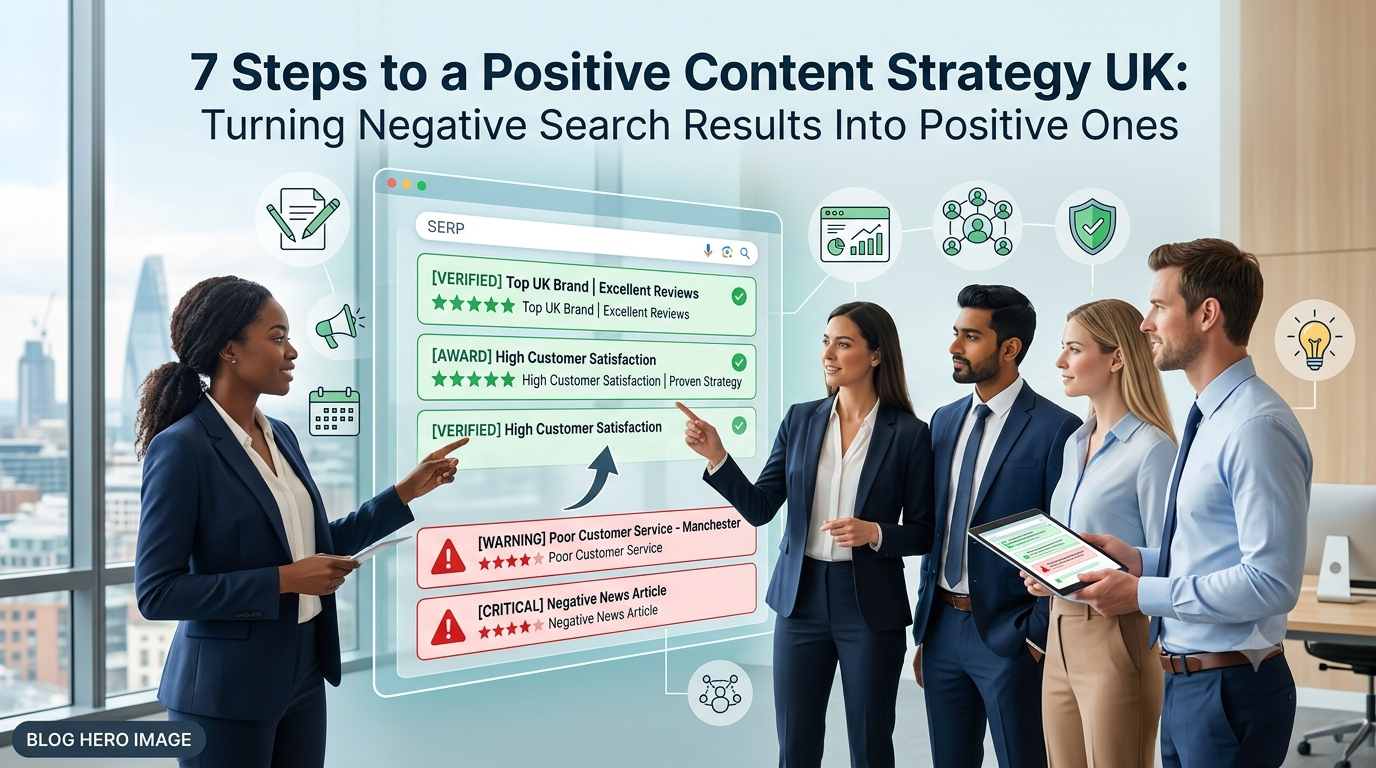
Positive Content Strategy UK
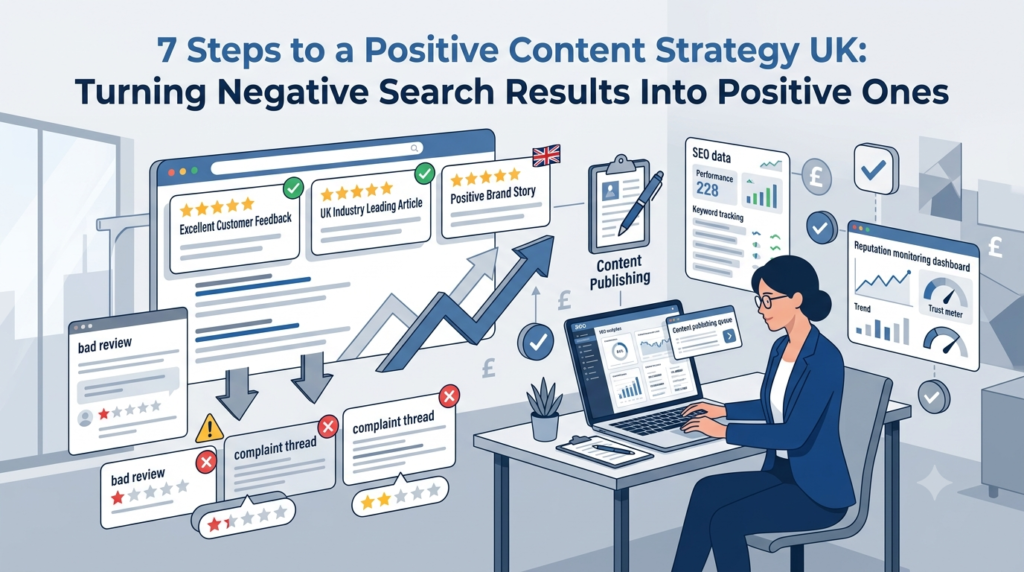
Negative content rarely disappears on its own, but it can be outweighed. A positive content strategy UK businesses actually stick with does not focus on erasing what already exists. It focuses on building enough accurate, authoritative, well optimized content that the negative result stops being the first thing people see. This is one of the most reliable outcomes in reputation management, precisely because it works with how search engines actually rank content rather than fighting against it.
Here is a practical, seven-step approach to building that strategy from the ground up.
Step 1: Audit What Is Currently Ranking
Before creating anything new, search your name or business name and document exactly what appears on the first two pages. Separate this into three categories: accurate and positive, accurate but unflattering, and inaccurate or outdated. This audit is the foundation of any serious online reputation management effort, since it tells you exactly what needs to be outranked rather than guessing.
Step 2: Fix the Fastest Wins First
Some issues can be resolved quickly, before any content strategy even begins. Outdated profiles, inconsistent business listings, or unclaimed directory pages are often the easiest to correct and can shift search results within days rather than months. Brand reputation management works best when these foundational issues are cleared out of the way early, so new content has a clean base to build on.
Step 3: Turn Your Reviews Platform Into a Content Asset
Genuine customer reviews are one of the most underused content sources available. Rather than treating your reviews platform purely as a feedback channel, pull real, permission-based testimonials into case studies, service pages, and social proof content. This does double duty: it strengthens online review management and gives search engines fresh, relevant content tied directly to your name.
Step 4: Build a Consistent Content Calendar
A single article rarely shifts entrenched search results. Real movement comes from a steady, consistent publishing rhythm, ideally covering genuine expertise, case studies, and answers to the specific questions your audience is actually searching. This is where brand reputation management stops being reactive and becomes a proper content operation with its own calendar and cadence.
If your business has been affected by negative reviews specifically, our 10-point UK checklist is a useful reference for prioritising which issues to tackle first within this calendar.
Step 5: Use Social Media to Fill the Gaps Search Cannot Reach
Reputation management with social media plays a distinct role here. Social profiles often rank on page one for a name search, which means an active, professional LinkedIn presence, or a well-maintained business profile on the platforms your audience actually uses, can occupy valuable search real estate that would otherwise sit empty or be filled by outdated content.
Step 6: Set Up Ongoing Review and Search Monitoring
A positive content strategy is not a one-time project. Ongoing online review monitoring, paired with regular search alerts for your name, means new negative content gets caught early, before it has time to rank well or spread. This is the difference between a strategy that holds over time and one that quietly erodes within a year.
Step 7: Know When to Bring in Specialist Support
Some situations move faster than an internal team can manage alone, particularly after a viral complaint or a wave of coordinated negative reviews. In these cases, a dedicated online reputation service can accelerate the process significantly, combining content strategy, technical SEO, and monitoring in a coordinated way rather than piecemeal effort. If a situation has already escalated, our first 24 hours crisis PR guide covers the immediate steps to take before longer-term content work begins.
Why Location-Specific Strategy Matters Too
For businesses based in major UK cities, local search context adds another layer. Someone researching the best reputation management services London has to offer is often looking for a provider who understands local press relationships and location-specific review platforms, not just generic national advice. If your business serves a specific city or region, building location-relevant content and citations into your positive content strategy strengthens both local search visibility and the broader reputation-building effort.
How Long This Actually Takes
Realistic timelines matter more than most strategies admit upfront. Fixing foundational issues can show results within days. Content and review-based improvements typically take a few weeks to start moving. Fully outranking deeply entrenched negative content, especially anything with strong backlinks or long-standing authority, can take several months of consistent effort. Providers who promise faster results across the board are usually overstating what search engines can realistically be expected to do.
Frequently Asked Questions
Can a positive content strategy actually remove negative search results?
Not directly. It works by building enough accurate, authoritative content to outrank negative results in relevance and visibility, rather than removing the original content itself.
How is this different from general SEO?
It uses the same core techniques as SEO but applies them specifically to name-based search results, prioritising which pages rank for a person or business name rather than broader keyword traffic.
Do reviews really make a measurable difference to search rankings?
Yes. Genuine, consistent reviews across a reviews platform contribute to both local search signals and the overall volume of accurate, positive content associated with your name.
Is social media part of reputation management, or is it separate?
It is a meaningful part of it. Social profiles frequently rank on page one for name searches, making an active, well-maintained presence a practical tool within a wider content strategy.
When should a business stop trying to handle this internally?
If a situation has already gone viral, involves coordinated negative activity, or has not improved after several months of consistent internal effort, bringing in specialist support usually accelerates results significantly.