
Rebuild Your Reputation After A Mistake
Rebuilding a reputation after a genuine mistake is a different challenge from fixing an unfair review or outdated article. When the damage stems from something that actually happened, whether a business error, a public misstep, or a personal lapse in judgement, the path back requires real accountability first, not just search strategy. Done well, reputation recovery after scandal is entirely possible. Done poorly, or rushed, it tends to prolong the damage rather than resolve it.
By the end of this guide, you’ll know:
- Why genuine accountability has to come before any recovery strategy
- A clear, step-by-step process for rebuilding trust, whether the mistake was personal or business-related
- The tools and realistic timelines that separate lasting recovery from a temporary fix
What Does Rebuilding a Reputation After a Mistake Actually Mean?
This is fundamentally different from suppressing unfair content. Rebuilding trust after a mistake means acknowledging what happened, demonstrating genuine change, and allowing time and consistent behaviour to gradually shift public perception. Search strategy plays a supporting role here, but it cannot substitute for the accountability work itself. Attempting to bury a genuine mistake through content tactics alone, without addressing the underlying issue, tends to be spotted quickly and can deepen the damage.
Why Genuine Recovery Matters More Than a Quick Fix
A rushed, defensive response to a real mistake is one of the most common reasons a story stays alive far longer than it needed to. Audiences, whether customers, colleagues, or the public, are generally forgiving of genuine mistakes handled with honesty, and considerably less forgiving of denial, deflection, or half-measures. For businesses, this affects customer retention and investor confidence. For individuals, it affects career trajectory and professional relationships. Both share the same underlying truth: how you respond matters more, long term, than the mistake itself.
Types of Situations This Applies To
- Business errors, such as a service failure, a data issue, or a poor decision that became public
- Corporate scandals, involving leadership conduct, financial irregularities, or workplace culture issues
- Personal missteps, such as a public comment, a professional lapse, or a past decision resurfacing
- Crisis-driven damage, where a single incident escalated quickly through media or social coverage
Each requires a broadly similar recovery arc, but the specific accountability steps and communication tone shift depending on which category applies.
How to Rebuild Your Reputation Step by Step
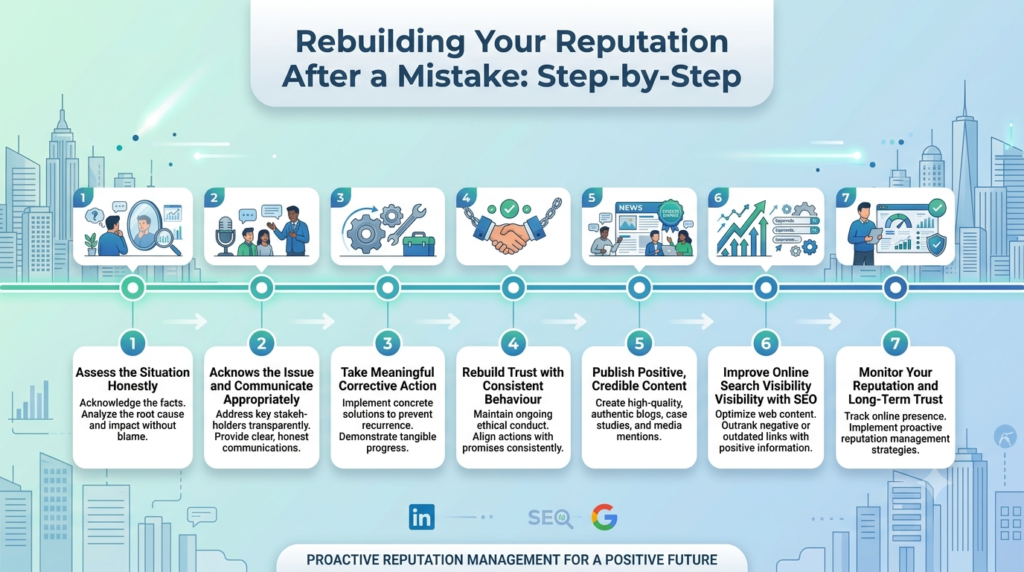
Step 1: Acknowledge What Happened Honestly
A credible corporate apology strategy starts with clear, specific acknowledgement rather than vague, evasive language. Avoid minimising what happened or shifting blame, since both tend to extend a story’s lifespan rather than close it.
Step 2: Take Concrete, Visible Action
Words alone rarely rebuild trust. Whatever the situation calls for, whether a policy change, a leadership decision, or a direct remedy for those affected, visible action demonstrates that the acknowledgement was genuine rather than a PR exercise.
Step 3: Communicate Consistently, Not Just Once
A single statement is rarely enough. Consistent, ongoing communication about the changes being made, without overexposure or repeated re-litigation of the original issue, helps establish a credible pattern of change over time.
Step 4: Address the Immediate Search and Media Footprint
Once the immediate crisis has passed, assess what is now ranking for your name or business name. If you’re still in the early hours of a live situation rather than the recovery phase, our first 24 hours crisis PR guide covers the immediate response steps that should happen before long-term recovery work begins.
Step 5: Rebuild Through Genuine, Consistent Positive Content
Over time, authentic case studies, updated leadership content, and genuine third-party coverage of the changes made all contribute to a more accurate, current picture in search results. This is the same foundational method covered in our full guide to fixing a damaged online reputation, applied specifically to a scandal-recovery context.
Step 6: Monitor Sentiment, Not Just Search Rankings
Beyond search visibility, track how sentiment is actually shifting across reviews, social mentions, and press coverage. Reputation rehabilitation is a gradual process, and monitoring sentiment gives a more accurate read on real progress than search position alone.
Step 7: Know When the Story Has Genuinely Moved On
Recovery does not mean erasing what happened. It means reaching a point where the mistake is no longer the dominant, first thing associated with your name or business. Recognising this shift, rather than continuing to over-manage a resolved issue, is itself part of a mature recovery strategy.
Tips and Best Practices for Rebuilding Trust
- Lead with accountability before strategy. Recovery efforts that skip genuine acknowledgement rarely hold up over time
- Avoid over-apologising repeatedly once a credible response has already been given, since this can re-surface the original issue unnecessarily
- Keep internal and external messaging aligned, particularly for businesses, since inconsistency between the two is often what extends a crisis
- Be patient. Rebuilding trust after a mistake typically takes months, not weeks, and rushing the process often backfires
- If legal exposure is involved, coordinate closely with legal counsel before any public statement is finalised
Rebuild Your Reputation After A Mistake
Tools for Managing Scandal Recovery
- Media and social monitoring tools, to track sentiment shifts and new coverage in real time
- Search alerts, to catch new content ranking for your name or business as recovery progresses
- Internal communication platforms, to keep messaging consistent across leadership and staff
- A structured PR crisis recovery framework, ideally established before a crisis happens rather than built reactively
Get Started With Reputation Rehabilitation Today
If you’re currently facing the immediate aftermath of a mistake or scandal, prioritise honest acknowledgement and concrete action before anything else. Once that foundation is in place, a structured, patient recovery strategy involving genuine content, consistent communication, and careful monitoring will do more long-term good than any attempt to rush or suppress the story. For situations involving significant public visibility or business risk, working with a specialist in brand recovery UK businesses trust can help coordinate this process more effectively than handling it alone.
Frequently Asked Questions
How long does it typically take to rebuild a reputation after a scandal?
Most genuine recovery processes take several months to a year or more, depending on the severity of the situation and how consistently accountability and change are demonstrated over time.
Should a business apologise publicly for every mistake?
Not every situation requires a public apology, but genuine mistakes that became publicly visible generally do. The key is a clear, honest acknowledgement rather than a vague or defensive statement.
Can search strategy alone fix a scandal-related reputation problem?
No. Search and content strategy support recovery, but they cannot substitute for genuine accountability and visible change. Attempting to rely on content alone often extends the story rather than resolving it.
What’s the biggest mistake people make when trying to recover from a scandal?
Responding defensively or minimising what happened. This consistently prolongs public attention far longer than a clear, honest acknowledgement would have.
Is personal reputation recovery different from business reputation recovery after a scandal?
The core principles are the same, accountability, consistent action, and patience, but personal recovery often involves more direct, individual communication, while business recovery typically requires coordinated messaging across leadership and staff.