
Restaurant Reputation Management
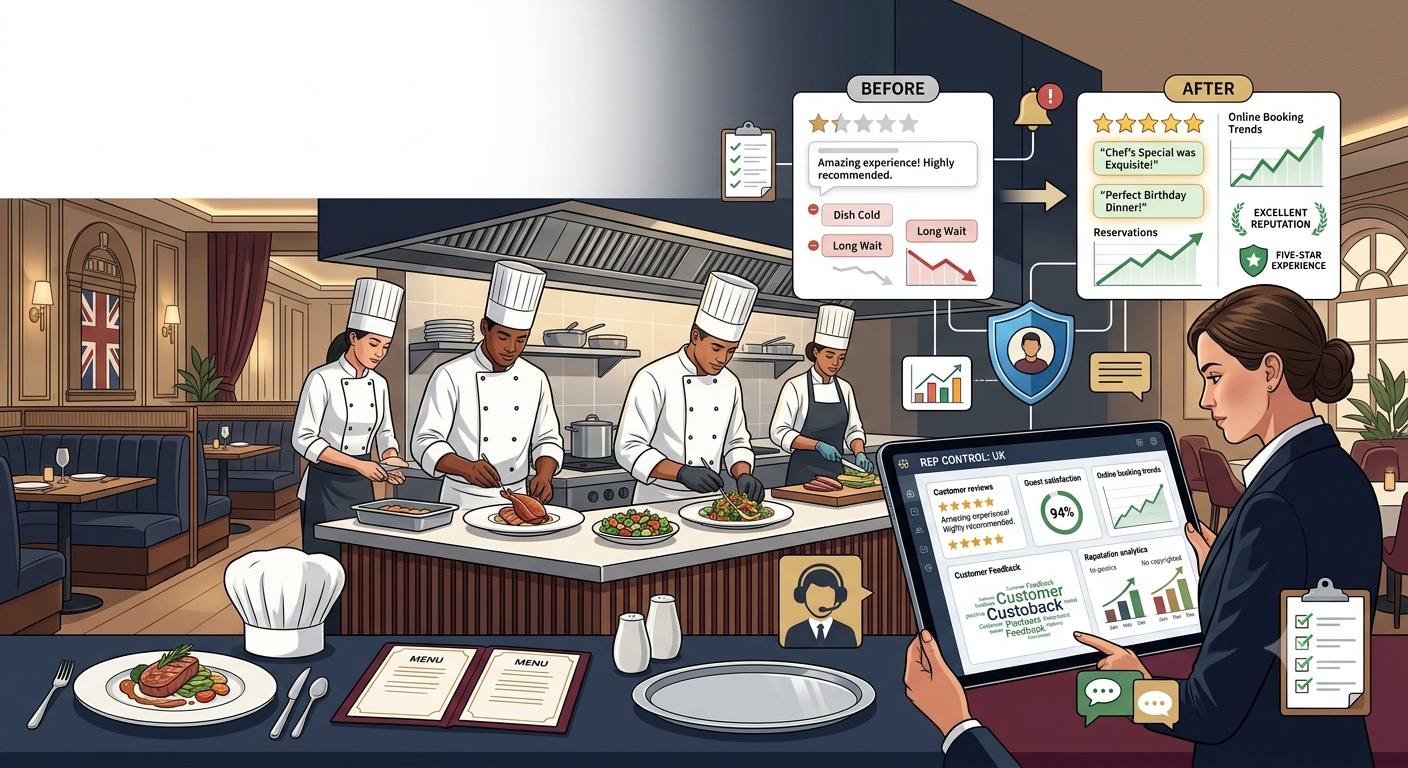
A restaurant’s reputation is shaped by something almost no other business faces: a government issued, publicly searchable hygiene score sitting right alongside its reviews. Restaurant reputation management has to account for this dual reality, food safety inspection results and customer sentiment, working together rather than as separate concerns. We help UK restaurants manage both sides of that picture, since increasingly, they’re not actually separate at all.
Why the Food Hygiene Rating Scheme Is a Reputation Issue, Not Just a Compliance One
Every restaurant in England, Wales, and Northern Ireland receives a Food Hygiene Rating Scheme score from 0 to 5 following a local authority inspection, published directly on the Food Standards Agency’s public ratings site. Nearly half of UK consumers say they check food hygiene ratings always or most of the time when choosing where to eat, meaning restaurant reputation management genuinely has to treat this score as a primary trust signal, not a background compliance detail.
The commercial stakes are higher than most restaurant owners realise. A rating of 0, 1, or 2 can trigger automatic loss of access on major delivery platforms, directly cutting off a revenue channel regardless of how strong your online reviews otherwise look. This is a genuinely different risk profile to most reputation concerns, since it isn’t about persuading customers to overlook a negative impression, it’s an automated, systematic restriction that applies regardless of individual customer sentiment. And because display remains voluntary in England, restaurants with lower ratings display them at noticeably lower rates than 5 rated businesses, meaning a weak score combined with non display can itself become a visible red flag to observant customers checking directly on the FSA site.
Bringing FHRS, Reviews, and Delivery Platforms Into One Strategy
Restaurant reputation management works best when it treats FHRS score, TripAdvisor and Google reviews, and delivery platform ratings as one connected picture rather than three separate concerns. A strong hygiene score paired with a weak review profile still leaves real gaps, since prospective diners increasingly cross-reference multiple sources before booking or ordering. We help restaurants build a coordinated monitoring and response approach across all of these simultaneously, so improvement in one area reinforces trust across the others.
Our guide to the UK review platforms that matter most covers where general review activity concentrates, though restaurants specifically also need to factor in the FHRS score and delivery-platform-specific rating systems that don’t apply to most other business types.
Responding to Reviews Without Compromising on Food Safety Concerns
A review mentioning a genuine food safety concern requires an entirely different response than a service complaint. Dismissing or minimising a hygiene related review publicly can look worse than the original comment, particularly if it later turns out to relate to a genuine issue reflected in an inspection outcome. We help restaurants respond honestly and specifically to service and quality complaints, while treating any safety adjacent feedback as a genuine operational signal worth investigating immediately, not just a reputation issue to manage away.
Handling a Food Safety Incident or Rating Drop
If your restaurant experiences a genuine incident, a food safety concern, a lowered FHRS score after re-inspection, or a viral complaint, speed and transparency matter more than a defensive response. Our guide to reputation damage control in the first 48 hours covers the response framework we apply to fast moving situations like this, and the FSA’s own appeals process is worth pursuing directly if you believe a rating was assessed unfairly, since a successful appeal can meaningfully restore both your compliance standing and your public reputation simultaneously.
Building Long Term Restaurant Customer Trust
The strongest restaurants treat reputation as continuous groundwork, not crisis response: displaying a strong FHRS rating prominently, since 5 rated businesses display voluntarily far more often than lower-rated ones and this visibility itself builds trust, maintaining a steady, genuine flow of reviews across Google and TripAdvisor, and keeping delivery platform ratings healthy through consistent food quality and accurate order fulfilment. Our guide to building a positive content strategy covers the broader principles behind this proactive approach, applied here to a restaurant’s specific mix of regulatory and customer-facing trust signals.
Understanding How Your FHRS Score Is Actually Calculated
Many restaurant owners assume the FHRS score is a single, simple pass-fail measure, but it’s actually built from three separate elements assessed during inspection:
- Food hygiene and safety. How hygienically food is handled, prepared, cooked, re-heated, cooled, and stored throughout the kitchen process.
- Structural compliance. The physical condition of the premises, including cleanliness, layout, ventilation, and equipment maintenance.
- Confidence in management. How confident the food safety officer is that the business can maintain safe practices consistently going forward, not just on the day of inspection.
This third element matters more than most restaurants realise, since a business with genuinely good food handling on the day can still score lower if the officer isn’t confident that standard holds up without an inspection happening. Understanding this breakdown helps restaurants prepare more effectively, since improving management systems and documentation, not just kitchen cleanliness on inspection day, is often what actually moves a score from a 3 or 4 up to a 5.
Why Regional and Sector Context Matters for Restaurant Reputation
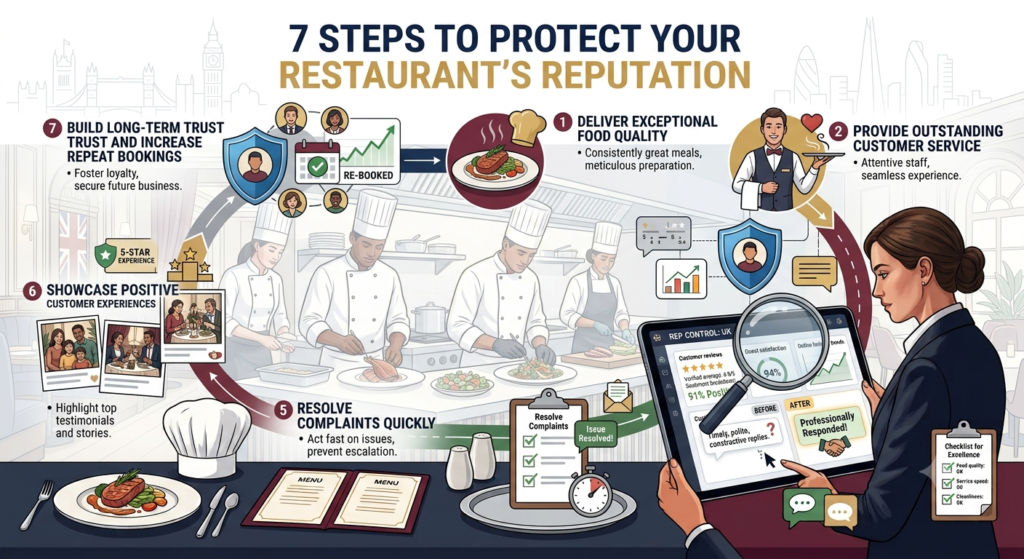
FHRS performance varies meaningfully by region and by food business type, and understanding where your restaurant sits within that broader context helps set realistic expectations and priorities. National data shows takeaways and mobile food vendors tend to average lower ratings than sit-down restaurants, while certain regions consistently outperform others. This matters for restaurant reputation management because a rating that looks merely average in isolation might actually represent a meaningful competitive advantage or disadvantage depending on what similar businesses in your specific area and category typically score. A restaurant competing primarily against other 5 rated establishments in a strong performing region faces different reputational stakes than one operating in an area or category where lower ratings are more common and therefore less differentiating to customers.
Frequently Asked Questions
Does a low Food Hygiene Rating actually affect delivery platform visibility?
Yes. Major delivery platforms can automatically restrict or remove access for businesses with a rating of 0, 1, or 2, making the FHRS score a direct commercial factor, not just a compliance requirement.
Should a restaurant display its FHRS rating even though it’s not legally required in England?
Yes, if the rating is strong. Voluntary display correlates directly with rating, since 5 rated businesses display far more often than lower rated ones, and visible display itself builds customer trust.
How should a restaurant respond to a review mentioning a hygiene concern?
Take it seriously and investigate immediately rather than dismissing it publicly, since a hygiene related complaint that turns out to be genuine can compound significantly if the public response looks defensive in hindsight.
Can a restaurant appeal a Food Hygiene Rating it believes is unfair?
Yes, through the Food Standards Agency’s formal appeals process, and a successful appeal can restore both the compliance rating and the public reputation impact simultaneously.
Is restaurant reputation management different from general hospitality reputation work?
Yes, restaurants face the added layer of a public hygiene rating and delivery platform specific ratings systems that most other hospitality businesses don’t have to manage alongside standard reviews.