
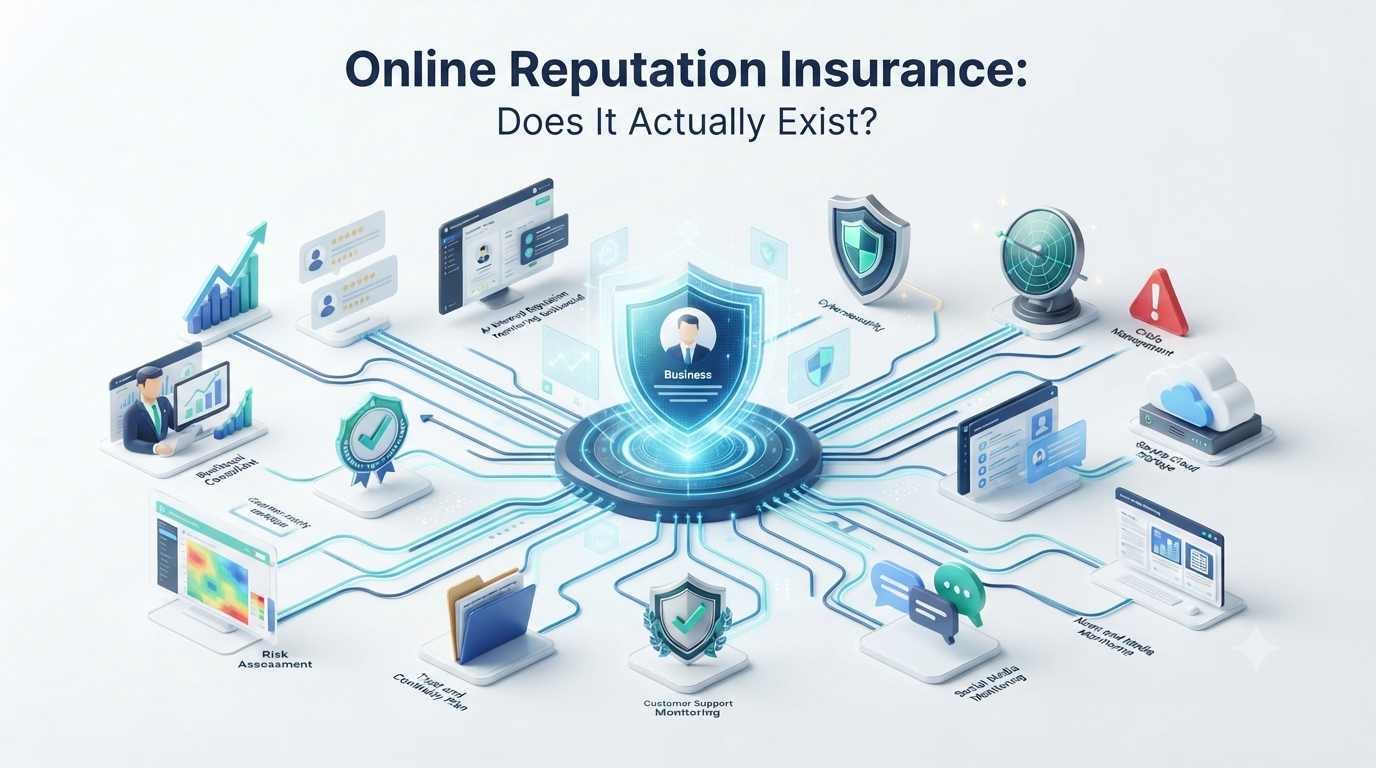
Online Reputation Insurance
The short answer is yes, but not in the form most people searching for online reputation insurance actually expect. There’s no simple policy you can buy to protect a small business’s Google reviews the way you’d insure a shop against fire damage. What genuinely exists is a small, developing category of UK insurance covering the financial consequences of serious reputational harm, and understanding exactly what it covers, and doesn’t, matters before assuming it’s a realistic option for your situation.
What Actually Exists as Online Reputation Insurance in the UK Market
A real, if niche, category of coverage does exist, structured in a few genuinely distinct ways:
- Standalone reputational damage insurance, a developing class of UK cover that indemnifies measurable financial loss, typically lost revenue, profit, or market value, following a defined reputational event.
- Crisis communications cover bundled within cyber insurance, funding the cost of PR consultants, customer notification, and incident response, considerably more common and accessible than standalone reputation policies.
- Reputation extensions to D&O, product recall, or broader cyber insurance, adding reputational harm coverage as a rider to an existing policy rather than a separate standalone product.
How These Different Coverage Types Actually Compare
| Coverage Type | What It Actually Covers | Typical Buyer | Rough Cost Range |
|---|---|---|---|
| Standalone reputational damage insurance | Measurable financial loss following a defined reputational event | Large corporates, FTSE-level businesses | £150,000–£400,000+ annually for meaningful indemnity limits |
| Crisis communications cover (within cyber insurance) | PR consultant costs, customer notification, incident response | Small to mid-sized businesses with cyber cover | Bundled within standard cyber premiums, often £500–£25,000+ annually depending on business size |
| D&O or product recall reputation extension | Reputational harm tied specifically to a covered director liability or product recall event | Mid-sized to large businesses with existing D&O or product cover | Varies significantly by base policy and extension scope |
Why Standalone Online Reputation Insurance Is So Expensive and Rare
The underwriting process for genuine reputational damage insurance is intensive, and this scarcity directly explains the cost. Insurers typically require an independent reputation audit from a specialist consultancy, assessing corporate communications strategy, existing media monitoring, documented crisis playbooks, and historic crisis response performance before agreeing to any meaningful coverage. This isn’t a simple application process, it’s closer to a full external assessment of your existing reputation management maturity. One documented UK case involved a food retailer with £680 million in annual revenue experiencing a viral contamination event, generating national media coverage for nine days. Their policy funded £1.2 million in professional response costs alongside a £4.8 million indemnity payment, giving a real sense of the scale this kind of cover is actually designed for.
How the Market for This Kind of Cover Has Changed Recently
Capacity for genuine reputational damage insurance contracted noticeably following several large losses in recent years, before gradually rebuilding through 2025 and 2026 as insurers refined their underwriting approach. This volatility itself tells you something important: even within the specialist insurance market, online reputation insurance remains a genuinely developing category rather than a mature, standardised product like motor or property insurance. Insurers are still working out how to price and structure this kind of risk reliably, which is part of why the underwriting process remains so intensive and the pool of insurers willing to offer meaningful coverage stays relatively small.
This evolving market context matters for anyone actually considering formal coverage, since terms, availability, and pricing can shift meaningfully year to year in a way they wouldn’t for a more established insurance category. Working with a broker who specifically understands this niche, rather than a general commercial insurance provider, tends to produce a more realistic assessment of what’s genuinely available for your specific situation.
What Most Businesses Actually Have Access To
For the overwhelming majority of small and mid-sized UK businesses, genuine standalone online reputation insurance simply isn’t a realistic or accessible option, given the cost and underwriting intensity involved. What’s genuinely accessible instead is the crisis communications element bundled within standard cyber insurance, which funds PR support and incident response specifically following a covered cyber event, not general reputational harm from any cause. This distinction matters considerably: cyber insurance’s reputational element typically only activates following a data breach or cyber incident specifically, not a viral complaint, a bad review cluster, or an unrelated public relations crisis.
Why Active Reputation Management Matters More Than Insurance for Most Businesses
Given how limited and expensive genuine online reputation insurance actually is for most businesses, active, ongoing reputation management remains the far more realistic and cost-effective form of protection available. A documented crisis response plan, consistent monitoring, and genuine reputation-building work all cost considerably less than even a modest standalone reputational insurance policy, while addressing a far broader range of situations than any policy’s specific trigger conditions would cover. Our guide to crisis response planning covers exactly this kind of proactive preparation, the genuine equivalent of insurance for businesses without access to, or budget for, formal reputational coverage.
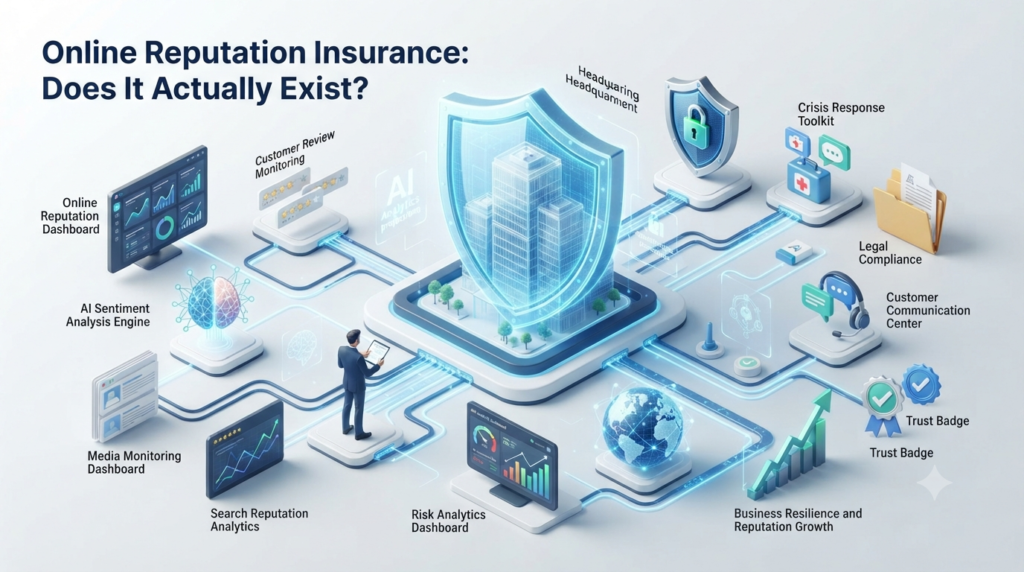
What Insurance Doesn’t Replace, Even When You Have It
Even businesses with access to reputational damage insurance or crisis communications cover still need genuine, active reputation management alongside it. Insurance typically compensates for financial loss after an event has already caused damage, it doesn’t prevent the damage from occurring, rebuild ongoing trust, or manage the day-to-day monitoring and review response that determines whether a crisis develops in the first place. Our guide to reputation damage control in the first 48 hours covers the practical response work that insurance funds but doesn’t replace, since even a well-insured business still needs someone actually executing that response effectively.
How We Help Businesses Build Realistic Protection
We help businesses build the genuine, active protection most companies actually need, monitoring, crisis readiness, and consistent reputation-building work, rather than relying on the narrow, expensive coverage that formal online reputation insurance realistically offers. Our complete framework for crisis management covers prevention, response, and recovery as an integrated approach, genuinely accessible regardless of whether formal insurance coverage is part of your broader risk strategy.
Frequently Asked Questions
Can a small business actually buy online reputation insurance?
Genuine standalone reputational damage insurance is generally out of reach for small businesses given cost and underwriting requirements, though crisis communications cover bundled within standard cyber insurance is often accessible and worth considering.
Does cyber insurance automatically include reputation protection?
Many cyber policies include a crisis communications element covering PR and incident response costs, but this typically only activates following a covered cyber event specifically, not general reputational harm from other causes.
How much does genuine reputational damage insurance actually cost?
For large corporates seeking meaningful indemnity limits, premiums can range from roughly £150,000 to £400,000 annually or more, reflecting the intensive underwriting and significant potential payouts involved.
Is active reputation management a genuine substitute for insurance?
For most businesses, yes, in practical terms. Given how limited and expensive formal coverage actually is, proactive monitoring and crisis preparation offer far more realistic, cost-effective protection for the vast majority of UK businesses.
What triggers a payout under a genuine reputational damage policy?
This varies by specific policy, but typically requires demonstrating a defined adverse event alongside measurable financial loss, lost revenue, profit, or market value, directly attributable to that specific reputational harm.



