
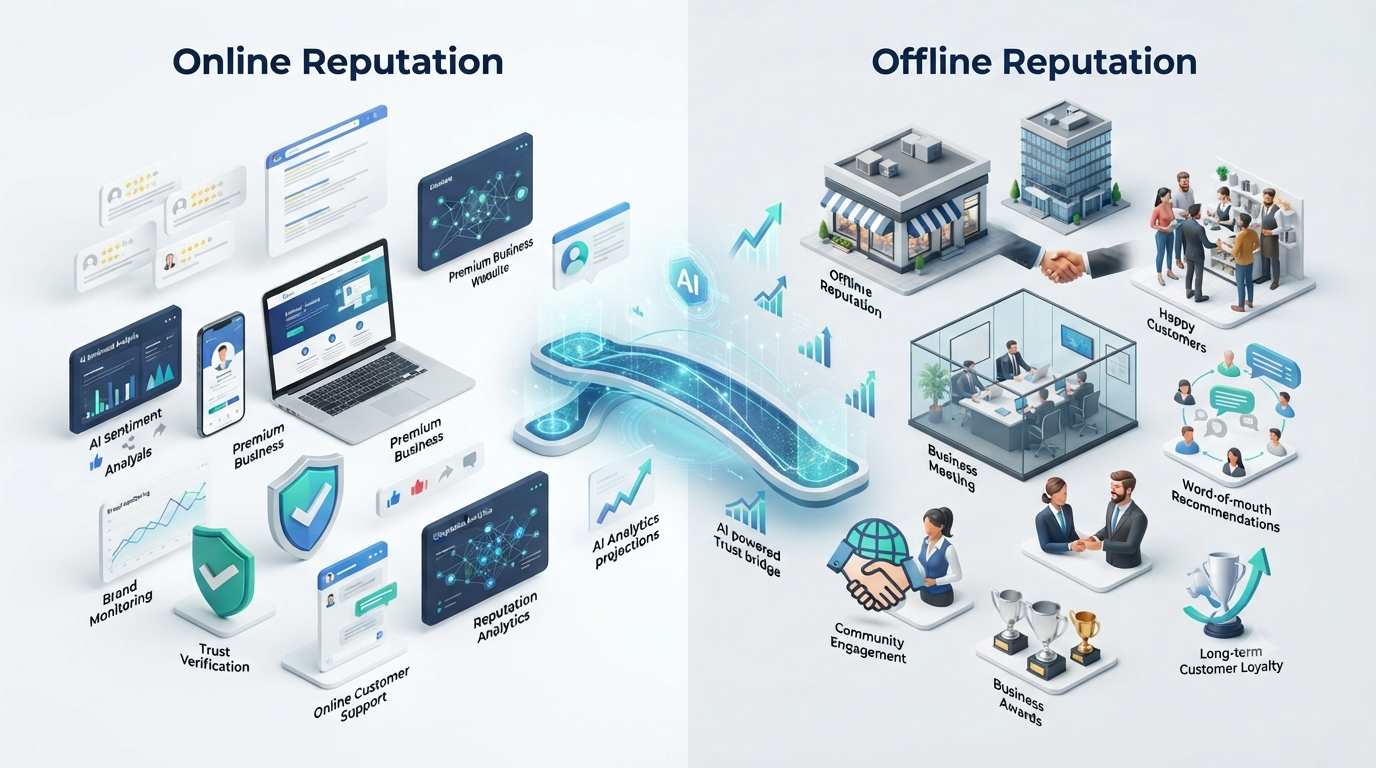
Online Reputation vs Offline Reputation
A business can be genuinely excellent in real life, beloved by regulars, trusted throughout its local community, and still look mediocre or worse online. The reverse happens too, a business with a thin real-world track record can appear polished and trustworthy purely through strong digital presentation. Online reputation vs offline reputation isn’t a contradiction, it’s a genuine gap that exists for identifiable reasons, and understanding why it forms matters because most people now form their first impression from the digital side, regardless of how strong the offline reality actually is.
Why This Gap Actually Forms
A few consistent patterns explain why online and offline reputation drift apart so commonly:
- Established businesses often neglect their digital presence. A business built over decades on genuine word of mouth may never have prioritised claiming profiles, generating reviews, or managing search results, since none of that mattered when reputation spread purely through personal recommendation.
- Newer businesses can appear more credible online than their track record justifies. A polished website and active social media can create a stronger digital impression than the business’s actual experience or history would earn through word of mouth alone.
- A single bad online moment can misrepresent years of good service. One viral complaint or a cluster of negative reviews from an unusual period can dominate search results even when it represents a genuine outlier rather than the typical customer experience.
- Review platforms capture only a fraction of actual customers. Most satisfied customers never leave a review, meaning the online record often reflects the most vocal minority rather than the true, broader picture of actual service quality.
Why Online Reputation vs Offline Reputation Increasingly Favours the Digital Side
The uncomfortable reality for businesses with strong offline standing but weak digital presence is that research now happens online first, almost universally, regardless of how established or trusted a business genuinely is within its community.
- Search happens before almost every decision now. Even someone who received a personal recommendation typically still checks online before actually committing, meaning a weak digital presence can undermine an otherwise strong referral.
- Digital impressions form faster than offline relationships can develop. A prospective customer forms a judgement from a search result or review page in seconds, long before they’d have the chance to experience the genuine quality a business actually offers in person.
- This comparison isn’t a fair fight in terms of reach. A single online review can be read by thousands of prospective customers, while an excellent in-person interaction, however genuine, typically only influences the people directly present for it.
- New customers, unlike returning ones, have no offline relationship to draw on yet. Every new customer starts from the digital impression alone, meaning a weak online presence disproportionately affects growth even when existing customers remain genuinely loyal.
Our guide to the psychology behind why first impressions stick covers exactly why this digital-first impression tends to be so difficult to overcome once formed, even with genuinely strong offline evidence to the contrary.
Real Scenarios Where the Online Reputation vs Offline Reputation Gap Creates Genuine Risk
A long-established local business with decades of loyal customers but no claimed Google profile and no reviews at all can appear, to someone searching cold, less credible than a much newer competitor with an active, complete digital presence. A professional with an excellent, well-regarded reputation within their industry circle can still lose opportunities to someone with a stronger, more visible LinkedIn presence and search footprint, simply because the offline reputation never became digitally visible. And a business that resolved a genuine service issue years ago, changing staff, fixing a process, can still be judged today by an old, unaddressed negative review that no longer reflects current reality at all.
How to Actually Close the Gap Between Online Reputation vs Offline Reputation
Closing this gap starts with treating digital presence as seriously as the offline reputation a business has actually earned, rather than assuming genuine quality speaks for itself regardless of visibility. This means actively claiming and completing free profiles, encouraging genuine reviews from the many satisfied customers who’d never think to leave one unprompted, and ensuring search results accurately reflect current reality rather than an outdated snapshot. Our guide to small business reputation management on a budget covers exactly these foundational steps for businesses working to bring their digital presence in line with genuine offline strength.
How to Actually Measure Your Own Gap
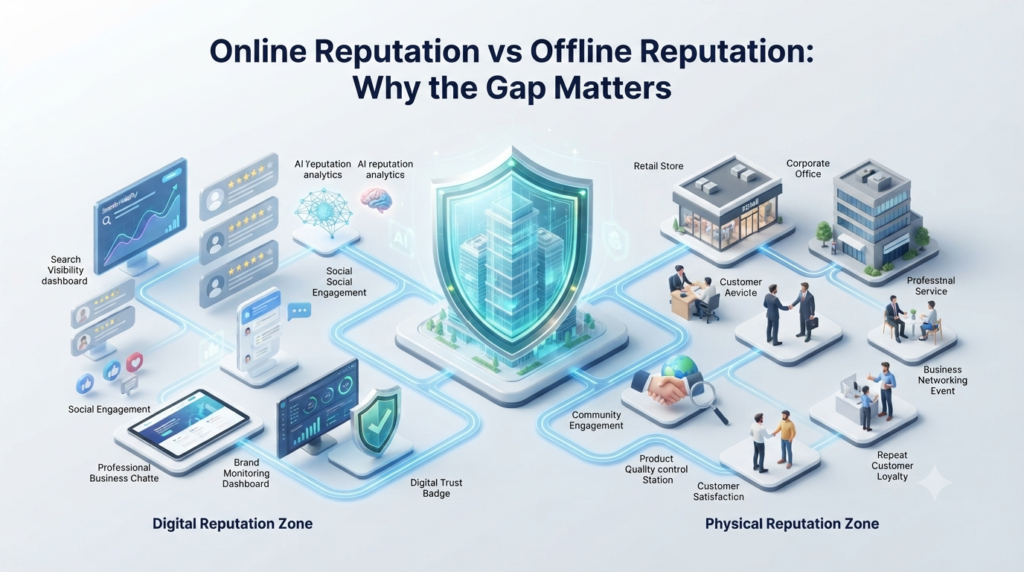
Understanding whether this gap genuinely applies to your situation starts with an honest, side-by-side comparison. List what you know to be true from direct experience, staff feedback, long-standing customer relationships, genuine service quality, then separately search your own name or business name and note what a complete stranger would actually see. The size of the difference between these two pictures is your online reputation vs offline reputation gap in practice, not an abstract concept but a measurable, comparable reality.
For businesses uncertain where to start, a few concrete signals tend to reveal the gap clearly. A high volume of repeat customers and referrals paired with thin or nonexistent online reviews suggests strong offline reputation without matching digital visibility. Conversely, strong search visibility and positive early reviews paired with limited actual operating history suggests the digital presence may be running ahead of what the business has genuinely proven yet. Neither situation is inherently bad, but both benefit from conscious awareness rather than assuming the two sides of this comparison are naturally aligned without any deliberate effort.
Why Closing This Gap Matters for Growth Specifically
Existing customers and long-standing local relationships tend to be more forgiving of a weak digital presence, since they already have direct, offline experience to draw on. New customer growth depends almost entirely on the digital side of this comparison, however, since prospective customers researching cold have nothing else to go on. Our guide to building genuine customer trust covers the deeper principles behind building a reputation that holds up consistently across both dimensions simultaneously, rather than relying on offline strength to compensate for digital neglect indefinitely.
How We Help Businesses Close This Gap
We help businesses bring their online presence in line with the genuine quality and trust they’ve already earned offline, closing the online reputation vs offline reputation gap so the digital impression a prospective customer forms actually reflects the real experience existing customers already know. Our complete beginner’s guide to online reputation is a useful starting point for understanding exactly what makes up this digital side of the comparison before deciding where to focus effort first.
Frequently Asked Questions
Can a business with a strong offline reputation really struggle online?
Yes, genuinely and commonly. Digital presence requires active, deliberate effort, and a business relying purely on word of mouth without claiming profiles or generating reviews can appear far weaker online than its actual offline standing would suggest.
Which matters more for growth, online reputation vs offline reputation?
For attracting new customers specifically, online presence typically matters more, since prospective customers researching cold have no offline relationship to draw on, while existing customers tend to be more forgiving of digital gaps.
How long does it take to close a significant gap between the two?
Foundational fixes like claiming profiles and generating initial reviews can show results within weeks, while fully aligning digital presence with genuine offline reputation typically takes several months of consistent effort.
Is it possible for online reputation to actually exceed genuine offline quality?
Yes, and this creates its own risk, since a polished digital presence not matched by actual service quality eventually generates the negative reviews and word of mouth that close the gap in the opposite, unfavourable direction.
What is the first step for a business realising this gap exists for them?
Search your own business name and honestly compare what you find against what your actual customers would say about their real experience, since this comparison reveals exactly where the online reputation vs offline reputation gap sits and what needs attention first.