
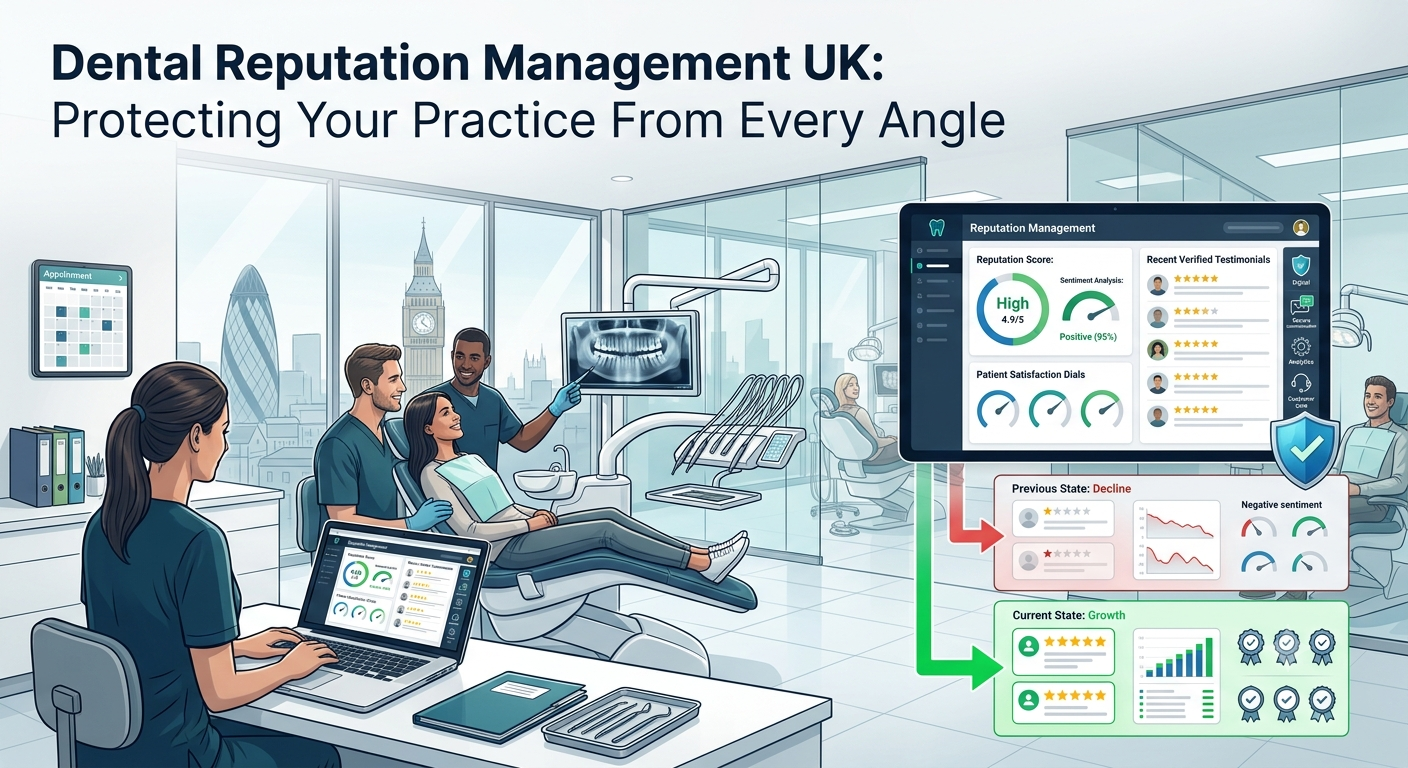
Dental Reputation Management
A dental practice’s reputation is shaped by more regulatory scrutiny than almost any other healthcare setting, patient reviews, individual clinician conduct, and practice wide inspection standards all feed into how a practice is perceived, often simultaneously. Dental reputation management exists because these layers rarely move in isolation, a single unresolved complaint can touch a dentist’s individual standing, the practice’s public reviews, and its regulatory record all at once. We help UK dental practices manage all three together, rather than reactively addressing each one separately.
Why Dental Practices Face Dual Regulatory Scrutiny
Dentistry is unusual among healthcare settings in being regulated by two entirely separate frameworks simultaneously. The General Dental Council regulates individual dental professionals through its Fitness to Practise function, investigating complaints about a specific registrant’s conduct or competence. The Care Quality Commission, by contrast, inspects the practice itself under the Single Assessment Framework, assessing the organisation across safety, effectiveness, care, responsiveness, and leadership. Dental reputation management has to account for both tracks at once, since a documentation failure uncovered during a CQC inspection can itself trigger a separate GDC referral for the individual clinician involved.
Understanding the Dental Complaints Service and What It Means for Your Practice
For private dental care specifically, patients can escalate unresolved complaints to the Dental Complaints Service, an independent, GDC funded body that supports both patients and practices in resolving disputes fairly. A significant proportion of cases handled through this route get resolved through local resolution at the practice level, which is precisely why having a clear, prompt, principle five compliant complaints process, the GDC’s own standards require a clear and effective complaints procedure, matters as much for reputation as it does for compliance.
Common Reputation Risks Facing UK Dental Practices
Several patterns show up consistently across the sector: unclear cost communication, which the Dental Complaints Service has specifically identified as one of the largest preventable causes of patient complaints, unanswered or poorly handled negative reviews that escalate into formal complaints unnecessarily, CQC documentation gaps that surface during inspection and create both regulatory and reputational exposure simultaneously, and confusion between NHS and private complaint routes, which frustrates patients and can itself become the source of a negative review even when the underlying treatment was sound.
How We Approach Dental Reputation Management for Practices
Our process begins with a full audit covering your practice’s public review presence across Google and dental specific platforms, your CQC inspection history and current rating, and how clearly your complaints procedure is communicated to patients from the outset. From there, we help build clearer patient communication around costs and treatment plans, since this single change addresses the most common root cause of complaints before they ever reach a review platform or the Dental Complaints Service.
Our guide to reputation management for doctors covering GMC complaints covers the closely related individual-practitioner side of medical reputation work, useful context for understanding how GDC processes compare to the GMC framework doctors operate under.
Managing Patient Reviews Without Breaching Confidentiality
Dentist Google reviews and dental practice reviews UK wide carry real weight for prospective patients choosing where to register, particularly for anxious or first-time patients researching a practice carefully before booking. Responding professionally to every review, without confirming or discussing specific patient treatment details, protects both patient confidentiality and the practice’s professional standing. Our practice-level companion guide covering GMC and CQC scrutiny explains this same confidentiality-first response approach in more depth, directly applicable to dental settings as well.
Handling a Serious Complaint or Inspection Concern
If a practice is facing an active GDC investigation involving a specific clinician, or a CQC inspection has flagged a serious concern, dental reputation management at this stage requires particular care, since confidentiality obligations limit what can be said publicly, and premature public commentary can complicate an ongoing regulatory process. Our guide to reputation damage control in the first 48 hours covers the broader crisis response framework we apply, adapted specifically to the dual regulatory sensitivity dental practices face.
Building Long Term Practice Trust Proactively
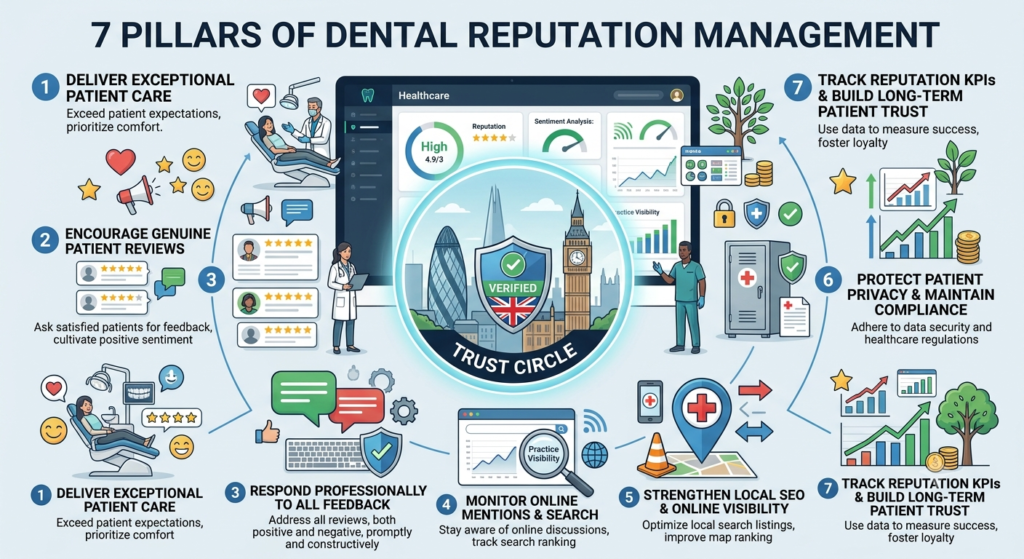
The strongest dental practices treat reputation as continuous, not reactive: keeping CQC documentation current well ahead of inspection cycles, maintaining a clear, visible complaints procedure that meets GDC principle five, and actively encouraging genuine patient reviews rather than waiting for reviews to accumulate passively. This proactive approach to dental reputation management consistently produces better outcomes than addressing issues only once they’ve already become visible complaints or negative reviews.
Frequently Asked Questions
What’s the difference between a GDC complaint and a CQC inspection concern?
The GDC investigates individual dental professionals through its Fitness to Practise process, while the CQC inspects the practice as an organisation under the Single Assessment Framework. Both can be triggered independently, but a documentation issue found during a CQC inspection can also lead to a GDC referral.
Can a dental practice respond publicly to a negative patient review?
Yes, but only with a general, professional response that avoids confirming or discussing specific treatment details, since patient confidentiality obligations apply regardless of how the review itself is worded.
What’s the most common preventable cause of dental patient complaints?
Unclear communication about treatment costs and plans, identified by the Dental Complaints Service as one of the largest preventable complaint categories, meaning transparent, upfront cost breakdowns genuinely reduce complaint volume.
Do NHS and private dental complaints follow the same process?
No. NHS complaints go through the Integrated Care Board and then the Health Service Ombudsman, while private complaints go through the Dental Complaints Service, and confusion between the two routes itself frequently frustrates patients.
How does effective dental reputation management actually reduce GDC and CQC risk?
By addressing the root causes, unclear communication, inconsistent documentation, unresolved complaints, that drive both patient dissatisfaction and regulatory scrutiny simultaneously, rather than treating reputation and compliance as separate, unrelated concerns.