
Ecommerce Seller Reputation
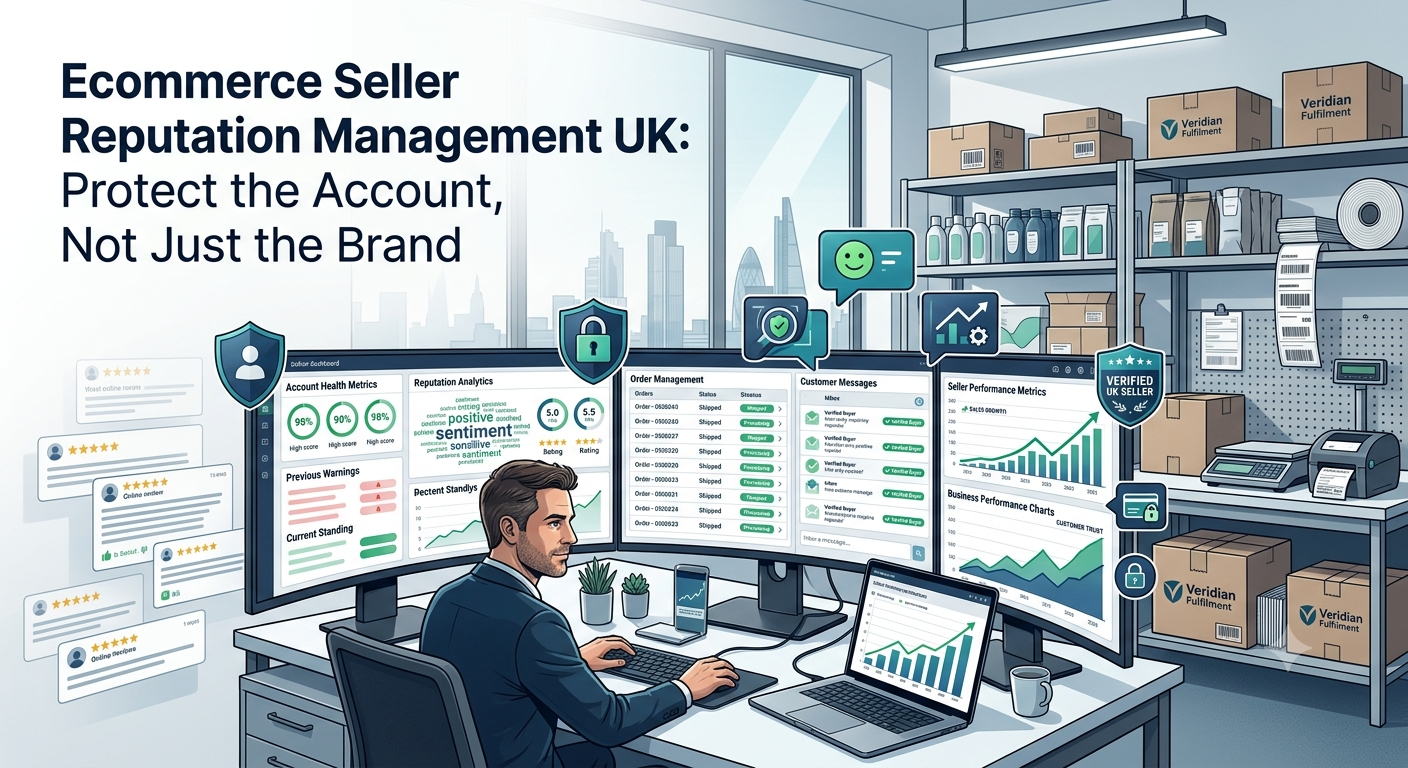
For most businesses, a damaged reputation costs sales gradually. For an online seller, it can cost you the ability to sell at all, overnight. Ecommerce seller reputation isn’t just a perception issue, it’s tied directly to hard platform metrics that can suspend your Amazon or eBay account with very little warning if left unmanaged. We help UK sellers protect both sides of this at once, the public-facing brand and the underlying account health that keeps you trading.
Why Ecommerce Seller Reputation Works Differently Than Other Sectors
Most reputation work focuses purely on public perception. Ecommerce seller reputation carries an additional, harder consequence: marketplace platforms convert customer dissatisfaction directly into account level metrics that can restrict or suspend your ability to sell. Amazon’s Order Defect Rate, which combines negative feedback, A to z Guarantee claims, and chargebacks over a rolling 60-day window, must stay below 1% or the account risks suspension. For sellers with lower order volume, a single bad batch of inventory generating a handful of negative reviews can push that number over the threshold within a week, since each defect carries more statistical weight on a smaller base.
The Metrics That Actually Determine Your Selling Privileges
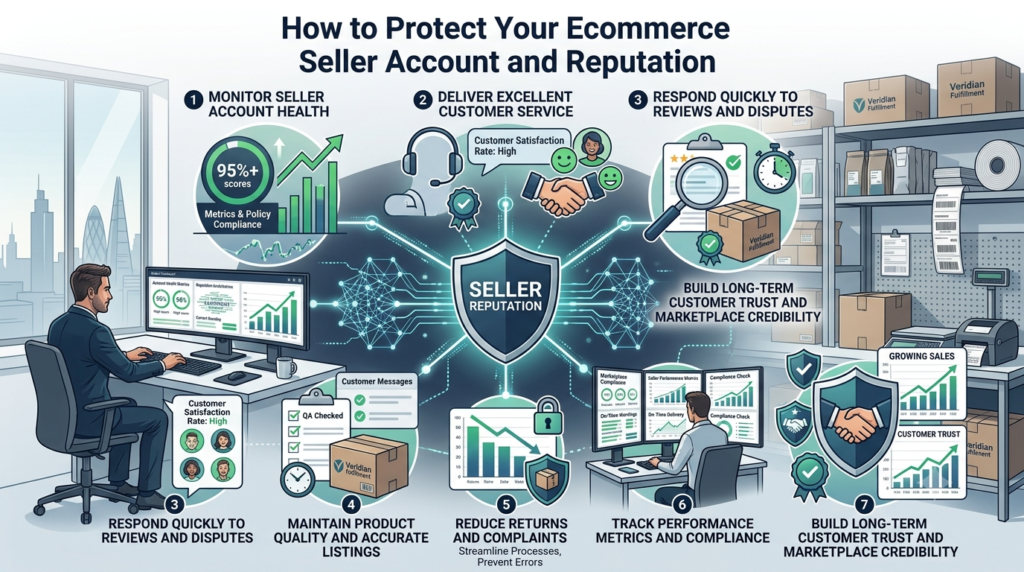
Beyond Order Defect Rate, Amazon tracks Late Shipment Rate, which must stay under 4%, and Cancellation Rate, which must stay under 2.5%, all feeding into a composite Account Health Rating that determines suspension risk. This means ecommerce seller reputation management has to work upstream of the review itself, addressing the operational causes, inventory quality, fulfilment speed, accurate listings, that generate negative feedback in the first place, not just responding to complaints after they’re already affecting your account health score.
How We Approach Ecommerce Seller Reputation Protection
Our process starts with a full audit connecting your public review presence, Amazon and eBay seller feedback, Trustpilot, and your own site reviews, with the underlying account health metrics driving them. From there, we help identify the specific operational patterns generating negative feedback, whether that’s a particular product line, a fulfilment bottleneck, or a listing accuracy issue, since fixing the root cause is what actually protects both your public reputation and your account standing simultaneously.
Our guide to building a positive content strategy covers the broader principles behind building a resilient, authoritative online presence, applied here specifically to marketplace and e-commerce review ecosystems.
Managing Feedback Across Every Platform, Not Just One
Amazon seller feedback, eBay seller ratings, and Trustpilot reviews each operate under different rules and carry different weight with customers researching your store. A seller focusing exclusively on Amazon account health while ignoring public Trustpilot sentiment, or vice versa, leaves a real gap, since prospective customers increasingly cross reference multiple sources before purchasing from an unfamiliar seller. We build monitoring and response routines that cover every platform relevant to your specific sales channels, not just the one carrying the most immediate operational risk.
Responding to Negative Feedback Without Making It Worse
Marketplace feedback and reviews require particular care in how they’re addressed, since most platforms restrict direct negotiation or pressure around feedback removal, and violating these policies, including any form of incentivised review activity, can trigger a policy suspension with no prior warning, a more severe enforcement category than a standard performance-based suspension. We help sellers respond within each platform’s specific rules, resolving genuine issues directly with customers through approved channels rather than risking a policy violation while trying to protect the seller’s ecommerce seller reputation.
Recovering From a Suspension or Serious Reputation Dip
If your account has already been suspended or your public reputation has taken a serious hit, recovery requires addressing both the platform-facing appeal and the public perception simultaneously. Our guide to reputation damage control in the first 48 hours covers the response framework that applies to fast-moving reputational incidents generally, while a well-documented Plan of Action addressing root cause, corrective action, and prevention is what platforms specifically require to consider reinstatement.
Building Long Term Trust as an Online Seller
The strongest ecommerce seller reputation is built proactively, through consistent product quality control, accurate listings that set correct customer expectations, and genuine, active review generation from satisfied customers rather than reactive damage control after metrics have already slipped. Sellers who monitor account health weekly and address emerging patterns early consistently avoid the suspension risk that catches unprepared sellers off guard during high volume periods.
Frequently Asked Questions
How quickly can negative feedback actually affect my Amazon account?
For lower volume sellers, a cluster of negative reviews from a single bad batch of inventory can push Order Defect Rate over the 1% threshold within about a week, since each defect carries more statistical weight against a smaller total order count.
Should I try to get negative marketplace reviews removed directly?
Only through the platform’s official reporting process for reviews that violate policy. Attempting to pressure or incentivise customers to change or remove genuine feedback risks a policy violation, which can trigger a more severe suspension than a standard performance issue.
Does ecommerce seller reputation management cover both Amazon and my own website?
Yes, effective management covers every platform where customers research or buy from you, since marketplace account health and public brand perception are connected but distinct, and neglecting either creates a real gap.
What’s the fastest way to reduce Order Defect Rate?
Address the underlying operational cause, typically inventory quality, fulfilment accuracy, or listing accuracy, since the defect rate reflects genuine customer experience rather than something that can be improved through response strategy alone.
Can a suspended seller account actually be reinstated?
Often, yes, with a well documented Plan of Action that clearly identifies the root cause, the corrective action already taken, and the prevention measures now in place, though vague or generic appeals are commonly rejected.