
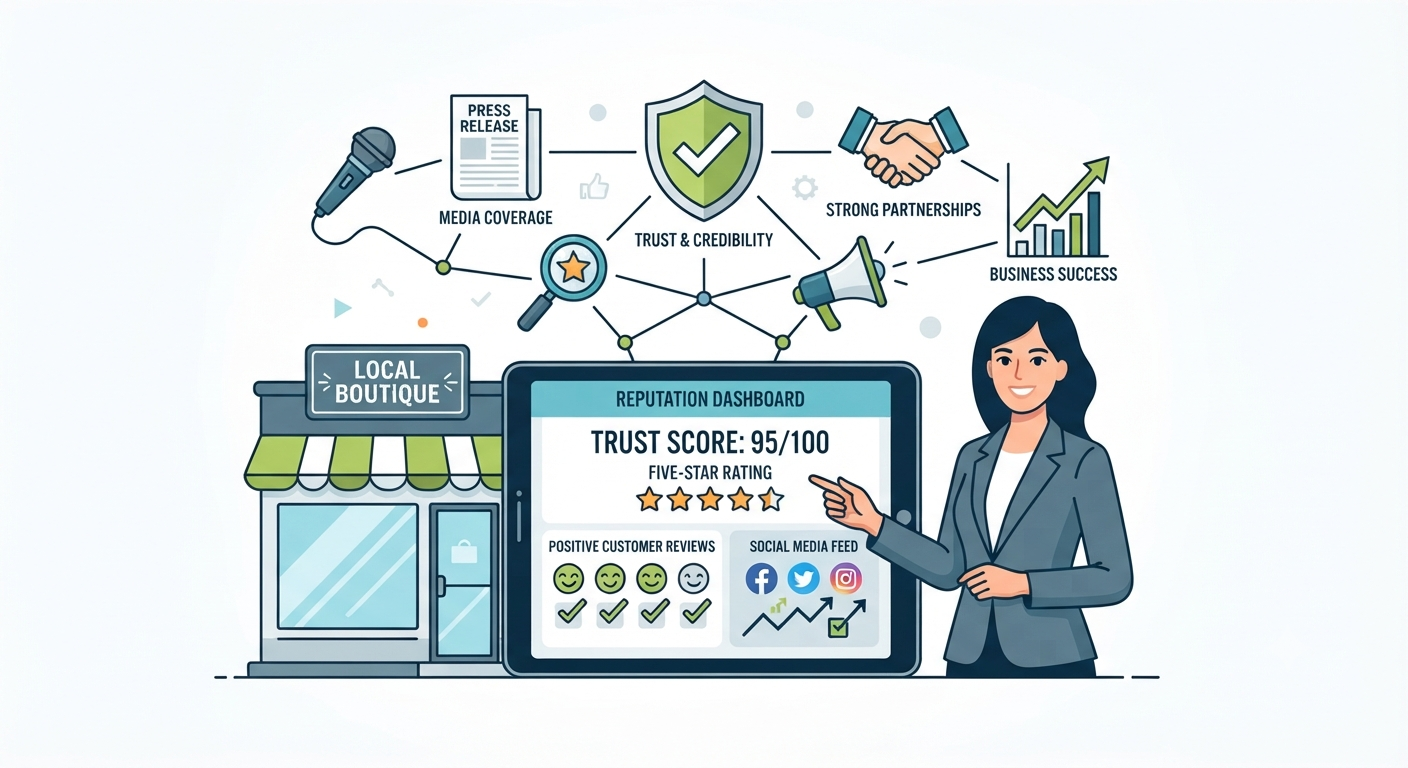
Online PR Reputation Management
Small businesses often assume PR reputation management belongs to companies with dedicated communications teams and enterprise budgets. In practice, the combination of earning genuine press coverage and actively managing how your business is perceived is entirely achievable at small business scale, provided you understand what actually matters and where to focus limited time and resources.
What PR Reputation Management Actually Combines
This isn’t one discipline, it’s two closely related ones working together toward the same underlying goal: genuine third-party credibility. This combined approach brings together earning media coverage and press mentions through outreach and storytelling, and actively managing search results, reviews, and public sentiment. Businesses that treat these as entirely separate efforts miss the compounding value that comes from combining them, since press coverage feeds directly into search authority, and a strong search presence makes future press outreach considerably easier.
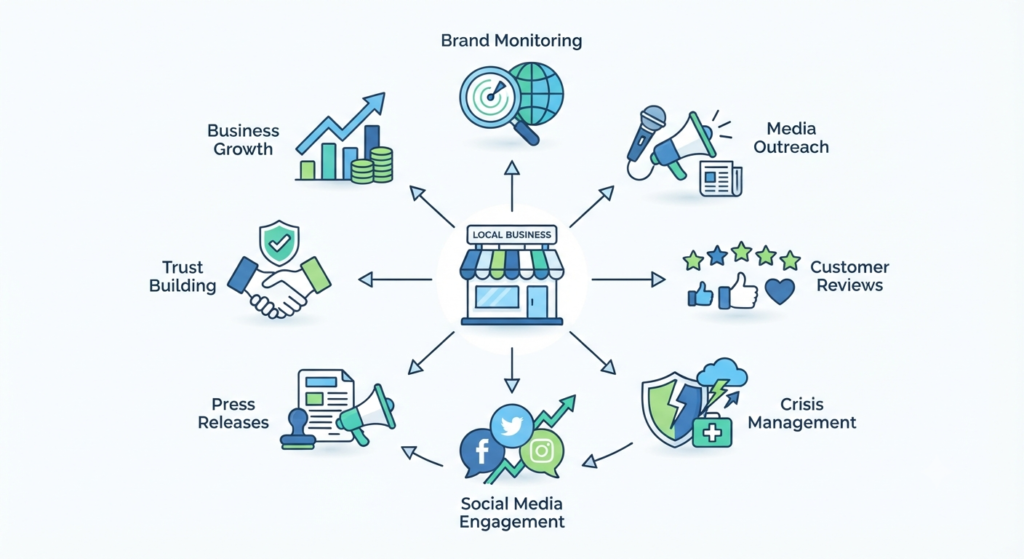
- Press and media relationships, building genuine connections with journalists covering your industry or local area
- Search visibility and content, ensuring accurate, authoritative information ranks well for your business name
- Review and reputation monitoring, tracking and responding to how customers actually perceive your business
- Crisis readiness, having at least a basic plan for handling something going publicly wrong
Getting Started With PR Reputation Management on a Small Business Budget
The good news is that small businesses often have real advantages here that larger companies lack, genuine, specific stories and direct access to decision-makers who can respond quickly without layers of internal approval.
Start with genuinely newsworthy local or industry angles. Journalists covering local business or trade publications are often more accessible than national press, and a specific, relevant story from a small business can earn coverage just as effectively as one from a larger competitor. Our guide to what digital PR actually involves covers the core tactics that work regardless of business size.
Build a simple, honest press release template. You don’t need an agency to write something journalists will actually use, you need a clear, factual structure and genuine news to put into it. We covers exactly the format and approach that earns attention from busy journalists.
Claim and maintain your core online presence first. Before pursuing press coverage, make sure your Google Business Profile, reviews, and basic search presence are accurate and complete, since press coverage sending people to a thin or outdated online presence wastes much of its value. Our guide to small business reputation management on a budget covers the specific, free and low-cost foundational steps.
Monitor consistently, even with basic tools. A simple search alert for your business name catches new mentions, reviews, and press activity without requiring expensive monitoring software, giving you enough visibility to respond quickly when something does happen.
Common Mistakes Small Businesses Make With PR Reputation Management
A few recurring patterns waste time and effort for small businesses trying to do this well:
- Pitching journalists with promotional content rather than genuine news. A story built around “we’re great” rarely earns coverage, while specific, factual news genuinely relevant to a journalist’s audience often does.
- Chasing press coverage while ignoring the underlying reputation foundation. Coverage sending prospective customers to a neglected, inconsistent online presence undermines much of the value that coverage was meant to create.
- Treating this as a one-off project rather than an ongoing habit. A single successful press placement or a burst of review requests rarely sustains itself without continued, consistent effort afterward.
- Trying to do everything at once without prioritising. Small businesses with limited time get better results focusing on the two or three highest-impact actions consistently than spreading thin effort across everything simultaneously.
Measuring Whether Your Efforts Are Actually Working
Small businesses juggling limited time benefit enormously from tracking a few simple signals rather than guessing whether their combined efforts are paying off. Watch whether new enquiries mention finding you through a press mention or a specific review, since this tells you which channel is actually driving interest. Track your average review rating and volume monthly, alongside how quickly you’re responding to new feedback compared to previous months. And note whether journalists you’ve pitched before are responding more readily to follow-up outreach, since this signals the relationship-building side of the work is genuinely taking hold.
These checks take only a few minutes but prevent months of scattered effort going into channels that aren’t actually producing results, letting a small business redirect limited time toward whatever is genuinely working rather than continuing everything indefinitely out of habit.
Why Combining Both Disciplines Matters More at Small Business Scale
Larger businesses can afford separate specialists for press relations and reputation management. Smaller businesses generally can’t, which actually makes the combined approach more valuable, not less, since every action taken serves both goals simultaneously rather than requiring separate budgets and separate effort. A single piece of genuine press coverage strengthens search authority, builds a credible backlink, and gives you authentic content to share, all from one focused effort rather than three separate campaigns.
How We Approach PR Reputation Management for Small Businesses
Our process starts with identifying your specific, genuine story angles and current reputation gaps together, rather than treating press outreach and reputation monitoring as separate engagements. From there, we build a realistic, prioritised plan matched to your actual budget and time, focusing on the combination of actions that deliver the most value for a business genuinely operating at small business scale, not a scaled-down version of an enterprise package that was never designed for you in the first place.
Frequently Asked Questions
Can a small business really do PR reputation management without hiring an agency?
Yes, particularly the foundational elements, claiming your online presence, responding to reviews, and pitching genuinely newsworthy local stories directly. More complex needs, ongoing media relationships, crisis situations, often benefit from professional support as the business grows.
Which should a small business prioritise first, press coverage or reputation management?
Reputation foundations generally come first, since press coverage sending people to an inconsistent or neglected online presence wastes much of its potential value. Build the foundation, then pursue press coverage to amplify it.
How much does professional PR reputation management typically cost for a small business?
Costs vary significantly by scope, but many providers offer scaled packages specifically for smaller businesses, and even a focused, project-based engagement can deliver meaningful value without an ongoing enterprise-level retainer.
Do small businesses actually get picked up by journalists, or is that only for larger brands?
Small businesses regularly earn coverage, particularly in local and trade publications, provided the story itself is genuinely relevant and specific rather than promotional.
How long does it take to see results from combined PR reputation management effort?
Foundational reputation improvements can show within weeks, while building genuine press relationships and search authority through combined effort typically takes several months of consistent activity to compound meaningfully.