Product Reputation Management
Every brand has a moment they hope never comes: the faulty batch, the safety recall, the viral unboxing video showing exactly what went wrong. When it happens, the product itself is only half the problem. The other half is what shows up in search results for months, sometimes years, afterward. Product reputation management exists for exactly this moment, and how a brand handles the first few days often matters more than the defect itself.
Why a Single Bad Product Can Outweigh Years of Good Ones
Here’s the uncomfortable truth about consumer trust: it’s asymmetric. Ten years of reliable products barely register compared to one dramatic failure caught on camera. Product reputation management has to account for this imbalance directly, because a single viral complaint, safety concern, or recall notice can dominate search results for a brand name far more thoroughly than any amount of positive marketing ever could.
This isn’t unfair, exactly. It reflects genuine risk-aversion in how people make purchasing decisions. But it does mean brands need a strategy built specifically for this scenario, not a generic reputation plan borrowed from an unrelated crisis.
What Actually Happens When a Product Goes Wrong
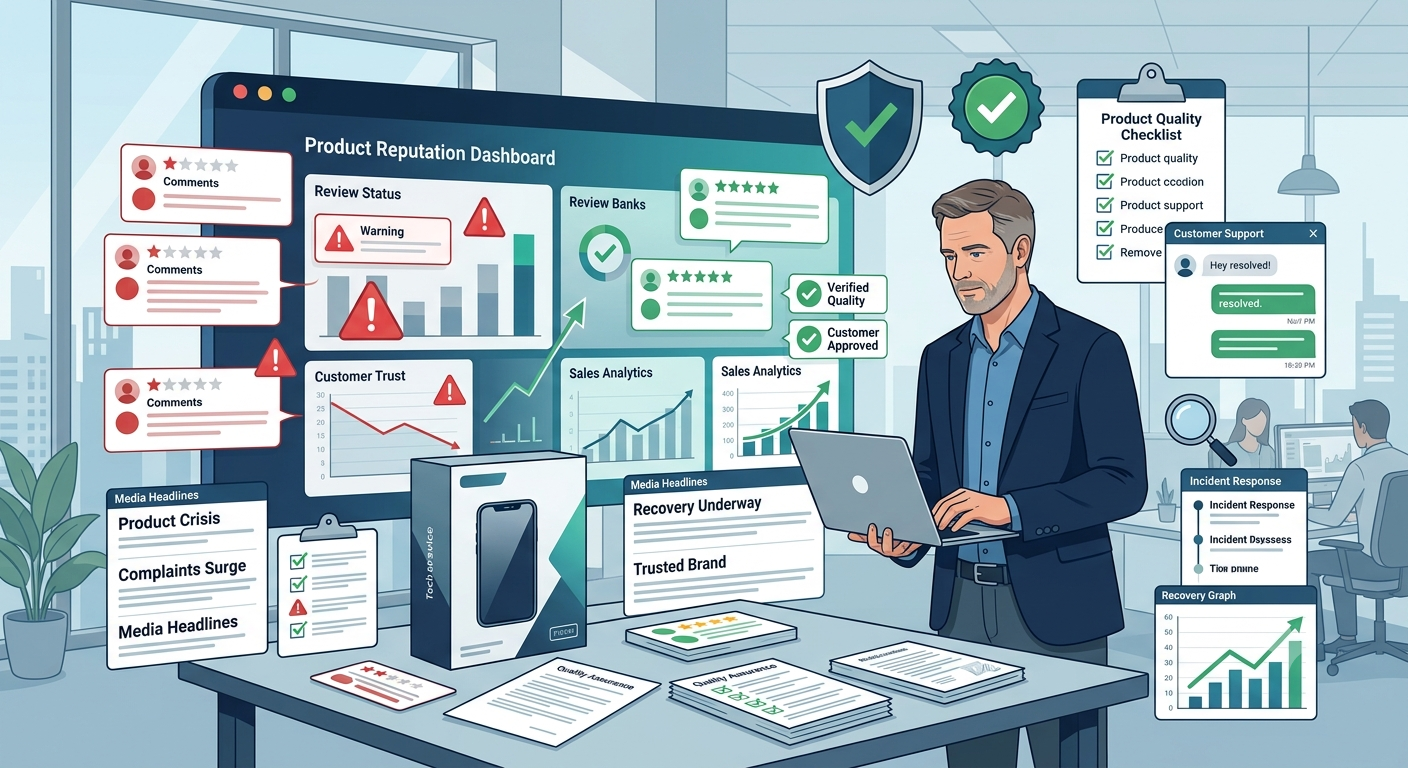
The pattern is fairly consistent across industries. A defect or safety issue surfaces, often first on social media before any official channel. Coverage spreads faster than most companies can formally respond. Review platforms fill with a wave of new, negative feedback, some from people directly affected, some from people who saw the story and want to pile on. And search engines, doing exactly what they’re designed to do, start ranking all of this prominently for the brand and product name.
Product reputation management is the discipline of getting ahead of this sequence rather than reacting to it one stage behind, which is where most brands lose control of the narrative.
The First Moves That Actually Matter
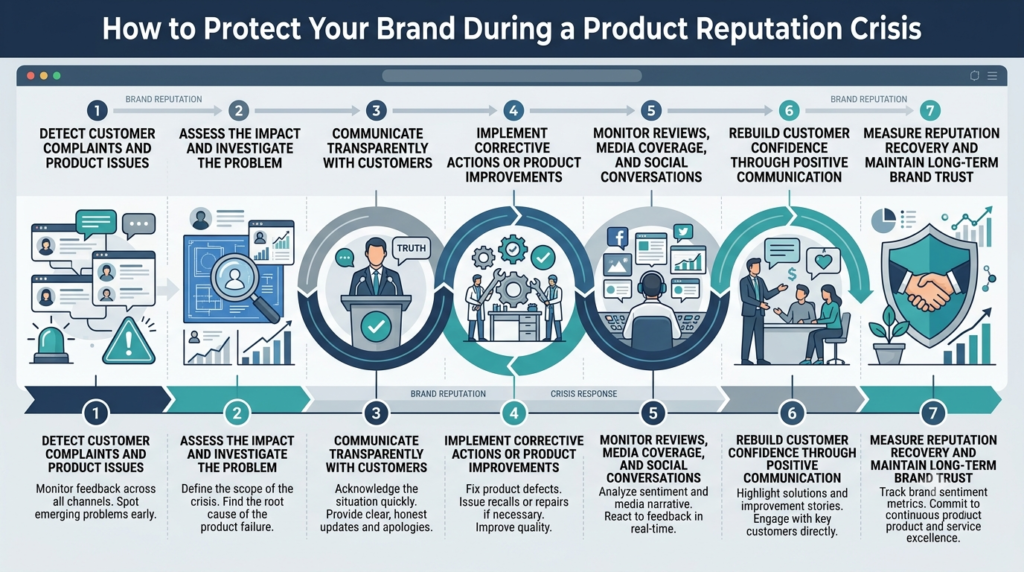
When something goes wrong with a product, a few early decisions shape everything that follows:
- Confirm the facts before saying anything publicly. Speculation or premature reassurance that later proves wrong causes far more damage than a short delay for accuracy.
- Prioritise customer safety communication over brand protection. A response that reads as more concerned with optics than with affected customers gets noticed, and criticized, immediately.
- Coordinate with legal and regulatory requirements early, particularly for anything touching product safety, where formal recall processes may apply regardless of reputation strategy.
- Get a holding statement out fast, even without every detail confirmed, since silence during an active story is consistently read as evasion.
Our guide to reputation damage control in the first 48 hours breaks down this exact response window in more depth, and the same urgency applies here, arguably more so, since product safety concerns carry both reputational and regulatory weight simultaneously.
Managing the Recall Process Without Losing the Narrative
Product recall UK processes are often handled well operationally and poorly communicated publicly, and that gap is where lasting reputation damage tends to happen. A technically correct recall notice, buried in legal language and issued without proactive outreach, does little to reassure the people who actually need reassuring. Clear, plain language communication about what happened, what’s being done, and what affected customers should do next protects trust far more effectively than a compliant but cold official notice.
The Review Wave: Managing Feedback During and After
Product review management becomes especially difficult in this scenario, since a spike in negative reviews often includes a mix of genuinely affected customers and opportunistic pile-on comments from people who never actually experienced the issue. Responding to every review individually, calmly and specifically, is tedious but important, since each response is visible to every future reader deciding whether to trust the brand again. Our guide to the UK review platforms that matter most is useful context for understanding where this feedback is most likely to concentrate and who’s actually reading it.
Rebuilding Trust After the Dust Settles
Consumer trust recovery doesn’t happen through a single well worded apology. It happens through consistent, visible follow through: genuine product improvements, transparent updates on what changed, and a steady return to normal, positive customer experiences that gradually rebalance what search engines and prospective customers see. This is the same long-game principle covered in our guide to building a positive content strategy, applied specifically to a brand working its way back from a product-specific incident.
When Brand Damage Control Needs to Go Further
Some situations extend beyond standard product reputation management into genuine crisis territory, particularly where there’s ongoing litigation, significant media investigation, or ongoing safety risk. In these cases, coordinated brand damage control involving legal counsel, a dedicated crisis communications team, and careful, consistent public messaging across every channel becomes essential, rather than optional. Product liability PR at this scale requires far more coordination than a single company spokesperson can typically manage alone.
Turning the Moment Into Long-Term Resilience
Counterintuitively, brands that handle a product failure well can sometimes emerge with stronger trust than before, since a genuine, well-managed response demonstrates exactly the kind of accountability customers hope to see but rarely get to witness directly. The brands that struggle long-term are almost always the ones that responded defensively, minimised the issue, or went quiet at the exact moment customers needed clear, honest communication most.
Frequently Asked Questions
How quickly should a brand respond when a product issue first surfaces?
As quickly as accuracy allows, ideally within hours with at least a holding statement, since delayed responses are consistently interpreted as evasive regardless of the actual reason for the delay.
Can negative reviews from a product recall period ever be removed?
Only if they violate platform policy, such as being fake or clearly abusive. Genuine reviews from affected customers typically remain, which is why a thoughtful response strategy matters more than removal attempts.
Does a product recall always cause lasting reputation damage?
Not necessarily. Brands that communicate clearly, prioritise customer safety visibly, and follow through consistently often recover fully, and some emerge with stronger customer trust than before the incident.
Should legal and reputation teams work together during a product crisis?
Yes, closely and early. Product safety issues often carry regulatory and legal obligations that need to be coordinated with public communication, rather than treated as separate, sequential concerns.
How long does it typically take to recover from a serious product reputation issue?
It varies by severity, but meaningful recovery usually takes several months of consistent, visible follow-through rather than a single announcement or apology resolving the situation quickly.