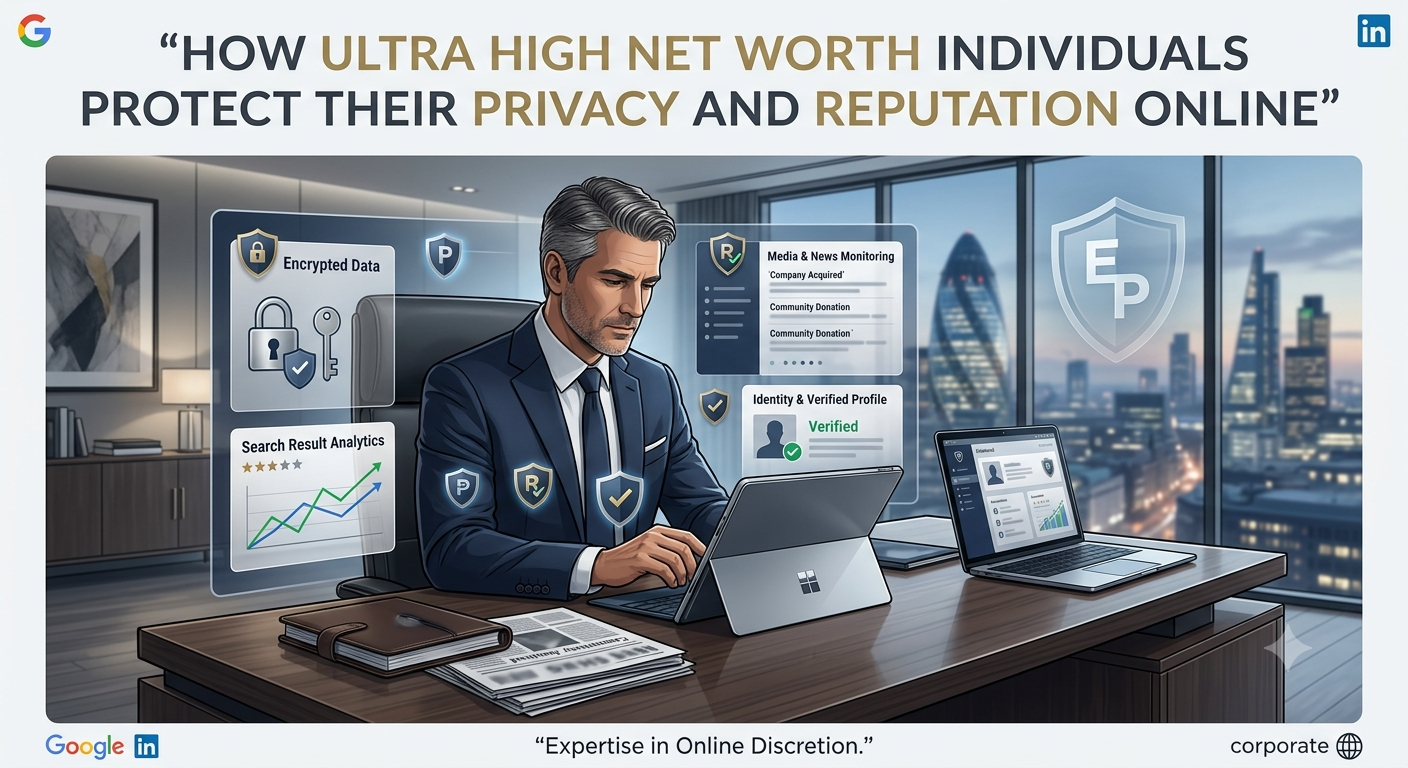
Ultra High Net Worth Individuals
Wealth attracts attention, and attention, left unmanaged, becomes exposure. For ultra high net worth individuals in the UK, the real challenge isn’t just responding when something negative appears. It’s managing an ongoing, elevated level of visibility that comes attached to financial prominence, family legacy, or business success, often whether they’ve sought that visibility or not.
By the end of this guide, you’ll know:
- Why UHNW reputation risks differ fundamentally from standard business or personal reputation concerns
- The specific steps involved in a discreet privacy and reputation protection strategy
- What to look for when choosing genuinely specialist support for this kind of work
What Does Privacy and Reputation Protection Mean for UHNW Individuals?
For most people, reputation management is about building visible, positive content. For UHNW individuals, the goal is frequently the opposite: controlling what’s visible at all. This includes auditing personal exposure across search engines and data broker sites, managing how family members appear in search results, and quietly monitoring for emerging risks before they escalate into visible problems. Privacy and reputation, for this audience, are deeply intertwined rather than separate concerns.
Why UHNW Individuals Face Distinct Reputation Risks
Several factors set this audience apart from typical reputation clients:
Wealth itself invites scrutiny and speculation, sometimes including misleading coverage about how it was acquired. Family members, spouses, children, business partners, are frequently drawn into search visibility even when they’ve had no direct involvement in whatever triggered attention. Personal detail exposure carries genuine security risk, not just reputational risk, since visible addresses, routines, or family information can expose individuals to harassment or targeted approaches. And legacy and succession considerations mean reputation decisions made today can affect how a family or estate is perceived for decades, not just in the short term.
Common Triggers for UHNW Reputation Concerns
Reputation exposure for this audience typically stems from a specific set of situations: media coverage tied to a business transaction, IPO, or major acquisition, family disputes or legal matters that attract press interest, philanthropic activity that invites public scrutiny of wealth and motives, proximity to a controversy involving a business partner or associate, and simple visibility from appearing on wealth rankings or industry lists.
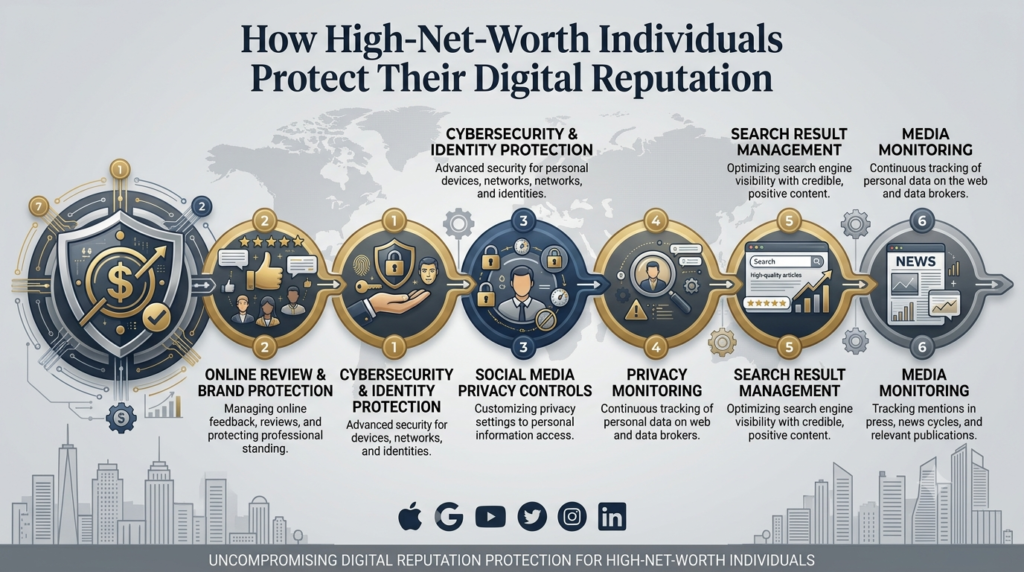
How UHNW Individuals Protect Their Privacy and Reputation
Step 1: Conduct a Full Privacy and Exposure Audit
The starting point is understanding exactly what’s currently visible or discoverable, including personal, financial, and family information published on data broker and aggregator sites, many of which most people are entirely unaware are publishing their details in the first place.
Step 2: Pursue Data Broker and Personal Information Removal
Data broker removal UK requests typically need to be submitted systematically, site by site, since there’s no single tool that clears every listing at once. This is often the single highest-impact step for reducing genuine exposure, and it’s worth revisiting periodically, since data brokers frequently re-aggregate information over time. Google’s own results about you removal tool is a useful starting point for search-specific exposure, though broader data broker removal typically requires a more systematic, ongoing process beyond that single tool.
Step 3: Shape Search Results Toward an Accurate, Curated Picture
Rather than promoting extensive new content, this usually means ensuring search results reflect an accurate, current picture rather than outdated information, content taken out of its original context, or unchecked speculation.
Step 4: Prepare for Discreet Crisis Response
When an issue does arise, the response itself needs to preserve privacy throughout the process, not just in the eventual outcome. This is a meaningfully different approach from a typical, public-facing corporate crisis response.
Step 5: Establish Ongoing, Quiet Monitoring
Most UHNW reputation work happens quietly in the background: tracking mentions, watching for new data broker listings, and identifying emerging risks well before they become visible problems, rather than reacting only once something has already surfaced publicly.
Tips and Best Practices for UHNW Privacy Protection
- Prioritise restraint alongside promotion. Knowing what not to amplify is often as important as building anything new
- Revisit data broker removals periodically, since listings frequently reappear over time
- Extend privacy consideration to family members proactively, not only after their information has already surfaced
- Choose advisors who understand data privacy regulation specifically as it applies to personal information removal, not just general SEO or PR
Tools Used in UHNW Privacy and Reputation Work
- Search monitoring tools, for tracking mentions of the individual and close family members continuously
- Data broker removal services, for systematically requesting removal across multiple aggregator sites
- Google’s results about you tool, for managing specific categories of personal information in search results
- Discreet crisis communication frameworks, prepared in advance rather than built reactively during an active situation
Ultra High Net Worth Individuals
Getting Started With UHNW Privacy Protection
The starting point for most UHNW individuals is simply understanding current exposure, since many are surprised by how much personal and family information is already aggregated and publicly accessible. From there, a combination of systematic data broker removal, careful search result curation, and quiet ongoing monitoring builds a durable, low-visibility foundation. Given the sensitivity and specialism this work requires, most UHNW individuals are better served by a specialist team with genuine experience in this exact area than a generalist reputation or PR agency.
Frequently Asked Questions
How is UHNW reputation management different from standard reputation management?
Standard reputation management typically focuses on building visible, positive content. UHNW work more often prioritises controlling and reducing visibility altogether, alongside genuine privacy and security considerations that go beyond typical reputation concerns.
Can personal information really be removed from data broker sites?
In many cases, yes, though it usually requires a systematic, site-by-site removal process rather than a single request, and listings can reappear over time, making periodic follow-up necessary.
Do family members need their own privacy protection, or just the individual?
Family members are frequently drawn into search visibility even without direct involvement in a triggering event, so proactive privacy consideration for close family is a standard part of genuine UHNW reputation work.
Is visibility always something to avoid for UHNW individuals?
Not entirely. The goal is usually an accurate, appropriately curated picture rather than complete invisibility, with excess unmanaged visibility treated as a risk factor rather than visibility itself being inherently negative.
Why do UHNW individuals need a specialist rather than a general reputation agency?
This work requires absolute confidentiality, familiarity with data privacy regulation relevant to personal information removal, and sensitivity to family and succession dynamics, a distinct skill set from conventional brand-focused reputation management.