

Reputation management is the process of shaping how an entity is understood through indexed reviews, search results, and authority signals. Online reputation refers to the full pattern of reputation signals that influence trust, credibility, and search visibility across the web.
Why has Trustpilot become central to consumer trust?
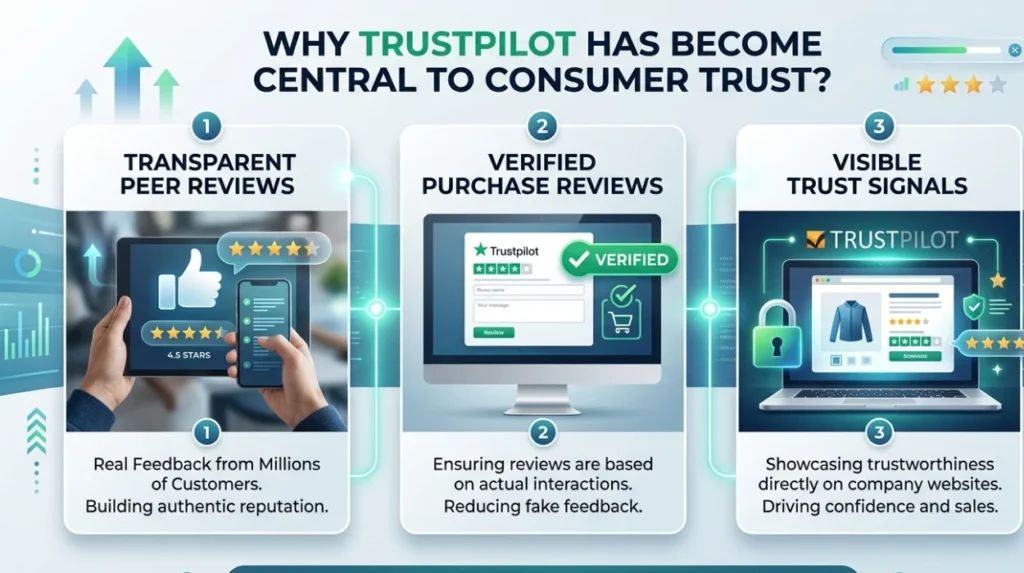
Trustpilot has become central because it acts as a visible trust layer in search and comparison behaviour. Trustpilot review management is critical because its ratings, review recency, and sentiment distribution influence entity perception before a user visits a website or contacts a business.
Dive Deeper With Our Expert Guides and Related Blog Posts:
How Fake Google Reviews Damage Trust Even When Customers Know They Exist
How to Report Fake Google Reviews and What Happens After You Submit
Trustpilot functions as a review environment that search engines can interpret as part of a wider digital footprint. When a profile has strong review volume, consistent recency, and balanced sentiment, it supports a credible entity picture. When the profile contains abrupt negative clusters or low trust review patterns, it weakens that picture. The result is a direct impact on search visibility and consumer judgement.
UK users often treat review platforms as a decision shortcut. That makes the review summary more than a customer feedback page. It becomes an indexed reputation asset that affects first impressions. Search engines can surface review pages, star ratings, and branded result snippets, which means the review environment participates in SERP evaluation. This is why Trustpilot now plays a major role in online credibility.
What is Trustpilot review management?
Trustpilot review management is the process of monitoring, analysing, and shaping the review profile associated with a business. It refers to the control of review signals within a search ecosystem so that sentiment, visibility, and credibility remain aligned with the entity’s actual reputation record.
The concept includes review response handling, review monitoring, dispute analysis, and sentiment tracking. It does not rely on one action alone. It works by treating the review page as part of a ranking and perception system. That means the focus is not only on the star rating. It also includes how the profile is indexed, how often it changes, and how users interpret the pattern.
This matters because Trustpilot pages often sit close to brand search results. That position gives the profile strong influence over entity perception. A business with unmanaged reviews can lose trust before a user reaches its own site. A business with consistent review management can maintain stronger control over what users see first.
How do review signals shape SERP evaluation?
Review signals shape SERP evaluation by telling search engines and users whether a business appears stable, reliable, or risky. A review signal is any visible pattern in ratings, text, timing, or reviewer behaviour that search systems use to interpret credibility.
Search engines do not read reviews as isolated comments. They evaluate volume, recency, repetition, and account behaviour as part of a larger trust model. A sudden wave of negative reviews can trigger a different interpretation from a steady stream of ordinary feedback. The profile therefore affects ranking influence beyond the review platform itself.
User perception also changes through the same signals. A profile with a strong average rating and recent positive feedback creates a cleaner trust path. A profile with high variation, unclear reviewer history, or repeated complaints creates friction. That friction affects click behaviour, enquiry behaviour, and conversion confidence. Review management therefore operates at the point where search visibility meets public judgement.
Why does sentiment distribution matter so much?
Sentiment distribution matters because it defines the emotional pattern attached to the entity in search. Sentiment distribution refers to the balance of positive, neutral, and negative review signals that shape how algorithms and users interpret trust.
A balanced distribution often supports credibility because it looks natural. A distorted distribution often raises questions because it looks coordinated, manipulated, or unresolved. Search engines can detect extremes in timing and wording, especially when negative reviews arrive in tight clusters. That affects content indexing and the way the platform contributes to the wider digital footprint.
Sentiment also influences how a user reads the profile. A user sees the star average, scans the newest comments, and weighs whether the pattern looks believable. That process happens quickly. If the profile looks unstable, the user often moves to another result. Trustpilot review management therefore protects more than the visible star score. It protects the interpretation layer that sits behind it.
How does review indexing affect online credibility?
Review indexing affects online credibility because indexed review content remains part of the searchable record. Content indexing is the process by which search engines store and retrieve review material so it can appear in results, snippets, and associated entity pages.
When Trustpilot content is indexed, it can contribute to branded search results, comparison queries, and decision stage research. That means the review profile affects credibility even before a visitor reaches the business site. A strong profile can support trust signals. A damaged profile can amplify doubt across the search journey.
Indexing also gives old review content persistence. A negative review can continue to influence perception long after the original event if it remains visible in search. That makes review management a long term reputation function rather than a short term moderation task. The business is not only managing comments. It is managing searchable evidence that shapes entity perception.
What role do authority signals play in Trustpilot profiles?
Authority signals play a major role because they determine how much trust search systems assign to the profile as a source. Authority signals are indicators of source strength, consistency, and credibility that affect how a review platform contributes to search visibility and public trust.
A Trustpilot profile with steady activity, authentic review patterns, and strong entity alignment carries more authority than one with erratic or suspicious behaviour. Search engines use that structure to assess whether the profile appears organic. If the pattern looks artificial, the authority of the profile weakens. That can reduce the value of the review page in SERP evaluation.
Authority also affects user interpretation. A profile that looks established and consistent creates less friction than one that changes abruptly. This is why review management is not just about deleting bad comments. It also includes supporting the broader trust framework around the entity. Strong authority signals make the profile more resilient during negative spikes.
Why has Trustpilot become more critical in the UK?
Trustpilot has become more critical in the UK because review culture strongly influences consumer decision making in sectors where trust is decisive. It matters more in the UK because consumers often compare businesses through public reputation signals before they inspect the company’s own site.
This pattern makes Trustpilot an important layer in the digital footprint. Users expect visible proof of reliability, and review platforms provide that proof in a compact format. The average rating, the volume of recent reviews, and the tone of comments all feed into credibility assessment. That turns the profile into an active part of brand perception.
UK businesses also face higher sensitivity to visible trust gaps. A review profile that looks unmanaged can weaken confidence quickly. This is true in sectors where service quality is hard to assess before purchase. Review management therefore acts as a trust stabiliser. It helps keep the public record aligned with the business’s actual reputation position.
How does Trustpilot differ from other review environments?
Trustpilot differs from other review environments because it acts as both a public feedback space and a search-visible authority layer. Its structure makes it more influential in entity perception because the review profile can appear directly in research behaviour and branded query evaluation.
Some review environments operate inside a platform only. Trustpilot often operates beyond the platform because its pages can influence search visibility and comparison decisions. That gives it wider ranking influence. A poor profile can shape a consumer’s view of the business before the website competes for attention.
The platform also carries its own credibility logic. Review timing, profile behaviour, and rating patterns all matter to the way users and algorithms interpret the page. That makes management more analytical than simple comment moderation. Businesses need to understand not only what the reviews say, but also how the system reads the pattern around them.
What makes review management effective?
Review management is effective when it improves the quality, clarity, and balance of the review record. It works by strengthening reputation signals, reducing noise, and aligning the visible profile with the business’s real credibility profile.
Effective management starts with monitoring. The business needs to know when new reviews appear and how the sentiment mix changes. It continues with response handling. Replies demonstrate engagement and can reduce the impact of unresolved complaints. It also includes dispute analysis when a review appears false, misleading, or policy violating. Each step affects the visible trust layer.
The effect on search visibility comes from consistency. A managed profile tends to show a more stable review pattern. That helps users read the business as organised and credible. It also helps search systems interpret the entity as legitimate rather than erratic. The outcome is a stronger reputation environment around the branded search space.
What are the risks of ignoring Trustpilot management?
Ignoring Trustpilot management creates risk because the review profile continues to shape perception without correction or context. Unmanaged review signals can lower entity credibility, distort sentiment distribution, and increase hesitation at the exact point where users compare options.
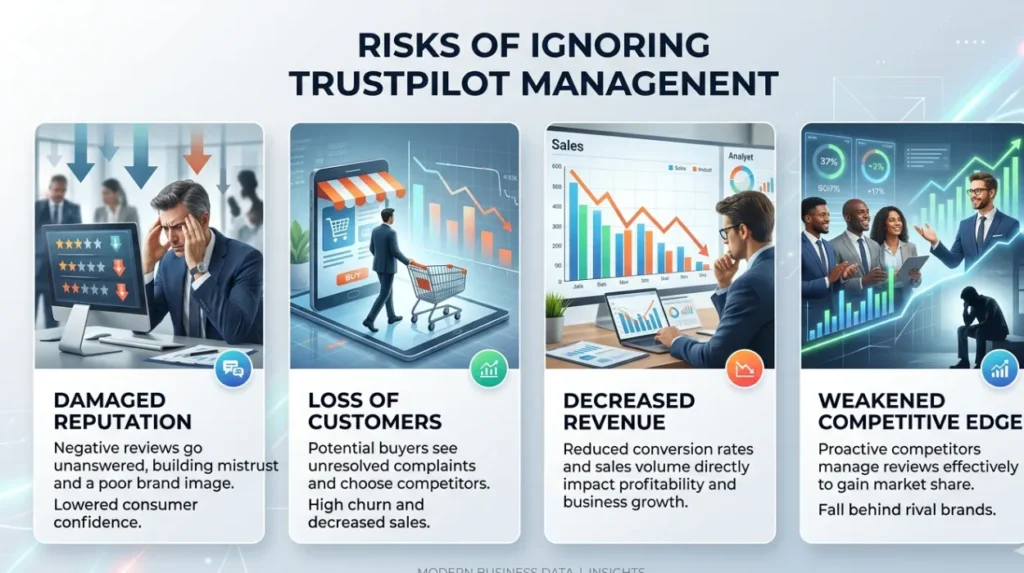
The first risk is visibility damage. A poor review pattern can remain near the top of search behaviour and affect every new visitor. The second risk is trust erosion. Users often treat recent negative reviews as evidence of ongoing problems. The third risk is amplification. A weak profile can attract more scrutiny, which magnifies the importance of each negative signal.
This matters because reputation systems compound. Search engines and users both respond to repeated cues. If those cues are negative, the digital footprint develops a stronger risk profile. Management reduces that risk by keeping the review environment balanced, current, and interpretable.
How should businesses think about review management strategically?
Businesses should think about review management as an ongoing trust function rather than a one off fix. The strategic goal is to maintain credible sentiment distribution, support stable search visibility, and preserve a coherent entity perception across review platforms and search results.
A useful approach begins with measurement. The business tracks review volume, response timing, and rating movement. It then maps the review profile against search results and branded query behaviour. This shows whether the Trustpilot page strengthens or weakens the wider digital footprint. It also shows whether the review profile needs correction, response work, or wider reputation support.
For comparison work,Trustpilot review management fits naturally after the section on platform differences, because it helps explain how one review ecosystem compares with another in search perception.
What is the main conceptual takeaway?
The main takeaway is that Trustpilot review management shapes trust through search-visible evidence. It influences how algorithms interpret credibility, how users read the profile, and how the wider entity reputation is formed inside search ecosystems.
This makes Trustpilot a central part of online reputation in the UK. It is not only a review site. It is a visible reputation layer that affects SERP evaluation, content indexing, and public trust. Businesses that understand this system keep a stronger grip on their digital footprint. Businesses that ignore it allow the review profile to define the brand narrative.