
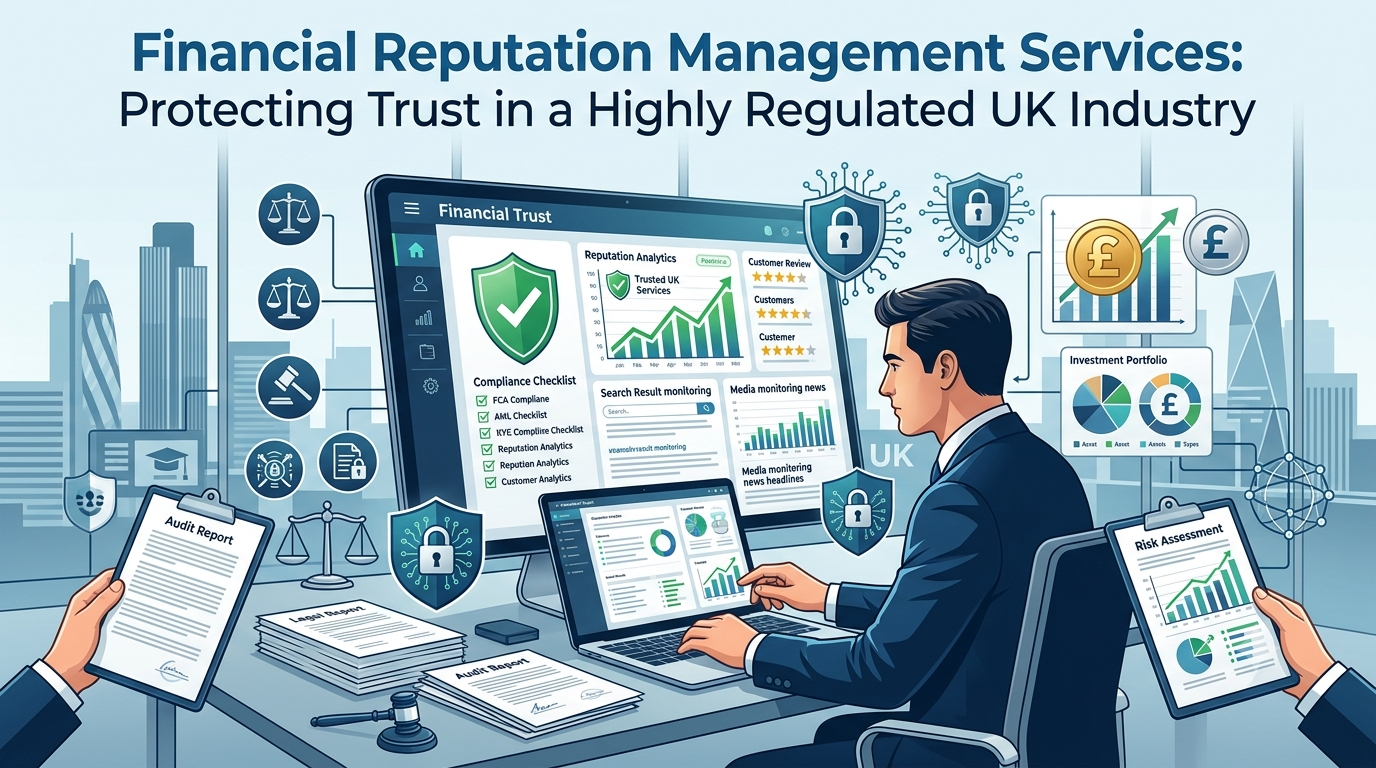
Financial Reputation Management
Trust is the entire product in financial services. A client choosing a wealth manager, mortgage broker, or financial advisor isn’t just buying a service, they’re handing over confidence in someone’s judgement with their money. That makes financial reputation management one of the highest-stakes categories of online reputation work in the UK, where a single negative search result can cost far more than a bad review typically would in other industries.
Why Financial Services Face Unique Reputation Risk
Financial firms and advisors operate under a level of scrutiny that most other sectors don’t. A few factors make financial reputation management especially critical here:
- FCA regulation and compliance history are searchable. Regulatory actions, even resolved ones, tend to rank prominently and stay visible for years, making FCA compliance reputation an ongoing consideration rather than a one-off concern.
- Client trust is built almost entirely pre-contact. Most prospective clients research a financial advisor or firm extensively online before ever booking a consultation.
- Negative reviews carry disproportionate weight. Because financial decisions feel high-risk to consumers, a handful of financial advisor reviews UK-wide can outweigh dozens of positive ones in perceived credibility.
- Media coverage of financial missteps travels far and ranks long. Financial news stories, even minor ones, tend to be picked up by aggregators and stay indexed indefinitely.
What Financial Reputation Management Actually Covers
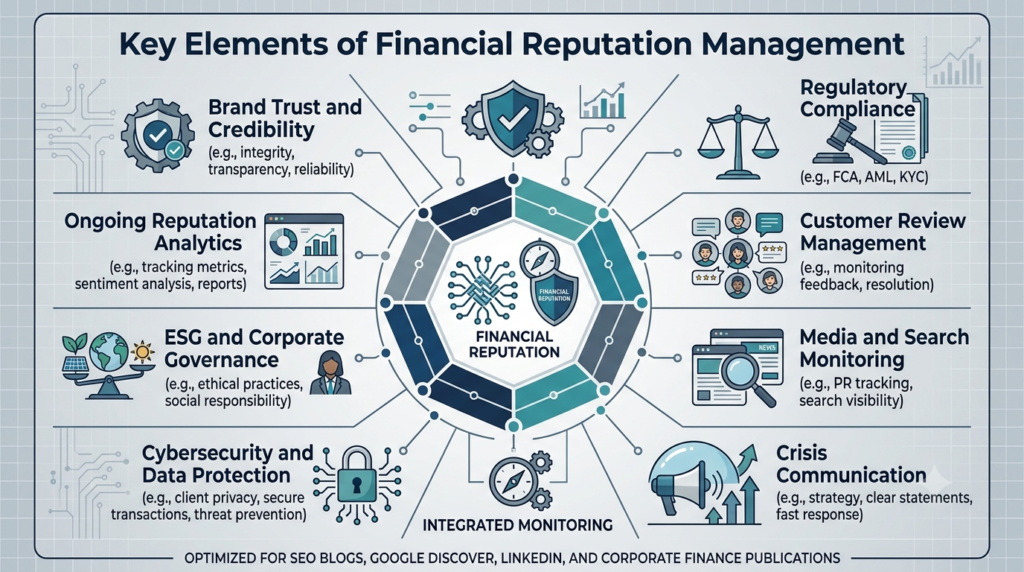
A comprehensive approach for UK financial services businesses typically includes five core areas.
1. Search result monitoring and control. Continuous tracking of what appears for the firm’s name, key advisors’ names, and branded search terms, with a plan ready for anything that shifts negative.
2. Regulatory and compliance content management. Ensuring resolved regulatory matters are represented accurately and don’t dominate search results disproportionate to their actual current relevance. This is a specialist form of regulatory reputation management that generic agencies often get wrong.
3. Review management across platforms. Encouraging genuine client feedback, responding professionally to negative reviews, and ensuring review profiles are accurate and complete across Google, Trustpilot, and sector-specific platforms. Our guide to the UK review platforms that matter most covers where to prioritise this for a financial services audience specifically.
4. Authoritative content development. Publishing expert commentary, market insights, and credentialed content that reinforces expertise and builds long-term search authority, the same core principle covered in our guide to building a positive content strategy.
5. Crisis preparedness. Financial firms are particularly exposed to fast-moving reputation events, a market downturn, a client dispute, a regulatory inquiry, and benefit enormously from having a response plan ready before it’s needed. Our guide to reputation damage control in the first 48 hours covers the response framework this kind of fast-moving situation demands.
The Cost of Ignoring Financial Reputation
For a financial advisor or firm, weak online reputation doesn’t just mean fewer five-star reviews. It means prospective clients choosing a competitor after a search-based comparison, difficulty attracting institutional partnerships or referral relationships, increased scrutiny during due diligence for mergers, acquisitions, or new licensing, and outsized reputational damage from isolated incidents that aren’t properly managed or contextualised.
Because financial decisions are emotionally loaded for consumers, the reputational stakes are simply higher than in most other industries, and the recovery timeline after a serious issue tends to be longer. If content crosses from unfair characterisation into false statements of fact, our comparison of defamation solicitors versus reputation management agencies explains how to identify which situation you’re actually dealing with.
Building Long-Term Trust Signals
The most effective financial reputation strategies aren’t purely reactive. They focus on building a strong foundation of trust signals that make the firm resilient, including consistent, accurate listings across financial directories and comparison sites, a steady stream of genuine client reviews rather than a handful from years ago, clear, accessible information about qualifications, regulation, and compliance, and thought leadership that positions advisors as credible, current experts rather than anonymous names.
This foundation matters most during moments of pressure. A firm with strong wealth management reputation signals already established can absorb a negative event far more easily than one whose entire online presence is thin or outdated.
Working With a Specialist
Financial reputation management requires a genuine understanding of the regulatory environment alongside search and PR expertise. A generic reputation agency without financial sector experience can miss important nuances, such as how to represent a resolved FCA matter accurately without appearing to obscure it, which itself can create further reputational and compliance risk.
A specialist UK reputation partner brings both financial services SEO capability and the sector context needed to protect client trust financial services businesses depend on, in an industry where trust is, quite literally, the business.
Frequently Asked Questions
Why does financial reputation management matter more than in other industries?
Financial decisions feel inherently high-risk to consumers, meaning trust signals and negative content both carry disproportionate weight compared to lower-stakes purchase decisions in other sectors.
Can a resolved FCA matter still affect a firm’s search results?
Yes. Regulatory actions, even fully resolved ones, tend to remain indexed and visible for years, which is why representing them accurately and in proportion is a core part of financial reputation management.
How is financial reputation management different from general PR?
It combines standard search and reputation strategy with a working understanding of financial regulation, ensuring compliance-sensitive content is handled accurately rather than in a way that could itself create regulatory risk.
What’s the biggest reputational risk for financial advisors specifically?
A concentrated cluster of negative reviews or an unresolved client dispute, since financial decisions are emotionally loaded for consumers and a handful of negative signals can outweigh a much larger volume of positive ones.
Should a financial firm prepare a crisis response plan in advance?
Yes. Financial firms are particularly exposed to fast-moving reputation events, and having a response framework ready before it’s needed consistently produces better outcomes than building one reactively during an active situation.