
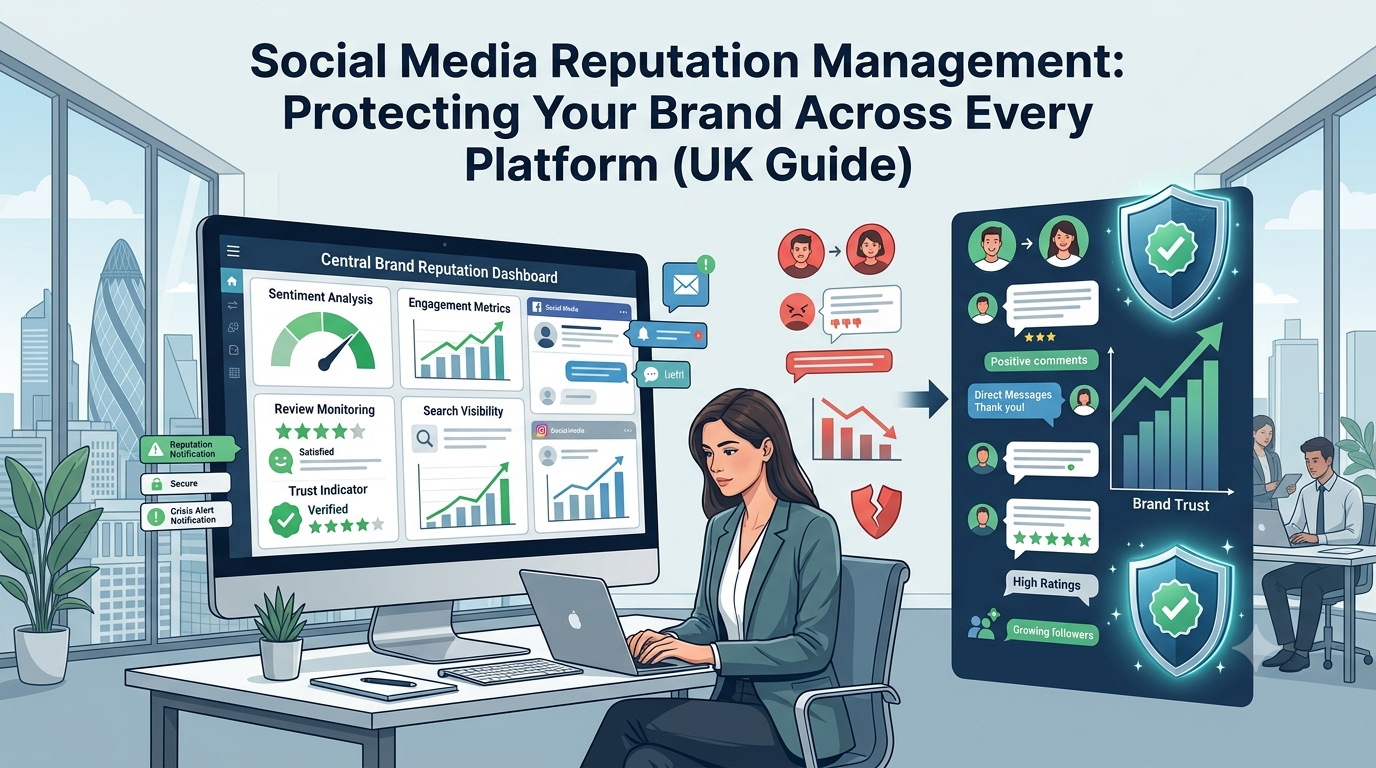
Social Media Reputation Management
A brand’s reputation no longer lives in one place. It’s scattered across X, Instagram, TikTok, LinkedIn, Facebook, and every comment section, review reply, and viral screenshot in between. Social media reputation management UK businesses now need has to account for all of it at once, since a single unanswered complaint or poorly judged post can spread across platforms faster than any traditional PR issue ever could.
This guide covers what actually matters, platform by platform, and how to build a strategy that holds up under real pressure rather than falling apart the moment something goes wrong.
Why Social Media Reputation Works Differently Than Search-Based Reputation
Search-based reputation management is largely about controlling what ranks. Social media reputation management UK-wide is about controlling what spreads, and speed matters far more here than in traditional search work. A negative comment can gain visibility within minutes, not weeks, and algorithms on most platforms actively reward high engagement, including angry or critical engagement, which means a brand’s worst moments can be pushed toward more people rather than quietly fading.
This is also where brand reputation on social media becomes genuinely two directional. Unlike a review platform, social media allows immediate public back and forth, meaning how a brand responds in real time becomes part of the story itself, for better or worse.
What Social Media Reputation Management Actually Covers
A proper strategy spans several connected responsibilities:
- Continuous monitoring across every relevant platform, not just the ones a brand actively posts on, since criticism often appears where a brand has no active presence at all
- Consistent brand voice and messaging across platforms, so responses feel coordinated rather than contradictory between channels
- Genuine engagement with both positive and negative mentions, rather than only responding when something goes wrong
- A clear escalation process for anything that moves beyond routine comments into a genuine reputational risk
Platform-Specific Risks Worth Understanding
Each major platform carries its own particular reputation risk profile:
- X (formerly Twitter) moves fastest of all major platforms, and negative sentiment here can influence traditional media coverage within hours, particularly for anything involving public figures or high-profile brands
- Instagram and TikTok carry heavy visual and video weight, meaning a single poorly received video or image can spread through shares and duets far beyond a brand’s own following
- LinkedIn affects B2B and employer reputation specifically, where negative posts from current or former employees can influence both hiring and client trust simultaneously
- Facebook remains heavily used for local business reviews and community groups, where negative sentiment can circulate within a specific local audience that’s highly relevant to a business’s actual customer base
- Review-adjacent platforms linked to social accounts, such as Google reviews surfaced through social search, blur the line between social and search reputation further
Building a Social Media Reputation Management Strategy
A resilient approach typically follows this sequence:
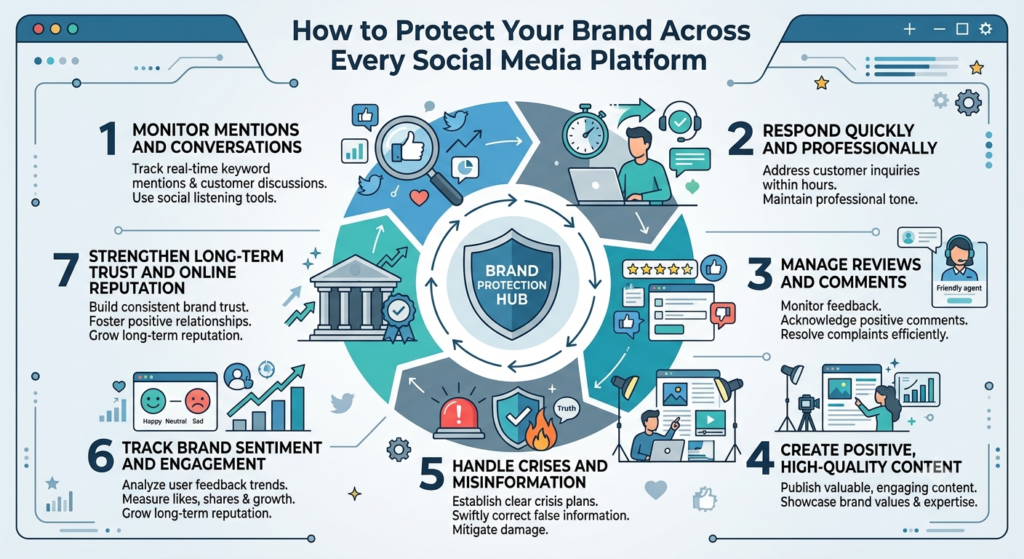
- Set up monitoring across every platform relevant to your audience, using social listening tools rather than relying on manual checks, which inevitably miss things
- Establish clear response guidelines covering tone, turnaround time, and who has authority to respond on the brand’s behalf
- Respond to negative mentions promptly and calmly, since a fast, measured response often prevents further escalation more effectively than a delayed, polished one
- Engage genuinely with positive mentions too, since visible engagement builds the kind of ongoing trust that helps absorb occasional negative moments
- Review sentiment patterns regularly, not just individual comments, to catch recurring themes before they become a larger pattern
Our guide to building a positive content strategy covers the content side of this work in more depth, which pairs directly with active social media monitoring.
Handling a Social Media Crisis Specifically
When something does escalate into a genuine crisis, speed and consistency matter more than a perfectly worded statement. The same core principles from our guide to reputation damage control in the first 48 hours apply directly here, adapted to the faster pace social platforms demand: acknowledge quickly, avoid defensive language, and keep every platform’s messaging consistent so the response doesn’t create a second, separate controversy of its own.
For situations that unfold within the first few hours specifically, our guide to the first 24 hours of crisis PR breaks down the immediate response window in more detail.
Cross-Platform Consistency: The Part Most Brands Get Wrong
Cross-platform brand consistency is one of the most overlooked parts of social media reputation management UK brands need to prioritise. Negative mentions rarely stay confined to a single platform, a complaint on X often gets screenshotted and shared to Facebook or Reddit within hours. Inconsistent tone or messaging between platforms during a sensitive moment can look evasive or disorganised, even when each individual response was reasonable in isolation.
Tools for Monitoring and Managing Social Reputation
- Social listening platforms, for tracking brand mentions across every relevant network in real time
- A centralised response dashboard, for managing replies consistently across multiple accounts and platforms
- Sentiment analysis tools, for spotting shifts in overall tone before they become a visible pattern
- A documented crisis response plan, prepared before it’s needed rather than built reactively mid-crisis
Frequently Asked Questions
How is social media reputation management different from general online reputation management?
It focuses specifically on real-time monitoring and rapid response across social platforms, where content spreads far faster than in traditional search results, requiring a different speed and tone of engagement.
Which social platform poses the biggest reputation risk for most UK brands?
It varies by industry, but X tends to move fastest and can influence traditional media coverage quickest, while Facebook and Google-linked reviews often matter most for local, community-facing businesses specifically.
Should a brand respond to every negative comment on social media?
Not necessarily every single one, but consistent, calm responses to genuine concerns build trust, while ignoring a pattern of similar complaints tends to make the underlying issue more visible over time, not less.
How quickly should a brand respond during a social media crisis?
As quickly as accuracy allows, ideally within hours rather than days, since silence during an active crisis is frequently interpreted as guilt or indifference regardless of the actual cause.
Can social media reputation issues affect a brand’s search engine rankings too?
Indirectly, yes. Highly visible social media controversies often get picked up and indexed by search engines through news coverage and aggregator sites, meaning social and search reputation are increasingly connected rather than separate concerns.