

Celebrity Reputation Management
There’s a particular kind of exposure that comes with public life that most people never have to navigate. Every interview, every paparazzi photo, every old tweet, all of it stays searchable indefinitely, ready to resurface at the worst possible moment. Celebrity reputation management exists because a public figure’s career, endorsements, and personal wellbeing all depend on something they have surprisingly little direct control over: what a search engine decides to show first when someone types their name.
The Particular Pressure of Being Permanently Searchable
Most reputation work assumes a relatively private starting point, a business or professional with limited existing visibility to build from. Celebrity reputation management starts from the opposite condition. There’s already an enormous volume of content out there, some of it accurate, some outdated, some deliberately misleading, and the work becomes less about building visibility from nothing and more about shaping which parts of an already crowded picture rise to the top.
UK tabloid media in particular has a long, well documented appetite for celebrity stories, and the sheer volume of coverage means even minor moments can generate lasting search visibility completely disproportionate to their actual significance. A single unflattering photo or an out of context quote from years ago can sit stubbornly on page one long after it has any real relevance to who that person is today.
What This Work Actually Looks Like Day to Day
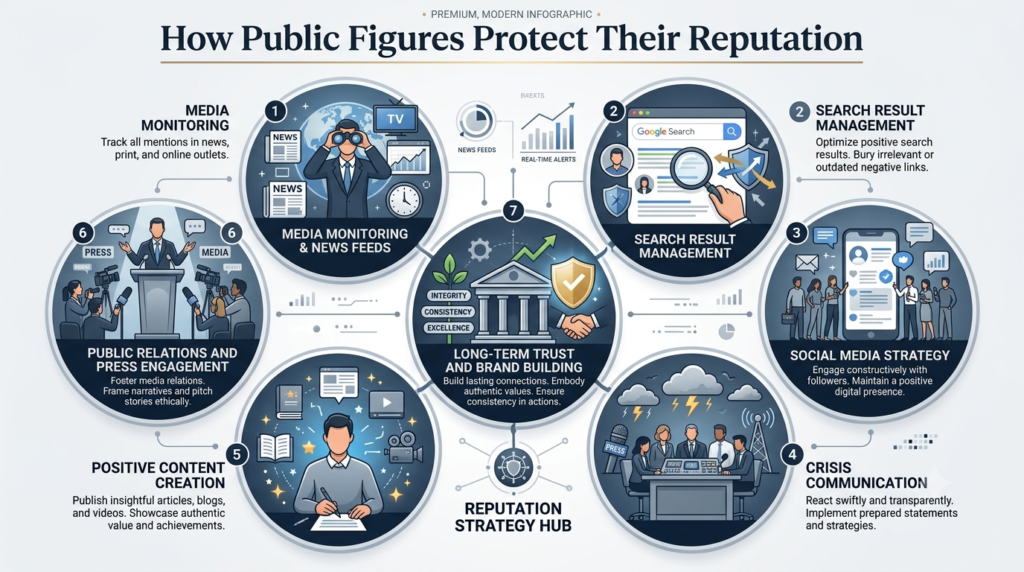
Public figure reputation UK wide is rarely about a single dramatic intervention. It’s closer to ongoing maintenance: tracking what’s being said across news, social media, and entertainment press, understanding which stories are gaining momentum before they peak, and making calculated decisions about when to respond publicly and when a response would simply give a story more oxygen than it would otherwise get.
This is where celebrity PR strategy diverges meaningfully from business reputation work. A business almost always benefits from more visibility. A public figure sometimes benefits from less, particularly around a story that’s likely to fade faster without engagement than with it. Knowing which situation you’re actually in requires real judgement, built from experience with how UK entertainment media specifically tends to behave.
Building an Authoritative Narrative Base
The most durable protection a public figure has isn’t reactive, it’s the accumulated weight of authoritative, accurate content built over time. A well-maintained official presence, credible interviews with reputable outlets, and consistent messaging across every platform all combine to create a strong foundation that search engines have good reason to trust and prioritise. When something negative does surface, this foundation is what determines whether the story dominates the page or simply becomes one entry among many accurate, current ones.
This is genuinely the same underlying principle behind our guide to building a positive content strategy, just operating at a much higher volume and pace than most businesses ever need to manage.
When a Story Actually Becomes a Crisis
Not every piece of negative coverage rises to the level of a genuine crisis, and treating routine tabloid noise as an emergency tends to backfire, both by signalling weakness and by drawing more attention to something that might otherwise pass quickly. Real crises, allegations with legal implications, a genuinely damaging leak, a story with real public interest weight, require a different, faster response entirely.
Our guide to reputation damage control in the first 48 hours covers the response framework that applies here, though for public figures specifically, the calculation around whether and how to respond publicly carries additional weight given how quickly entertainment media cycles move. The first hours matter enormously, and our guide to that immediate window is worth reviewing alongside this one for anyone facing something time-sensitive right now.
The Line Between Narrative Control and Accountability
There’s an important distinction worth making clearly. Celebrity reputation management, done properly, is not about concealing legitimate accountability or burying genuine wrongdoing. Attempts to do that tend to fail publicly and cause far more lasting damage than the original issue would have. The actual goal is ensuring accurate context sits alongside criticism, that isolated moments don’t unfairly define an entire public record, and that misinformation doesn’t get to dominate a narrative unchallenged simply because it spread faster than the truth did.
This distinction matters both ethically and practically. Search engines and audiences alike have become considerably better at recognising narrative manipulation, and a strategy built on genuine transparency tends to hold up far better over time than one built on suppression alone.
Dealing With Outdated or Out-of-Context Content
A significant portion of celebrity reputation work involves older content that no longer reflects who someone is or what they’ve actually done, an old interview taken out of context, a resolved legal matter still ranking prominently, or a photo from years ago that continues circulating without its original context attached. Our guide to removing negative content from Google in the UK walks through the realistic options here, including what genuinely can be addressed through removal requests and what instead needs to be outranked through stronger, more current content over time.
Why This Requires Genuine Specialism
Celebrity crisis management and everyday narrative maintenance both demand a particular blend of skills that generalist agencies often lack: a working understanding of how UK entertainment and tabloid media actually operate, the judgement to know when silence serves better than a statement, and the search expertise to build a resilient, accurate presence that holds up under sustained public attention. This is a fundamentally different discipline from standard corporate reputation work, closer in practice to the specialist approach required for political figures, and it typically requires a team with direct experience in exactly this kind of high-visibility environment.
Frequently Asked Questions
Is celebrity reputation management about hiding negative stories?
No, or at least not when done properly. The goal is ensuring accurate context and current information are visible alongside any criticism, not concealing legitimate accountability, which tends to backfire publicly when attempted.
Why does silence sometimes work better than a public response?
Responding to a story can draw more attention and extend its visibility, particularly for minor or fading coverage. Judging when engagement helps versus when it prolongs a story requires real experience with how media cycles typically behave.
Can old, out-of-context content actually be removed from search results?
In some cases, yes, particularly where personal data or clearly outdated context is involved, though much of this work focuses on building stronger, current content that outranks older material rather than removal alone.
How is celebrity reputation management different from general PR?
It combines continuous monitoring, rapid crisis judgement, and deep familiarity with UK entertainment and tabloid media specifically, a distinct skill set from standard public relations or corporate communications work.
Does responding quickly always help during a public figure’s crisis?
Not always. Speed matters for genuine, serious situations, but for minor stories, a measured, sometimes delayed response can prevent giving a fading story unnecessary renewed attention.