
Influencer Reputation Management
Your entire career is your name, and your name is entirely searchable. For UK influencers and content creators, there’s no separation between personal reputation and professional viability the way there is in most careers, a damaged public image doesn’t just feel bad, it directly costs brand deals, platform reach, and audience trust simultaneously. Influencer reputation management exists because this audience faces a genuinely distinct set of pressures that generic PR advice was never built to address.
Why Influencers Face a Uniquely Exposed Kind of Risk
Unlike most professionals, influencers build their entire livelihood on public visibility and audience trust, which means every post, every brand partnership, and every piece of old content remains part of an ongoing, permanently searchable public record. Influencer reputation management has to account for this constant exposure, since a single controversy doesn’t just generate temporary negative press, it can permanently shift how an entire audience perceives someone whose business model depends entirely on that audience’s continued trust.
The ASA Compliance Risk Most Creators Underestimate
One of the most underappreciated reputation risks facing UK influencers isn’t controversy, it’s advertising disclosure. The Advertising Standards Authority enforces the CAP Code across all UK influencer marketing, and its own monitoring research found that 43% of influencer ads analysed had no disclosure at all. Enforcement has intensified significantly, with the ASA now using AI-based monitoring to scan content at scale, and repeat non-compliance can result in an influencer being publicly listed on the ASA’s non-compliant influencer webpage, a genuinely damaging, searchable reputational consequence that follows a creator’s name indefinitely.
This matters because ASA compliance isn’t just a legal box to tick. It’s become a direct reputation management concern in its own right, since public non-compliance listings are exactly the kind of authoritative, official source that ranks prominently and damages brand trust far more than most creators anticipate.
Common Reputation Risks Facing UK Content Creators
Several risk patterns show up consistently across the influencer space:
- Undisclosed or poorly disclosed brand partnerships, which risk both ASA action and audience trust simultaneously once discovered
- Old content that no longer reflects current values or positioning, resurfacing at exactly the wrong moment, often years after original posting
- Rapid audience sentiment shifts, since algorithm-driven platforms can amplify criticism as effectively as they amplify praise
- Brand partnership fallout, where a single controversial partnership or product issue reflects back on the creator’s personal reputation, not just the brand’s
- Inconsistent messaging across platforms, creating the appearance of a curated, inauthentic persona rather than a genuine one
How We Approach Influencer Reputation Management
Our work starts with a full audit of a creator’s current search presence, social sentiment, and disclosure practices across every active platform, identifying both existing vulnerabilities and any compliance gaps before they become a visible problem. From there, we help build consistent, authoritative search presence, genuine press coverage, accurate professional profiles, and a search footprint substantial enough that isolated moments don’t disproportionately define the overall picture. Our guide to building a positive content strategy covers the underlying principles behind this longer-term foundation work.
For creators facing an active situation, we provide rapid response support built around the same urgency principles in our guide to reputation damage control in the first 48 hours, adapted specifically to how fast influencer controversies move across algorithm-driven platforms compared to traditional media cycles.
Building a Personal Brand That Can Absorb a Bad Moment
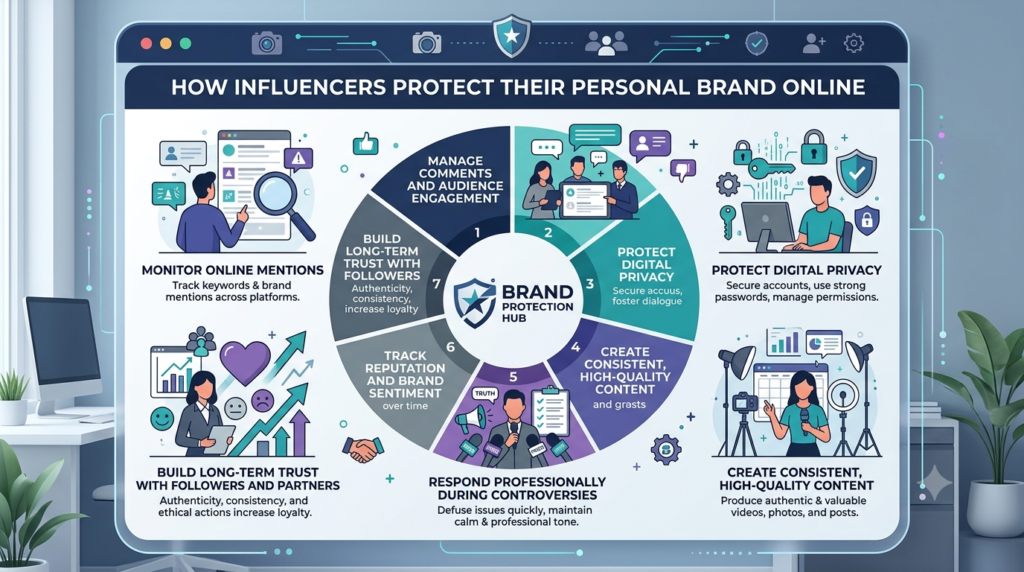
Personal brand management UK creators rely on works best as ongoing foundation-building rather than pure crisis response. A creator with genuine, consistent positive search presence, accurate ASA-compliant disclosure practices, and authentic audience relationships has far more credibility to draw on during a difficult moment than one starting from a thin or inconsistent public record. This is the same principle behind our guide to celebrity reputation management, applied here to the specific dynamics of platform native, audience built careers.
Handling a Genuine Crisis Without Losing Your Audience
When a real controversy hits, speed and honesty matter more than a polished statement. Influencer crisis management requires understanding platform-specific dynamics: a delayed response on fast-moving platforms can look far worse than the original issue, while a defensive or dismissive tone tends to escalate audience backlash rather than calm it. Our guide to the first 24 hours of crisis PR covers the immediate response window that applies directly to a fast-moving creator controversy.
Why This Requires Genuine Platform Specific Expertise
Influencer PR strategy has to account for platform algorithms, ASA and CMA regulatory requirements, and audience psychology all at once, a combination generic corporate reputation approaches typically aren’t built to handle. Understanding brand partnership trust specifically, how audiences judge a creator’s authenticity based on partnership choices and disclosure practices, requires genuine familiarity with how this ecosystem actually works, not just standard reputation management principles applied generically.
Frequently Asked Questions
How does ASA non compliance actually affect an influencer’s reputation?
Repeated non-disclosure can result in public listing on the ASA’s non-compliant influencer page, a searchable, official record that damages both audience trust and brand partnership opportunities well beyond the original posts involved.
Can old, controversial content really still affect a creator’s career years later?
Yes. Content remains searchable indefinitely, and platform algorithms can resurface old material unexpectedly, meaning a strong, current search presence is essential to prevent old content from disproportionately defining someone’s public image.
Should influencer reputation management focus on prevention or crisis response?
Both, but prevention matters more long-term. Creators with strong, consistent, compliant public presence built proactively have significantly more credibility to draw on if a genuine crisis does occur.
Does brand partnership choice actually affect audience trust?
Yes, audiences increasingly evaluate creators based on partnership authenticity and disclosure honesty, making thoughtful partnership selection and proper disclosure a genuine reputation factor, not just a legal requirement.
How quickly should a creator respond to a developing controversy?
As quickly as accuracy allows. Fast-moving platforms mean delayed responses are often interpreted more harshly than the original issue, making a prompt, honest acknowledgement generally safer than waiting for a perfectly crafted statement.