

Submitting a Right to Erasure request to Google involves identifying eligible search results, providing evidence that the information is inaccurate, excessive, outdated, or no longer relevant, and completing Google’s review process. The outcome depends on how Google balances privacy interests against public interest and information accessibility.
Reputation management strategies differ based on whether the objective is content removal, content suppression, or search visibility adjustment. Online reputation control methods are evaluated through their influence on reputation signals, entity credibility, sentiment distribution, and search ranking influence across search ecosystems.
How Does a Right to Erasure Request Compare with Other Reputation Management Approaches?
A Right to Erasure request is a content removal mechanism that focuses on eliminating search visibility for specific information rather than improving the overall perception landscape.
The Right to Erasure originates from data protection principles that allow individuals to request the removal of personal information from search results under specific circumstances. It operates by assessing whether privacy rights outweigh public interest. In contrast, content creation strategies operate by introducing new information assets that influence sentiment distribution and search ranking influence. Search suppression strategies operate by promoting favourable or neutral content above unwanted results without removing the original source.
The comparison between removal and enhancement approaches reveals distinct operational differences. Removal targets a specific URL or search result. Content enhancement targets overall SERP composition. Suppression strategies influence ranking positions while removal strategies influence index visibility. Each approach affects reputation signals differently because search engines evaluate relevance, authority, freshness, and user value independently.
The effectiveness of a Right to Erasure request depends on eligibility standards rather than publishing volume or optimisation efforts. Content creation campaigns depend on long-term authority building and entity credibility development. Search suppression depends on ranking competition. These differences make removal a direct intervention method while enhancement approaches function through broader search ecosystem influence.
What Information Qualifies for a Right to Erasure Request?
Eligibility depends on privacy relevance, proportionality assessment, and the relationship between personal information and public interest.
Information commonly evaluated includes outdated personal details, inaccurate records, irrelevant historical content, and information that creates disproportionate privacy exposure. The assessment process measures whether continued visibility serves a legitimate public interest. Search engines evaluate the balance between personal privacy and informational value when determining removal outcomes.

Public figures, professionals, and individuals involved in matters of public significance face a different evaluation framework. Search ecosystems interpret public relevance as a stronger ranking and indexing justification. Information linked to professional conduct, public responsibilities, regulatory matters, or significant societal interests often receives greater protection from removal requests.
The qualification process differs from standard reputation management initiatives because it relies on legal and privacy criteria rather than optimisation mechanisms. Content suppression evaluates ranking opportunities. Content enhancement evaluates content gaps and sentiment distribution. Right to Erasure assessments evaluate privacy rights and public information value. This distinction creates a separate operational framework within reputation management analysis.
Get More Insights:
What Personal Reputation Management Involves for Professionals in the UK
How Does Google Evaluate a Right to Erasure Request?
Google evaluates requests through a balancing process that compares privacy interests against public interest considerations.
The evaluation mechanism operates through evidence assessment. Applicants provide URLs, search queries, identity verification information, and contextual explanations. Google analyses whether the content remains relevant, accurate, proportionate, and necessary for public access. The review focuses on information visibility rather than direct website modification.
Search engines interpret reputation signals differently from legal privacy requests. Ranking systems evaluate relevance, authority, and user intent. Privacy review systems evaluate data protection considerations and informational necessity. This distinction means a page can remain authoritative from a ranking perspective while still becoming eligible for search result removal.
The review process also evaluates contextual factors. Information age, current relevance, professional significance, and factual accuracy contribute to decision-making. Search ranking influence does not determine eligibility. Privacy and public interest balancing determines eligibility. This separation illustrates how reputation management and privacy governance operate through different mechanisms inside search ecosystems.
How Does Content Removal Compare with Content Suppression for Reputation Control?
Content removal eliminates visibility opportunities for specific results, while content suppression changes ranking prominence without removing content.
Content removal operates by reducing or eliminating search result exposure. Successful removal requests alter SERP composition directly because the affected content no longer appears for relevant searches. Content suppression operates through competition. New content assets, authoritative publications, and positive reputation signals compete for visibility positions against unwanted results.
The comparison highlights different scalability characteristics. Removal targets individual URLs. Suppression strategies influence broader keyword environments. Removal provides direct visibility reduction when approved. Suppression requires ongoing optimisation because ranking environments continuously evolve. Search ecosystems constantly reassess relevance and authority signals, creating movement across search results.
Risk exposure also differs. Removal depends on approval standards and legal criteria. Suppression depends on ranking performance and content authority. Removal outcomes remain limited to approved content. Suppression outcomes extend across larger sections of search visibility. These operational differences influence how reputation managers evaluate intervention frameworks.
Long-term sustainability varies between approaches. Content removal can provide durable outcomes for approved URLs. Suppression requires sustained authority development. Search engines continually reassess content relationships, meaning suppression effectiveness depends on continuous entity credibility reinforcement.
What Should Applicants Expect After Submitting a Request?
Applicants should expect a structured review process involving evidence assessment, eligibility evaluation, and outcome notification.
The submission process initiates verification procedures designed to confirm identity and request legitimacy. Search engines evaluate whether the requester has a direct relationship to the information in question. Verification mechanisms protect privacy rights while preventing misuse of removal systems.
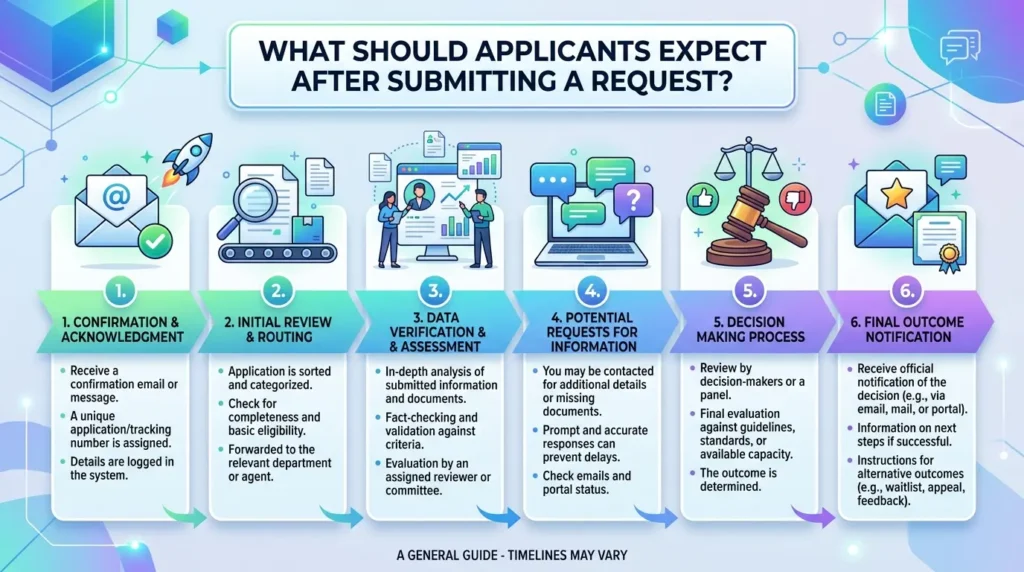
The assessment stage focuses on content analysis. Review teams evaluate contextual factors, public interest considerations, and privacy implications. This process differs from algorithmic ranking evaluations because it incorporates policy and legal standards. Reputation signals contribute to content visibility, but privacy requests are assessed through separate criteria.
Possible outcomes include approval, partial approval, rejection, or requests for additional information. Approved requests typically affect search visibility rather than source publication. Rejected requests leave existing search visibility unchanged. Partial approvals demonstrate the nuanced nature of privacy balancing, where specific URLs qualify while others remain visible.
Processing times vary according to request complexity, information sensitivity, and evidence quality. Search ecosystems require careful evaluation because removal decisions affect information accessibility and public transparency. This review structure explains why outcomes depend on contextual assessment rather than automated ranking calculations.
Which Reputation Risks Remain After a Successful Right to Erasure Request?
A successful request reduces specific visibility risks but does not eliminate all reputation exposure.
The primary limitation involves source persistence. Search result removal does not automatically remove content from the originating website. Users accessing the source directly can still view the information. This distinction separates search visibility control from source-level content removal.
Reputation signals continue to exist across broader digital environments. Social media discussions, archived references, secondary publications, and third-party citations may remain accessible. Search ecosystems interpret information from multiple sources, creating interconnected reputation pathways. Removal from one search environment does not guarantee complete digital disappearance.
Entity credibility also depends on cumulative information patterns. Search engines evaluate relationships between entities, topics, references, and content ecosystems. Removing one result changes visibility distribution but does not automatically alter overall sentiment distribution. Reputation management analysis therefore evaluates both visibility reduction and broader information architecture.
The comparison between removal and enhancement approaches becomes relevant after successful requests. Removal reduces immediate exposure. Enhancement strategies influence future perception signals. Search ecosystems continuously reassess entities through newly published content and evolving authority relationships.
How Do Reactive and Proactive Reputation Management Methods Compare?
Reactive methods respond to existing visibility challenges, while proactive methods influence reputation signals before significant issues emerge.
A Right to Erasure request represents a reactive intervention. It addresses content that already exists and already influences search visibility. Reactive methods operate after reputation concerns become identifiable. Their effectiveness depends on eligibility, evidence quality, and ecosystem conditions.
Proactive approaches focus on entity credibility development, content ecosystem expansion, and trust signal reinforcement. These methods operate by establishing authoritative information assets before negative visibility patterns emerge. Search engines interpret consistent, relevant, and authoritative content as strong credibility indicators.
The comparison reveals different resource structures. Reactive interventions often target specific incidents or URLs. Proactive approaches target long-term reputation architecture. Reactive methods influence immediate visibility concerns. Proactive methods influence broader search ranking influence and entity understanding.
Sustainability analysis favours proactive frameworks because search ecosystems reward consistency, relevance, and authority accumulation. Reactive interventions remain important when specific risks require immediate evaluation. The strongest reputation management models analyse both approaches within a broader visibility governance framework.
Which Factors Influence the Success Rate of a Right to Erasure Request?
Success rates depend on privacy relevance, evidence quality, public interest considerations, and information context.
Accurate documentation strengthens the evaluation process because review teams require clear contextual evidence. Strong requests explain why information no longer serves a legitimate public purpose. Weak submissions often fail to establish a clear privacy rationale. The assessment framework measures proportionality rather than personal preference.
Information age significantly influences evaluation outcomes. Historical information with limited current relevance receives different scrutiny compared with recent or ongoing matters. Search ecosystems evaluate whether visibility remains justified based on contemporary informational value.
Public interest remains a central factor. Information connected to professional accountability, public safety, financial transparency, or civic relevance often receives stronger protection from removal. Search engines balance privacy rights against information accessibility to preserve informational integrity.
Search ranking influence itself does not determine approval likelihood. Visibility prominence does not automatically create eligibility. Privacy justification, relevance assessment, and public interest balancing remain the primary decision variables within the evaluation process.
A Right to Erasure request is a privacy-based content removal mechanism that differs fundamentally from content suppression and content enhancement strategies. Removal approaches focus on visibility reduction, while enhancement approaches influence reputation signals, entity credibility, and sentiment distribution across search ecosystems.
The evaluation process depends on privacy rights, evidence quality, contextual relevance, and public interest considerations rather than traditional search ranking influence. Removal provides direct intervention for eligible content, whereas suppression and content creation strategies operate through SERP competition and authority development.
Analysing reputation management methods requires understanding how search engines interpret information, assess entity relationships, and evaluate visibility signals. The comparison between reactive and proactive approaches, removal and enhancement methods, and short-term versus long-term outcomes provides a structured framework for evaluating reputation management options within modern search environments.
Within broader reputation management analysis, organisations operating in sensitive sectors such as Healthcare Reputation Management often examine privacy-based removal mechanisms alongside content governance, search visibility assessment, and digital footprint evaluation.
How do I submit a Right to Erasure request to Google?
To submit a Right to Erasure request, complete Google’s removal request form and provide details about the personal information you want removed from search results. Google reviews each request individually and may ask for additional evidence before making a decision.
What information can be removed through a Google Right to Erasure request?
A Right to Erasure request may apply to personal information that is outdated, inaccurate, excessive, or no longer relevant under applicable privacy laws. Removal from Google Search does not automatically delete the content from the original website where it is published.
How long does Google take to process a Right to Erasure request?
Processing times vary depending on the complexity of the request and the amount of information provided. In many cases, Google may take several days or weeks to review the request and communicate its decision.
Can Google refuse a Right to Erasure request?
Can Google refuse a Right to Erasure request?
Yes, Google may reject a request if there is a strong public interest in keeping the information accessible or if legal requirements outweigh privacy concerns. Each case is assessed by balancing privacy rights with the public’s right to access information.
Does a Right to Erasure request remove content from the internet completely?
No, a successful Right to Erasure request generally removes certain URLs from Google Search results rather than deleting the content itself. For complete removal, you may also need to contact the website owner or publisher directly, a process often discussed in reputation management and online privacy strategies by Reputation Management PR Agency.