
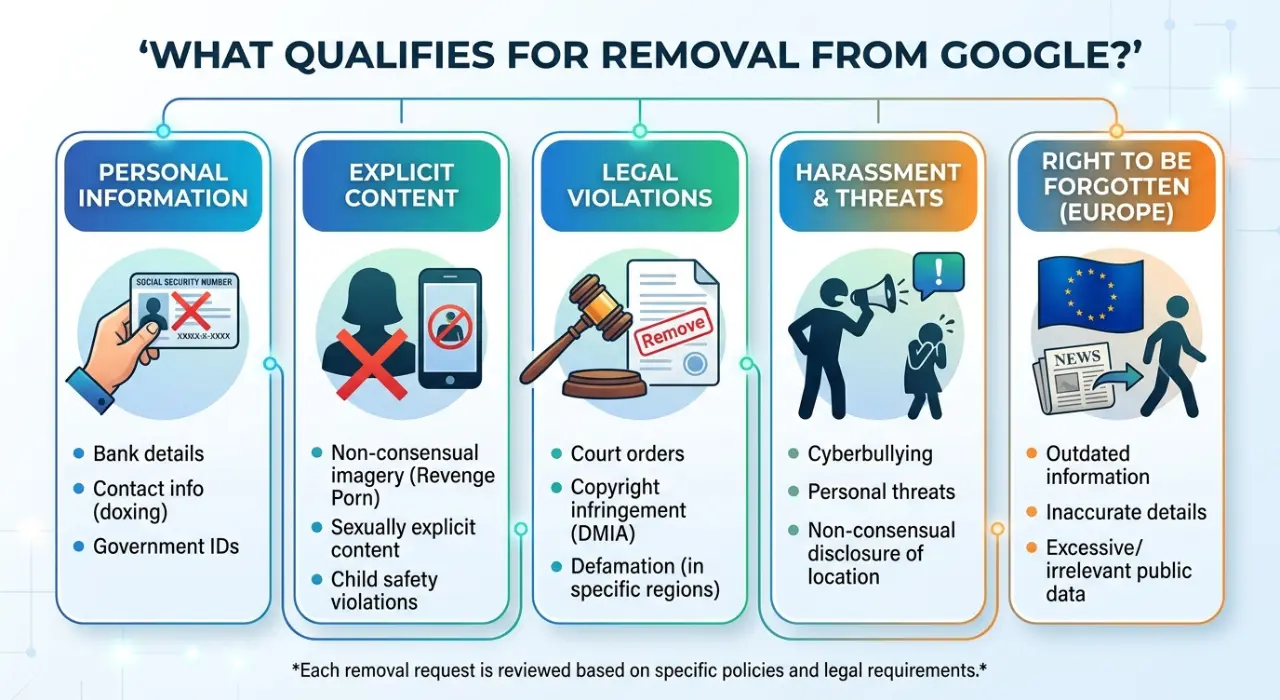
Google removes specific categories of content when the material violates legal, privacy, safety, or policy standards defined within its search ecosystem. Delisting refers to the process of restricting indexed content from appearing within search engine results pages (SERPs) after evaluation against removal criteria.
Reputation management is the process of analysing and influencing how digital information shapes public perception across search ecosystems. Online reputation refers to the collection of indexed content, authority signals, review data, and entity associations that define trust, credibility, and visibility within search engines.
What does removing content from Google actually mean?
Removing content from Google refers to limiting the visibility of indexed URLs within search engine results pages rather than deleting information from the internet itself. Search engines operate through crawling, indexing, and ranking systems that store references to webpages and evaluate their relevance for user queries. When content qualifies for delisting, Google suppresses or removes indexed references from its searchable database. The original material often remains active on the hosting website unless the publisher deletes it independently. This distinction defines the difference between content removal and search delisting within reputation management systems. Search visibility changes immediately alter entity perception because users interpret SERP results as indicators of legitimacy, authority, and trust.
Content indexing is the mechanism that allows search engines to store and retrieve webpages for ranking evaluation. Delisting interrupts this indexing process by removing URLs from searchable query associations. Search algorithms interpret indexed content as part of an entity’s digital footprint, which contributes to reputation signals over time. Negative or harmful content influences SERP evaluation because repeated visibility reinforces search perception patterns. Reputation ecosystems therefore depend on both the existence of content and its discoverability through search engines. Delisting reduces discoverability and weakens the influence of harmful reputation signals.
Which types of content does Google remove from search results?
Google removes content that violates defined policies relating to privacy, exploitation, fraud, personal harm, or legal restrictions. The search engine evaluates removal requests through policy frameworks rather than subjective reputation concerns. Content qualifies for delisting when it creates identifiable risks connected to safety, identity misuse, or unlawful exposure. Search ecosystems prioritise user protection because harmful information damages trust within indexing environments. Reputation management analysis therefore focuses on how policy-based removal systems interact with visibility and perception. The removal process depends on evidence, context, and policy alignment rather than public relations concerns.
How does Google evaluate personal information removal requests?
Personal information removal refers to the restriction of sensitive identifying data from indexed search results. Google evaluates requests involving financial information, government identification numbers, medical records, private contact details, and confidential credentials. Search systems interpret exposed personal data as a security threat because indexed information enables identity misuse and reputational exploitation. Delisting mechanisms reduce search visibility to prevent mass discoverability of sensitive records. The removal decision depends on whether the information creates direct privacy or safety risks within public indexing systems. Reputation signals improve when sensitive information no longer dominates branded or entity-based searches.
Read More:
Why Certain Google Search Results Stay Up Even When You Request Removal
How to Remove Damaging Google Search Results Through Legal and SEO Routes
Why does Google remove explicit or exploitative content?
Exploitative content refers to material involving harassment, non-consensual explicit imagery, or manipulated intimate media distributed without permission. Search ecosystems classify this material as harmful because it damages digital trust and creates long-term reputational harm. Google removes exploitative content to maintain search integrity and reduce the amplification of abuse signals. SERP evaluation systems recognise repeated visibility of exploitative material as a distortion of entity perception. Delisting therefore functions as a protective mechanism within reputation ecosystems. Search visibility restrictions reduce association between harmful material and branded or personal search queries.
How does Google treat fraudulent or deceptive content?
Fraudulent content refers to webpages designed to deceive users through impersonation, scams, phishing, or misinformation relating to identity and transactions. Search engines evaluate this material through spam detection systems and policy enforcement algorithms. Google removes deceptive content because false associations undermine credibility within search ecosystems. Reputation systems rely on trust signals derived from consistency, authenticity, and source legitimacy. Fraudulent content damages authority perception because search users interpret indexed results as validated references. Delisting removes deceptive associations and restores clearer entity interpretation across SERPs.
Which types of content does Google usually refuse to remove?
Google refuses to remove lawful content that remains publicly accessible and does not violate search policies. Search engines prioritise informational neutrality because indexing systems are designed to reflect publicly available information. Negative press coverage, criticism, consumer complaints, and opinion-based commentary often remain indexed despite reputational consequences. SERP evaluation systems treat lawful content as part of the broader informational environment surrounding an entity. Reputation management analysis therefore distinguishes between policy violations and reputational discomfort. Search visibility alone does not qualify content for delisting.
Search ecosystems interpret public information as part of authority and credibility assessment models. News articles, public records, forum discussions, and editorial commentary contribute to entity perception because algorithms evaluate topical relevance and source authority simultaneously. Content remains indexed when it satisfies legal publication standards and demonstrates informational legitimacy. Search engines avoid acting as arbiters of reputation because neutrality supports informational consistency across the web. Delisting frameworks therefore focus on harm prevention rather than image optimisation. Reputation signals continue evolving through the ongoing interaction between content quality, authority, and user engagement.
How do search engines interpret reputation signals?
Reputation signals are measurable indicators that search algorithms use to evaluate credibility, authority, and trustworthiness across digital ecosystems. These signals include backlinks, review sentiment, content consistency, source reliability, engagement metrics, and topical associations. Search engines analyse these elements collectively to determine how entities appear within SERPs. Reputation management therefore extends beyond individual webpages because algorithms evaluate broader semantic relationships connected to an entity. Search perception develops through repeated exposure to consistent reputation signals across multiple sources. Entity reputation becomes stronger when authority, relevance, and trust indicators align.
Algorithms evaluate reputation through pattern recognition systems rather than emotional interpretation. Positive sentiment alone does not determine visibility because search engines prioritise relevance, authority, and indexing quality. A highly authoritative negative article frequently outranks weaker positive content because source credibility influences SERP evaluation. Search ecosystems therefore reward informational reliability over promotional intent. Reputation systems interpret consistency across sources as evidence of legitimacy and trustworthiness. Contradictory or misleading content weakens entity perception because algorithms detect inconsistencies across indexed references.
Why does search visibility influence public perception?
Search visibility influences public perception because users interpret ranked results as indicators of legitimacy and relevance. SERPs function as reputational gateways that shape initial impressions before direct engagement occurs. Search ecosystems organise information hierarchically, meaning higher-ranked content receives greater attention and perceived authority. Reputation management analysis therefore examines ranking positions as perception drivers rather than simple traffic metrics. Visibility defines which narratives dominate branded and entity-related searches. Indexed content with strong authority signals shapes public interpretation more effectively than low-ranking material.

Search algorithms reinforce visibility through engagement and authority loops. Content receiving sustained clicks, backlinks, and interaction accumulates stronger relevance signals over time. High-visibility content therefore maintains reputational influence because algorithms continue associating it with user intent. Negative material with strong authority signals frequently persists within SERPs due to historical relevance and engagement metrics. Delisting changes these visibility dynamics by removing indexed pathways that reinforce harmful associations. Reputation ecosystems respond directly to changes in indexed prominence and query associations.
How do review signals affect online reputation?
Review signals refer to structured feedback data that search engines use to interpret trust, satisfaction, and credibility. Search ecosystems analyse ratings, textual sentiment, review frequency, and platform authority to evaluate entity perception. Reviews contribute directly to local visibility, knowledge panels, and reputation summaries within SERPs. Reputation management therefore includes analysis of how review content influences search interpretation. Search engines assess review authenticity through behavioural patterns, consistency, and account legitimacy. Manipulated or artificial reviews weaken trust signals because algorithms detect abnormal engagement structures.

Sentiment interpretation systems evaluate recurring themes within review ecosystems. Positive reviews strengthen authority perception when consistency exists across independent sources. Negative reviews influence entity perception when complaints demonstrate repeated operational or ethical concerns. Search algorithms interpret recurring patterns as stronger indicators than isolated feedback. Reputation systems therefore prioritise consistency and source reliability over isolated sentiment extremes. Online credibility develops through sustained alignment between user experience signals and indexed content.
What role does a digital footprint play in reputation management?
A digital footprint is the cumulative collection of indexed information associated with an individual, organisation, or entity across search ecosystems. This footprint includes webpages, social profiles, reviews, media coverage, public records, and user-generated content. Search engines aggregate these references to construct entity understanding and contextual relevance. Reputation management analyses how these indexed associations influence authority perception and search visibility. Digital footprints evolve continuously because search algorithms reassess indexed material based on freshness, relevance, and engagement. Entity perception therefore changes as new information enters the indexing environment.
Search ecosystems evaluate digital footprints semantically rather than as isolated webpages. Algorithms connect topics, mentions, and references to establish broader entity relationships. Consistent authoritative references strengthen credibility because semantic associations reinforce trust signals. Harmful or contradictory information weakens entity clarity and introduces uncertainty into SERP evaluation systems. Delisting alters the composition of a digital footprint by removing searchable associations from indexed environments. Reputation systems therefore depend on both content creation and content suppression dynamics.
How does healthcare reputation management relate to search perception?
Healthcare reputation management refers to the analysis of how healthcare-related entities are interpreted within search ecosystems through authority, trust, and credibility signals. Search engines apply stricter evaluation standards to healthcare-related information because health content influences public wellbeing and decision-making. Algorithms assess expertise, accuracy, source authority, and review sentiment when ranking healthcare-related content. Reputation systems within healthcare environments therefore depend heavily on trust signals and informational consistency. Negative or misleading content influences search visibility more intensely because healthcare queries fall within high-trust evaluation categories. Entity perception in healthcare ecosystems develops through verified authority and reliable indexing patterns.
Healthcare-related SERPs demonstrate heightened sensitivity to credibility signals because algorithms prioritise trustworthy information sources. Reviews, public complaints, inaccurate medical claims, and outdated references influence search interpretation significantly. Content indexing within healthcare ecosystems therefore affects both reputation and perceived legitimacy simultaneously. Delisting mechanisms involving privacy breaches or harmful misinformation carry greater reputational implications within healthcare-related search environments. Search ecosystems interpret healthcare credibility through semantic consistency, professional authority, and verified informational accuracy. Reputation management analysis in this context focuses on how search engines define trustworthiness across medically relevant queries.
Why does authority matter in content ranking and delisting evaluation?
Authority refers to the perceived reliability and expertise of a source within search ecosystems. Search engines evaluate authority through backlinks, historical trust signals, topical relevance, and publisher consistency. High-authority content receives stronger ranking positions because algorithms interpret credibility as a quality indicator. Reputation management therefore analyses authority as a central factor in SERP evaluation and entity perception. Authoritative negative content often remains highly visible because trust signals outweigh reputational concerns. Delisting requests involving authoritative sources face stricter scrutiny because search ecosystems prioritise informational reliability.
Authority also influences how search engines interpret removal requests themselves. Verified legal documentation, policy evidence, and authenticated complaints strengthen the legitimacy of delisting evaluations. Search systems rely on structured evidence because authority-based verification reduces manipulation risks. Reputation ecosystems therefore reward factual consistency and documented credibility. Weak or unverifiable claims fail to influence indexing systems effectively because algorithms and review teams prioritise evidential reliability. Search visibility ultimately reflects the interaction between authority signals, relevance patterns, and policy frameworks.
Removing content from Google involves restricting indexed visibility within search ecosystems rather than erasing information from the internet entirely. Delisting frameworks operate through policy evaluation systems that prioritise privacy, safety, legitimacy, and search integrity. Search engines remove specific categories of harmful or unlawful content while continuing to index lawful material that contributes to public informational ecosystems.
Reputation management defines how indexed content shapes entity perception through authority, trust, sentiment, and visibility signals. Search algorithms evaluate digital footprints semantically by analysing consistency, credibility, engagement, and source authority across SERPs. Content ranking dynamics therefore influence how users interpret trustworthiness and legitimacy within online environments. Delisting changes search visibility patterns, but broader reputation systems continue operating through indexed authority signals, review interpretation, and semantic entity associations.
What types of content can be removed from Google search results?
Google may remove content that violates its policies, including personal information, non-consensual explicit images, financial data, doxxing content, and outdated legal records. In some cases, copyright violations and defamatory content may also qualify for delisting through legal or policy-based requests.
How do I request content removal from Google?
You can submit a removal request through Google’s official removal tools by identifying the URL and the reason for removal. Reputation Management PR Agency recommends gathering supporting documentation before filing a request to improve the review process and response time.
Does removing content from Google delete it from the internet?
No, removing content from Google only prevents the page from appearing in Google Search results. The original content may still exist on the website unless the site owner removes or updates it directly.
How long does Google take to remove search results?
Google’s review timeline varies depending on the request type and the complexity of the case. Some removals are processed within days, while legal or privacy-related delisting requests may take several weeks for evaluation.
Can outdated or inaccurate information be removed from Google?
In certain situations, outdated or misleading content may qualify for removal if it creates privacy risks or violates Google’s content policies. Reputation Management PR Agency often advises updating or removing the source content first to improve the chances of successful deindexing.