
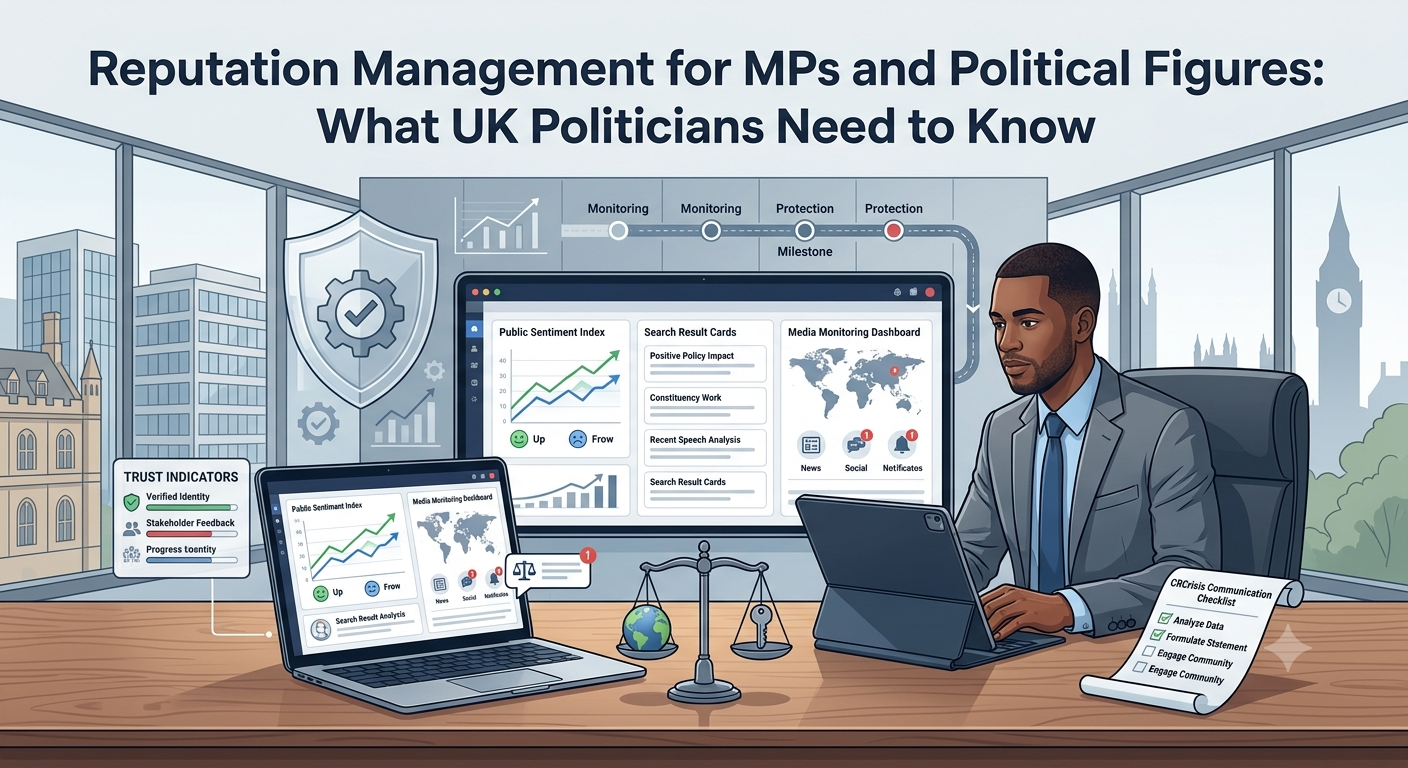
Political Reputation Management
Few reputations face scrutiny as constant, or as unforgiving, as those in public office. Every vote, statement, and public appearance becomes permanently searchable, and in a media environment that moves faster than most offices can formally respond to, political reputation management has become essential infrastructure rather than an optional communications extra.
This isn’t about controlling a narrative unfairly. It’s about ensuring an accurate, complete public record is what actually surfaces when constituents, journalists, and colleagues search a politician’s name, rather than isolated fragments stripped of context.
Why Political Figures Face a Different Kind of Reputation Risk
Politicians operate under conditions most other public-facing reputation work doesn’t account for. Voting history, past interviews, and public statements remain searchable indefinitely and are frequently resurfaced years later, often stripped of the context in which they were originally made. Opposition research adds another layer entirely, since political rivals and their teams actively work to keep unflattering content visible and ranking well, in a way that has no real parallel in business reputation management.
Media cycles compound this further. A misleading headline or an out-of-context clip can dominate search and social visibility for days before a correction or clarification gains anywhere near equivalent reach. And because constituent trust is built cumulatively over years, search results function as a kind of ongoing character reference that voters consult constantly, not only during election periods.
What Political Reputation Management Actually Involves
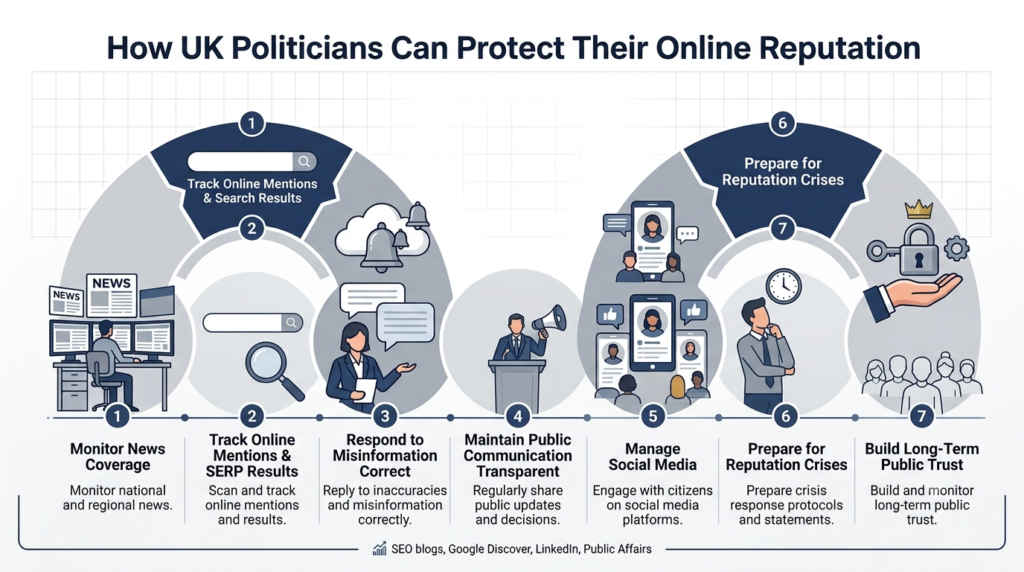
A structured approach for MPs, MEPs, councillors, and other public figures typically covers five core areas.
- Continuous search monitoring. Tracking what appears for the individual’s name, constituency, and key policy positions, with alerts set for sudden negative shifts rather than periodic manual checks.
- Accurate representation of the public record. Ensuring voting history and past statements are represented with full context, rather than allowing isolated, misleading fragments to dominate search results unchallenged.
- Strengthening owned, authoritative content. A well-maintained official website, consistent social media presence, and direct constituent communication channels give search engines credible, current material to prioritise ahead of outdated or out-of-context coverage.
- Rapid response frameworks for breaking stories. Political reputation events often unfold within hours rather than days. Pre-agreed response protocols, similar to the kind of structured approach covered in our guide to reputation damage control in the first 48 hours, allow a team to act quickly and accurately instead of scrambling to catch up after the story has already spread.
- Long-term narrative consistency. Keeping public messaging coherent across years, so that a single incident doesn’t come to disproportionately define an entire public record built over a much longer career.
Common Reputation Risks Facing UK Political Figures
Several risk patterns show up consistently in this space: out-of-context video or quote clips circulating widely on social media before clarification is possible, older news articles continuing to outrank current, more relevant coverage, deliberately misleading content from politically motivated sources, sharply amplified negative sentiment during election periods when both search volume and scrutiny spike, and personal social media history predating public office that no longer reflects current positioning.
Where content crosses from unfair characterisation into outright false statements of fact causing serious harm, this may move beyond reputation management into genuine legal territory. Our comparison of defamation solicitors versus reputation management agencies explains how to tell which situation you’re actually facing.
Why Speed Matters More in Political Reputation Management
In most reputation contexts, there’s time to build a carefully considered response. In politics, that window is frequently measured in hours. A story that gains ranking and social momentum within the first 24 to 48 hours becomes significantly harder to displace afterward, which is why political reputation management leans heavily on preparation rather than pure reaction. Our guide to the first 24 hours of crisis PR covers the same underlying urgency principle that applies directly to a breaking political story.
Having monitoring systems, pre-approved messaging templates, and an existing relationship with a reputation team in place means a genuine crisis can be addressed immediately, rather than losing critical early hours simply getting organised.
Balancing Transparency With Protection
Effective political reputation management is not about concealing legitimate scrutiny or evading public accountability, since that ultimately damages trust further rather than protecting it. It’s about ensuring genuine achievements and positions are represented accurately and aren’t buried, that misinformation doesn’t dominate the narrative unchallenged, that isolated incidents are placed in appropriate context, and that constituents can find accurate, current information rather than outdated or distorted coverage.
Where outdated or clearly inaccurate content is directly harming this balance, our guide to removing negative content from Google in the UK walks through the realistic options available, including what can and cannot be addressed through search-based removal alone.
Working With a Specialist Team
Political reputation management sits at the intersection of PR, search strategy, and a working understanding of the UK political media landscape specifically. This requires familiarity with how UK news cycles, parliamentary procedure, and constituency dynamics interact with search visibility, and the judgement to build a response framework suited to the realities of public office rather than a generic crisis playbook borrowed from the corporate world. Our guide to building a positive content strategy covers the longer-term content principles that apply here, adapted to the higher stakes and faster pace of political life.
Frequently Asked Questions
How is political reputation management different from standard PR?
It combines continuous search monitoring, rapid response capability, and a detailed understanding of UK political media dynamics, requirements that go well beyond the scope of general public relations work.
Can old news articles about a political figure really be pushed down in search results?
In many cases, yes, primarily by building a stronger, more current base of authoritative owned content over time, since removal alone is rarely possible for genuine news coverage.
How quickly does a political reputation team need to respond to a breaking story?
Ideally within hours rather than days, since search and social momentum in the first 24 to 48 hours is significantly harder to shift once it has taken hold.
Is political reputation management about hiding legitimate criticism?
No. Genuine public accountability and scrutiny remain essential. The goal is ensuring accuracy and context, not concealment, since attempting to hide legitimate scrutiny ultimately undermines public trust further.
Do opposition research tactics actually affect search rankings?
Yes, political rivals and their teams frequently work to keep unflattering content visible and highly ranked, which is one of the key differences between political reputation management and standard business reputation work.