LinkedIn Reputation Management
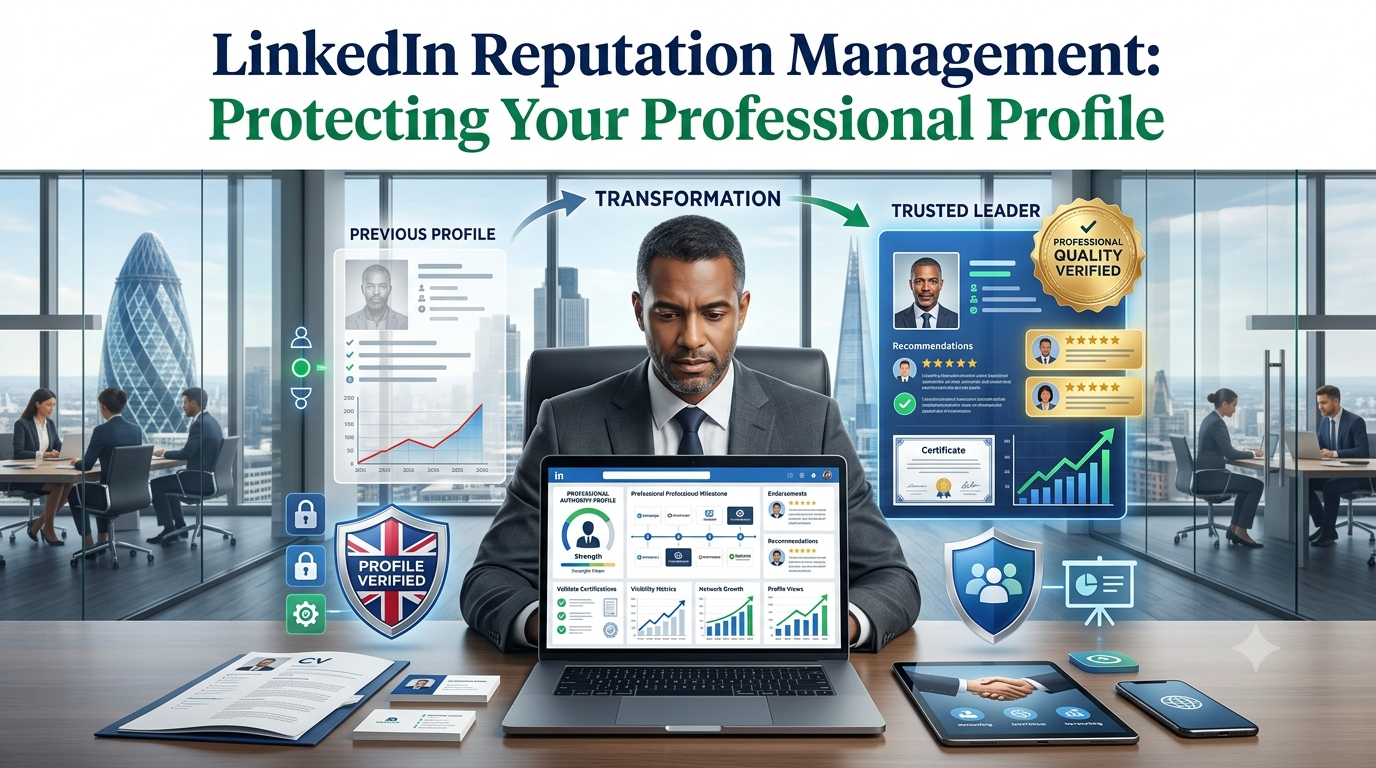
LinkedIn has quietly become the place where professional trust gets decided before anyone picks up the phone. With over 1.3 billion members and 87% of recruiters using it to vet candidates before an interview is ever scheduled, LinkedIn reputation management has moved from a nice-to-have to a genuine business necessity for anyone whose career or company depends on how they’re perceived professionally. Unlike more casual social platforms, LinkedIn’s audience arrives with specific professional intent, researching, evaluating, and deciding, which means what they find carries disproportionate weight compared to a casual social media impression. We help executives, professionals, and companies build and protect exactly that.
Why Personal Profiles Matter More Than Most People Realise
Here’s a statistic that should reshape how most executives think about LinkedIn: personal profiles generate up to 5 times more engagement and 2.75 times more impressions than company pages. LinkedIn reputation management for a business, therefore, isn’t really about the company page alone, it’s about the leadership team’s individual presence, since decision-makers and prospective hires are consistently more influenced by real people than by branded corporate content. A company with a polished page but an invisible or inconsistent leadership presence is leaving significant trust-building potential unused.
What Recruiters and Buyers Actually See in Seconds
The average LinkedIn session lasts just 7 to 8 minutes, and recruiters reviewing a profile are making snap judgements based on your headline, top experience, and photo, not a deep read of your entire career history. Complete profiles are up to 40 times more likely to generate opportunities than incomplete ones, meaning gaps, outdated information, or a thin summary section directly cost visibility, not just polish. On the buyer side, over half of B2B decision-makers say LinkedIn thought leadership content has led them to consider new vendors, meaning a founder or executive’s personal presence increasingly functions as a genuine sales asset, not just a networking tool.
Common Reputation Risks on LinkedIn
A few patterns show up consistently for professionals and executives:
- Outdated or inconsistent information across the profile. A stale headline, an old job title, or a summary that no longer reflects current focus creates a credibility gap the moment someone actually checks, particularly damaging given how quickly recruiters and buyers form first impressions.
- A thin or inactive presence relative to peers. In an environment where personal content consistently outperforms company content, a leader who never posts or engages leaves the narrative entirely to whatever else surfaces when their name is searched.
- Unmanaged recommendations and endorsements. A recommendations section that hasn’t been actively curated can leave outdated or irrelevant testimonials as the most visible social proof on the entire profile.
- No verification despite it being readily available. LinkedIn’s verification badge, confirming identity, workplace, or education through trusted partners, is a straightforward, underused trust signal that many professionals simply haven’t set up.
How We Approach LinkedIn Reputation Management
Our process starts with a full audit of your current profile, positioning, content history, and how you compare to relevant peers or competitors, identifying specific gaps between where your presence stands and where the data shows it should be. From there, we help build a complete, consistent profile, verified where appropriate, with a headline and summary built to perform within that critical first impression window rather than reading as a static resume.
Our guide to CEO reputation management covers the broader executive reputation principles that LinkedIn work sits within, particularly relevant given how directly leadership visibility now feeds into overall company perception.
Profile Audit and Competitive Analysis
• Conduct a comprehensive review of your current LinkedIn profile, positioning, content history, and overall professional presence.
• Analyze how your profile compares with industry peers, competitors, and other relevant professionals.
• Identify strengths, weaknesses, and opportunities for improvement based on data-driven insights.
• Highlight gaps between your current profile performance and industry best practices.
LinkedIn Profile Optimization
• Build a complete and professionally optimized LinkedIn profile that reflects your expertise and career achievements.
• Ensure profile information remains consistent, accurate, and aligned with your personal or corporate brand.
• Assist with profile verification and credibility enhancing elements where applicable.
• Create compelling headlines and summaries designed to make a strong first impression and encourage profile engagement.
Strategic Personal Branding
• Position your profile to support long term professional visibility and reputation growth.
• Develop messaging that communicates expertise, authority, and industry relevance.
• Strengthen personal branding beyond a traditional resume-style presentation.
Executive Reputation Management
• Align LinkedIn optimization efforts with broader CEO and executive reputation management strategies.
• Enhance leadership visibility across professional networks and digital platforms.
• Support a positive public perception of both the individual executive and the organization they represent.
• Leverage LinkedIn as a key channel for building trust, credibility, and thought leadership.
Building an Active, Trust Building Presence
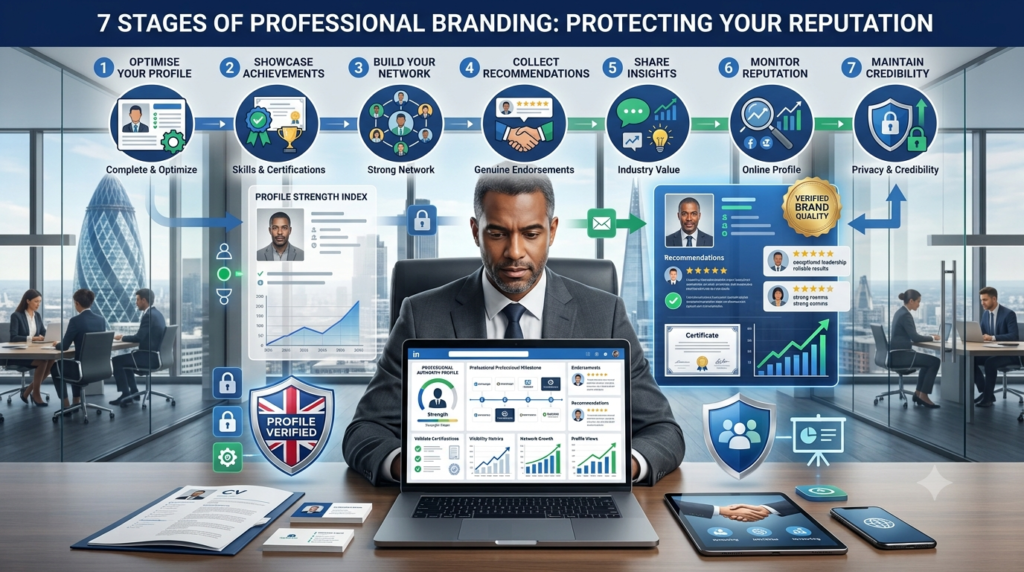
Beyond the static profile, we help professionals and executives build a consistent content and engagement rhythm, since personal posts and thought leadership content substantially outperform passive profiles in both visibility and trust building. This isn’t about constant self promotion, it’s about genuine, useful visibility that reinforces expertise ahead of the moments that actually matter, an investor conversation, a job change, a partnership discussion, all of which increasingly start with a LinkedIn search rather than a cold introduction.
For anyone stepping into a more public role, our guide to preparing your personal reputation before becoming a company director covers the broader search visibility work that LinkedIn presence forms a core part of.
Why Company Wide LinkedIn Reputation Management Matters Too
While executive visibility carries disproportionate weight, LinkedIn reputation management for a business benefits significantly from extending beyond the leadership team alone. Employee advocacy, staff members genuinely sharing and engaging with company content on their own profiles, achieves substantially greater reach than company page posts alone, and research consistently shows the large majority of employees who participate in structured advocacy programmes say it has directly benefited their own careers too. This creates a genuinely mutual incentive: employees build their own visibility while the company benefits from the far greater organic reach personal profiles achieve compared to a branded page speaking alone.
Coordinating this across a team does require some structure, shared messaging guidelines, easy to share content, and recognition for employees who participate, but the payoff is a company reputation built on many authentic voices rather than a single corporate account competing for attention against every other brand on the platform.
Handling a Negative Moment on LinkedIn
Given how professional and reputation-conscious the platform’s audience is, a negative comment thread, a public dispute, or a controversial post can spread quickly among exactly the audience most likely to remember it, recruiters, peers, and potential clients. Our guide to reputation damage control in the first 48 hours covers the response framework that applies to fast moving situations generally, and on LinkedIn specifically, a calm, professional, and prompt response tends to be read favourably by the platform’s business-minded audience, who generally respond better to visible accountability than to silence or deletion.
Frequently Asked Questions
How much does LinkedIn actually influence hiring and business decisions?
Significantly. The large majority of recruiters use LinkedIn to vet candidates before an interview, and a meaningful share of B2B decision makers say LinkedIn content has directly influenced which vendors they consider.
Is it worth verifying my identity on LinkedIn?
Yes. Verification is a straightforward, credible trust signal that many professionals overlook, and given how quickly recruiters and buyers form impressions, every available signal of authenticity genuinely helps.
Should company reputation focus on the company page or individual leadership profiles?
Both, but individual profiles generally deserve more attention than most companies give them, since personal profiles consistently generate far more engagement and impressions than company pages alone.
How often should a LinkedIn profile actually be updated?
Regularly, ideally whenever a role, focus, or achievement changes, since an outdated profile creates a credibility gap the moment someone checks it against current reality.
Does posting content on LinkedIn really matter for reputation, or is a complete profile enough?
A complete profile is the foundation, but active, genuine content substantially outperforms a passive profile in both visibility and trust-building, particularly for executives whose thought leadership directly influences buyer and hiring decisions.