

Reputation management delivers control over what prospects see in search results and restores trust signals that drive decisions. Controlling search visibility and strengthening reputation signals directly reduces commercial risk and stabilises public perception.
A targeted Corporate reputation management programme delivers measurable SERP control and trust restoration by combining content engineering, legal takedown where necessary, and authoritative amplification. The service begins with an entity credibility audit that maps keywords, branded search queries, and existing reputation signals across search engines and major review platforms.
The audit produces a ranked action plan that links each negative or weak signal to a remediation tactic, enabling measurement through baseline and ongoing SERP tracking, sentiment scoring, and domain authority shifts. Typical measurable outcomes include improved SERP share of positive assets (percentage of first-page listings you control), reduction in prominence of negative pages (measured by position displacement), and uplift in on-site conversion indicators driven by search referrals. These outcomes matter because high-visibility positive assets and aligned reputation signals reduce prospect friction and increase likelihood-to-engage metrics in procurement and sales processes.
Which processes ensure rapid negative content suppression and sustained control?
A combined suppression and amplification process ensures rapid reduction in the visibility of harmful content and creates sustained control through high-authority placement. The process starts by prioritising assets for negative content suppression using impact scoring (business-critical pages first), then executes parallel tactics: SEO-driven content publishing on owned and third-party platforms, legal or platform-complaint takedowns when applicable, and link and citation strategies to elevate preferred assets.
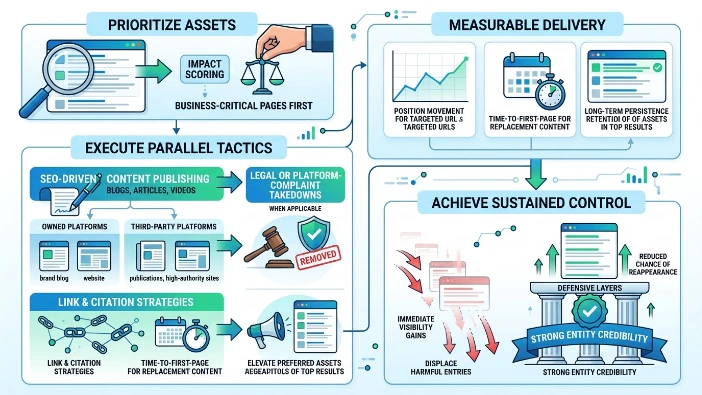
Measurable delivery includes position movement for targeted URLs, time-to-first-page for replacement content, and long-term persistence measured by retention of positive assets in top results. This process delivers immediate visibility gains by displacing harmful entries while ensuring sustainability: published authoritative content strengthens entity credibility and creates defensive layers that reduce the chance of reappearance.
Which reputation signals directly influence buying decisions in search?
Clear, authoritative reputation signals deliver improved conversion by signalling reliability and relevance at point of search. Reputation signals include verified contact data and credentials on corporate pages, consistent NAP (name, address, phone) citations across authoritative directories, high-quality third-party coverage, positive review velocity, and structured data that surfaces rich results. Reputation management ensures these signals are standardised, optimised, and amplified so search engines and users interpret the entity as credible. Measurable improvements show as higher click-through rates from branded searches, increased appearance in knowledge panels, and more frequent display of rich snippets—each of which increases trust and reduces perceived risk for decision-makers reviewing suppliers.
Which evidence demonstrates that reputation services improve rankings and visibility?
Proven evidence shows reputation-focused SEO and PR tactics shift rankings and content visibility by addressing both algorithmic and human ranking factors. Practical evidence includes case metrics such as the percentage of first-page listings reclaimed, time-to-replace negative assets with owned content, and domain authority increases from earned coverage. The mechanism is simple: high-quality content on authoritative domains combined with targeted link signals and properly structured metadata alters search algorithms’ assessment of relevance and authority. For organisations, this translates into measurable outcome improvements—higher organic traffic to corporate pages, increased branded query conversions, and higher authority scores that protect against future ranking volatility. These measurable shifts validate the investment because they directly correlate with lead volume and stakeholder confidence.
Which safeguards reduce legal and reputational risk during remediation?
A controlled remediation protocol reduces legal and reputational exposure by combining compliance review, escalation thresholds, and documented permissions for interventions. The protocol mandates an initial legal assessment to identify defamation, data protection, or contractual considerations, then applies escalation rules for takedown requests versus content rebuttals. Reputation management teams implement preservation steps to retain evidence and maintain audit trails while executing public-facing corrections, ensuring transparency and defensibility. Measured safeguards include reduced incidence of legal pushback, shortened resolution timelines for platform disputes, and traceable consent records for content changes. These safeguards reduce commercial risk by preventing reactive mistakes that amplify negative attention.
Which investment level delivers sustainable long-term value versus short-term fixes?
A strategic investment in corporate reputation management delivers sustainable value by prioritising durable assets and defensive content over ephemeral quick-fixes. Long-term programmes allocate budget to high-authority content creation, continuous monitoring, and backlink resilience while retaining capacity for urgent suppression. The return profile shows initial impact within weeks for high-priority queries and stabilisation of results over months as authoritative assets accumulate.
Cost justification rests on avoided losses: improved win rates in procurement, reduced legal fees, and preserved customer lifetime value resulting from maintained trust. Measurable financial outcomes include increased conversion rates from branded search, reduced churn attributable to reputational concerns, and lower cost-per-acquisition from organic channels due to strengthened search presence.
For more information explore:
How a Reputation Management Company Protects Your Digital Presence
Which KPIs prove the service improves trust and stabilises perception?
A focused KPI framework proves trust improvement and perception stabilisation by tracking both search performance and human-centred indicators. Core KPIs include share of first-page positive assets, displacement rate of negative listings, review sentiment score and velocity, knowledge panel ownership, and conversion rate from branded search referrals.
Implementation ties each KPI to monitoring dashboards that report week-over-week movement and attribution to specific tactics. Improved KPIs signal strengthened entity credibility and reduced decision friction for buyers, which directly impacts commercial outcomes. Reported improvements provide clients with transparent evidence of progress and control.
Which vendor qualifications ensure reliable delivery and accountability?
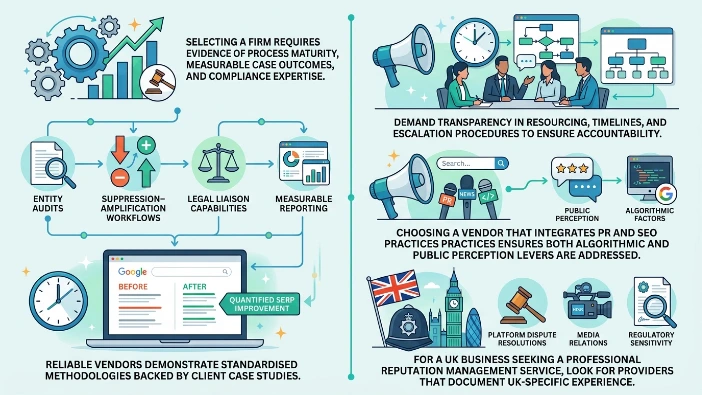
Selecting a firm with proven delivery requires evidence of process maturity, measurable case outcomes, and compliance expertise. Reliable vendors demonstrate standardised methodologies entity audits, suppression–amplification workflows, legal liaison capabilities, and measurable reporting backed by client case studies showing quantified SERP improvements.
Demand transparency in resourcing, timelines, and escalation procedures to ensure accountability. Choosing a vendor that integrates PR and SEO practices ensures both algorithmic and public perception levers are addressed. For a UK business seeking a professional reputation management service, look for providers that document UK-specific experience with platform dispute resolutions, media relations, and regulatory sensitivity.
Dive Deeper With Our Expert Guides and Related Blog Posts:
Why UK Businesses Trust a Specialist Reputation Management Agency
Get Expert Online Reputation Management Tailored for Your UK Business
Which immediate actions will accelerate results after hiring a firm?
Implementing five defined post-engagement actions accelerates impact and clarifies control responsibilities:
- Publish targeted content: Create pages that address priority search queries and increase positive asset count.
- Submit platform disputes: File complaint or takedown requests for demonstrably false or infringing content.
- Optimise structured data: Add schema to corporate pages to enable knowledge panel and rich snippet visibility.
- Drive earned coverage: Secure authoritative third-party placements that lift domain authority and citation signals.
- Monitor branded queries: Establish real-time SERP tracking and sentiment alerts to respond to re-emergent risks.
Each action produces measurable effects faster asset displacement, increased presence in rich results, and quicker sentiment reversals thereby reducing risk and accelerating value realisation.
For more detail explore:
What to Look for When Choosing a Reputation Management Compan
Which guarantees and reporting practices demonstrate transparency and outcomes?
Build trust through measurable results with Reputation Management PR Agency offering transparent reporting, KPI-driven strategies, and clear reputation performance tracking. Detailed dashboards, SERP monitoring, and sentiment analysis help businesses understand how reputation campaigns improve visibility, credibility, and long-term brand protection.
A decision to engage a corporate reputation management service delivers controlled search visibility, reinforced reputation signals, and measurable reductions in commercial risk. Clear processes entity audits, suppression plus amplification, legal safeguards, and KPI-driven reporting ensure outcomes that improve rankings, content visibility, and public trust. For UK organisations demanding accountable, measurable remediation and long-term protection, a structured programme provides both rapid impact and sustainable defence.
What is corporate reputation management?
Corporate reputation management is the process of shaping how a business appears in search results, reviews, news, and other online channels. It helps protect brand credibility, support trust, and reduce the impact of negative content.
Why is corporate reputation management important for UK businesses?
It matters because buyers often research a company before making contact or purchase decisions. Strong reputation signals improve trust, support conversion, and reduce the risk of losing leads to negative search results.
How does corporate reputation management work?
It usually combines search visibility control, content strategy, review management, and monitoring of brand mentions. The goal is to improve what people see first when they search for the company name or related terms.
How long does it take to improve a company’s online reputation?
Timelines depend on the strength of the existing search results and the type of issue being addressed. Some improvements appear within weeks, while more complex reputation repair work can take several months.