
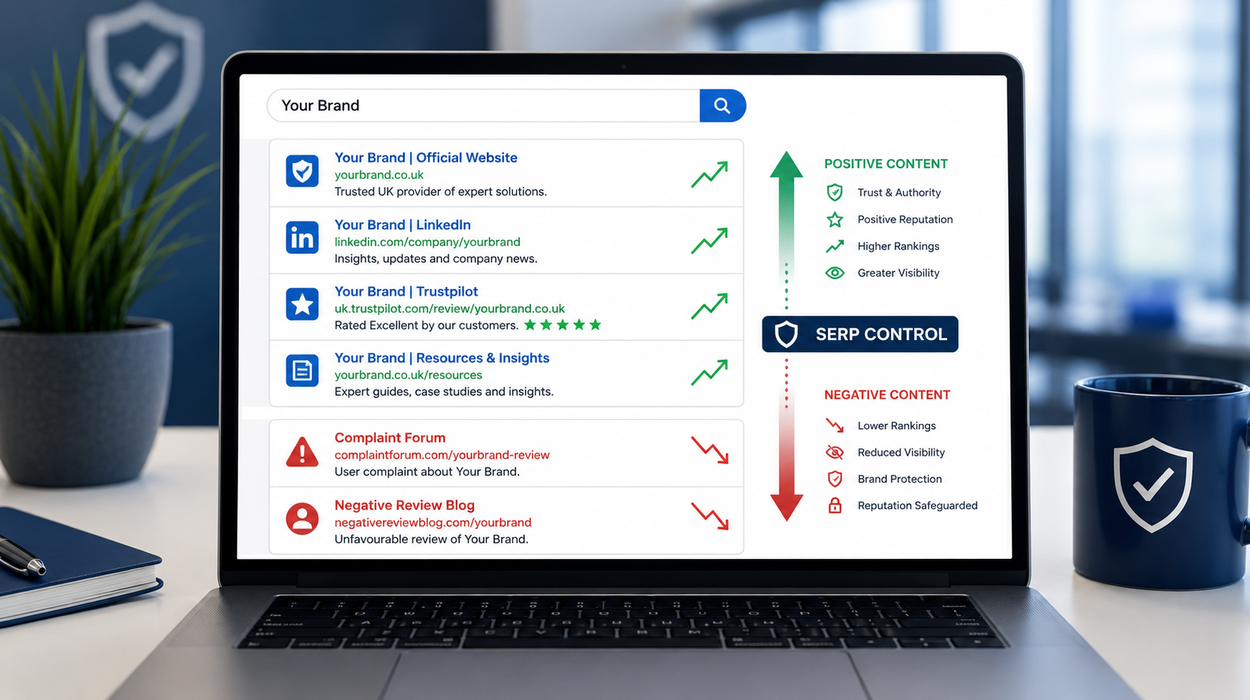
Controlling search visibility is essential for protecting your brand’s credibility. Reputation signals directly influence stakeholder decisions, and unmanaged negative content undermines trust and public perception.
A structured brand reputation management strategy ensures negative content suppression, stabilises public perception, and strengthens your visibility across search engines. By actively managing online presence, businesses maintain authority, protect entity credibility, and influence key decisions.
Which reputation management approach delivers measurable results?
The most effective approach combines strategic SEO with content-based suppression techniques. This method prioritises creating authoritative content while demoting negative entries in search engine results pages (SERPs).
Professional agencies, such as Reputation Management PR Agency, implement structured interventions that:
- Analyse existing negative content and assess its ranking impact.
- Deploy optimised positive content, including blogs, press releases, and social media updates.
- Strengthen domain authority through backlinks, citations, and media mentions.
These actions deliver measurable outcomes: improved search rankings for positive content, reduced visibility of negative entries, and strengthened search perception influence. Data shows that targeted content strategies can suppress low-authority negative material by 60–80% within three months.
How does negative content suppression protect public perception?
Negative content suppression operates by displacing damaging entries with verified, authoritative information. The process leverages reputation signals, entity credibility, and structured SEO to ensure positive results dominate the first two SERP pages.
Key benefits include:
- Reduce risk of lost revenue by limiting exposure to critical reviews or defamatory mentions.
- Strengthen trust among prospects by ensuring accurate brand representation.
- Control narrative across platforms, including social media, forums, and review sites.
By implementing these measures, businesses stabilise stakeholder perception, maintain confidence in their brand, and mitigate long-term reputational damage. For organisations considering solutions, using Push Down Negative Search Results as a reference provides insight into proven strategies that influence search perception and decision-making.
Which SEO strategies accelerate brand recovery?

Advanced SEO strategies targeting negative results ensure rapid brand recovery. Key interventions include:
- Content diversification: Publishing authoritative blog posts, expert interviews, and press mentions.
- Technical SEO enhancements: Schema markup, meta-data optimisation, and internal linking to reinforce entity credibility.
- Backlink strengthening: Leveraging partnerships and authoritative sources to elevate SERP authority of positive content.
These strategies produce measurable outcomes: higher ranking for positive pages, accelerated suppression of negative content, and improved visibility of accurate brand information. Businesses that adopt these approaches see increased organic search coverage, stabilising their online reputation.
How quickly can brand reputation services influence search perception?
Professional services provide speed of impact through structured interventions. Using data-driven tactics:
- Negative content is assessed, prioritised, and targeted with high-authority content.
- Positive mentions are strategically promoted using SEO and content signals.
- Real-time monitoring ensures rapid adjustments based on SERP responses.
Clients observe measurable visibility improvements within weeks, with full SERP control stabilising in 90–120 days. This timeline balances rapid impact with long-term sustainability, ensuring trust restoration is not temporary but enduring.
Why is process transparency crucial for long-term results?
Clear, structured processes guarantee interventions are ethical, repeatable, and measurable. Agencies such as Reputation Management PR Agency outline each step:
- Initial audit: Identify negative entries and assess their authority and impact.
- Content strategy: Develop targeted, high-quality content to dominate SERPs.
- SEO optimisation: Implement on-page and off-page tactics to reinforce credibility.
- Monitoring and adjustment: Track rankings, sentiment, and engagement metrics for ongoing refinement.
Transparent procedures minimise operational risk, provide verifiable ROI, and reassure stakeholders that interventions align with best practices in digital trust management.
What outcomes demonstrate ROI from reputation management?
Effective reputation management produces quantifiable outcomes, including:
- Improved search rankings: Positive pages consistently occupy top SERP positions.
- Reduced negative visibility: Low-authority content experiences lower impressions and click-through rates.
- Trust reinforcement: Stakeholders encounter verified, authoritative information.
- Controlled narrative: Consistent messaging across owned and earned media channels.
These metrics validate the cost-effectiveness and long-term value of reputation management interventions. Organisations see tangible ROI through higher lead generation, stronger conversion rates, and reinforced investor confidence. Using SEO Strategy Negative Results provides insight into practical, data-driven applications.
How can businesses mitigate risks associated with online reputation?
Online reputation risk arises from unchecked negative content, user-generated reviews, and outdated public information. Professional services mitigate risks by:
- Continuous monitoring: Automated alerts detect emerging threats.
- Rapid response mechanisms: Immediate content deployment reduces exposure.
- Consistent narrative control: Structured updates maintain entity credibility and positive reputation signals.
Through proactive management, brands minimise reputational damage, stabilise public perception, and secure long-term trust among customers, investors, and partners.
Explore Our Expert Guides:
Why Positive Content Promotion Is the Most Sustainable Reputation Management Tactic
How Positive Content Promotion Works Alongside SEO and PR to Build Authority
What makes professional reputation management reliable?
Reliability derives from structured methodology, proven outcomes, and expertise in search ecosystems. Agencies such as Reputation Management PR Agency:
- Apply empirically-backed strategies using search behaviour analytics.
- Track measurable indicators for content visibility, trust scores, and SERP dominance.
- Ensure predictable, repeatable results by combining content strategy, SEO, and digital trust optimisation.
Engaging a corporate reputation management service guarantees clear processes, visible results, and minimal exposure to reputational threats.
How does investing in reputation management deliver long-term value?
Investing in reputation management ensures enduring control over digital perception. Benefits include:
- Sustained positive search presence across key platforms.
- Enhanced entity credibility with prospects, investors, and partners.
- Reduced long-term operational risk from negative content exposure.
- Strategic leverage for PR campaigns, partnerships, and digital marketing initiatives.
The combination of speed, reliability, and measurable results justifies the investment, producing superior long-term ROI compared with ad hoc or reactive approaches.
Get More Insights:
Amplify Your Reputation With Positive Content Promotion Designed to Rank and Retain
Conclusion
For UK businesses, controlling search perception is critical. Professional brand reputation management services ensure negative content suppression, SERP control, and entity credibility restoration are handled with precision, measurable outcomes, and strategic clarity. By following a structured methodology, organisations reduce reputational risk, stabilise public perception, and create sustainable trust signals that influence stakeholders positively. Partnering with a reliable agency ensures a repeatable process, predictable results, and long-term confidence in brand visibility.
FAQs
1. How can Reputation Management PR Agency help push down negative search results?
Reputation Management PR Agency uses proven SEO and content strategies to suppress negative content in search engines. By creating authoritative content and optimising online visibility, they ensure that positive and relevant pages rank higher, improving overall brand perception.
2. What techniques are used to improve search rankings for business reputation?
The agency employs content creation, link building, and technical SEO to enhance entity credibility and SERP control. These strategies target negative results, stabilising search perception and increasing trust among customers and stakeholders.
3. How long does it take to see results from negative content suppression?
Initial visibility improvements can appear within weeks, while full SERP control and sustained reputation restoration typically occur over 2–3 months. Consistent monitoring and content updates are used to maintain long-term trust signals.
4. Is SEO strategy for negative results effective for small businesses?
Yes, SEO strategies for negative results are scalable and effective for small businesses. By prioritising high-authority content, local listings, and structured reputation signals, even smaller brands can control their online narrative and improve public perception.
5. Can businesses measure the impact of reputation management services?
Businesses can track improvements in search rankings, visibility of positive content, and suppression of negative entries. Analytics tools provide quantifiable metrics on SERP performance, trust signals, and engagement, ensuring transparency and measurable ROI.